
Synopsis
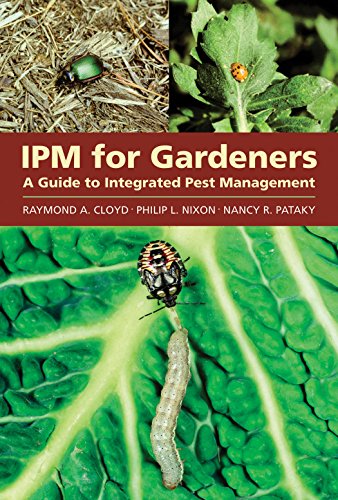
Since the publication of Silent Spring in 1962, interest in alternative pest-management strategies has increased dramatically. As a way to reduce the use of pesticides and keep plants healthy, integrated pest management (IPM) has evolved to emphasize prevention, early diagnosis (or "scouting"), and long-term control strategies -- not quick fixes. Many nurseries, land-use agencies, and public gardens now require the use of IPM as an intelligent, real-world system to raise plants in an environmentally responsible manner. Authoritative and packed with case studies, this volume promises to change the way we see our gardens.
This book is only available through print on demand. All interior art is black and white.
"synopsis" may belong to another edition of this title.
About the Author
Raymond A. Cloyd is assistant professor of Ornamental Entomology and Integrated Pest Management in the Department of Natural Resources and Environmental Sciences at the University of Illinois. His appointment combines research, teaching, and extension. Dr. Cloyd has held positions in private industry as a landscape maintenance supervisor and greenhouse manager. He earned his Ph.D. in Entomology from Purdue University.
Excerpt. © Reprinted by permission. All rights reserved.
As we all know, to maintain healthy landscape plants, it is important to manage pests. Equally true, however, is that effective pest management requires a healthy, vigorous plant. These two points cannot be separated, and both are intimately involved in landscape IPM. Before we can even attempt to manage plant pests, it is essential that we understand something about the needs of the host plant.
It is also important to consider the ultimate goal of pest management in a home landscape. Unlike an agricultural setting, where maximum growth rate and yield are the focus, landscapes are intended to be both useful (provide shade, function, added value) and aesthetically pleasing. The goal is not to obtain bigger and better plants as much as to maintain healthy, vigorous plants that are easy to manage, or what is often called plant health care. Healthy plants are more resistant to attack by insects and diseases, more likely to recover from environmental and other stresses, and better able to withstand injury.
Therefore, it is best to rely on healthy plant growth and development as one deterrent to plant problems. Not surprisingly, IPM is closely tied to plant health.
To discuss plant needs, we need a working understanding of plant growth, differentiation, and development. Plant growth is the irreversible increase in either the mass or size of cells. By definition, true growth occurs only in living organisms. Because growth is quantitative, it is easy to measure. In vegetable production, for example, increases in dry or fresh weight are frequently used to measure growth.
Differentiation refers to differences other than size that occur in the process of cell, tissue, or organ changes as cells multiply. One cell divides to form two cells that may develop into different tissues. For example, general plant cells may give rise to water-conducting vessels, or phloem sieve tubes that move organic matter in the plant, or even epidermal cells. Differentiation is qualitative: Although one can see changes as new tissues emerge and the plant takes form, the changes are difficult to measure.
Development takes into account both growth and differentiation. It represents the sum of all changes that a plant undergoes in life. Because these changes are closely interrelated, "plant growth and development" is generally accepted terminology, even though it is somewhat redundant.
Plant development is not always productive. Plants do not increase in size, shape, and volume without limits. Although plants such as kudzu (Pueraria lobata), tree-of-heaven (Ailanthus altissima), and other weedy ornamentals certainly have a high degree of productive metabolism, these plants do not experience unlimited growth. Even plants that appear to be thriving have nonproductive growth processes at work as well.
Plant growth and development is described in terms of metabolism. Metabolism is the sum of the processes of building up and tearing down the living substance of which cells are composed (the protoplasm). Plant development involves a continual process of metabolism — both anabolic (constructive) and catabolic (destructive). Photosynthesis is anabolic metabolism, but for it to take place, complex molecules must be broken down into simpler parts. If plant energy sources are used, then some catabolic metabolism must occur to attain the necessary components. Stated another way, carbohydrates produced and stored earlier are converted to energy as needed in current processes, but for this anabolic metabolism to occur, tissue must be broken down. Thus catabolic metabolism is a necessary part of growth and development.
When plants are young, there is much more anabolic metabolism than catabolic metabolism, so growth is rapid. When anabolic and catabolic metabolism are equal, growth still occurs, but without a change in size. In this case, growth is mostly involved in tissue repair and maintenance, as one can see on a mature tree when callous tissue forms over a wound or canker. Bonsai trees are grown in trays or small containers with restricted root systems. The roots and stems are pruned to maintain a mature tree that is less than 3 feet tall.
Watering and fertilizing are important in keeping anabolic metabolism slightly greater than catabolic metabolism. When catabolic metabolism exceeds anabolic metabolism, decline and death take place. The dying process in plants may be rapid, as with annual plants, or slow, as with the natural decline of a tree.
Plant growth and development requires the absorption of materials from outside the plant used in combination with materials within the plant. Plants convert these materials to food that they can store or use immediately. Photosynthesis, respiration, and transpiration are the three major functions involved in this process.
"About this title" may belong to another edition of this title.
Other Popular Editions of the Same Title

Search results for IPM for Gardeners: A Guide to Integrated Pest Management

Seller Image
IPM for Gardeners : A Guide to Integrated Pest Management
Seller: GreatBookPrices, Columbia, MD, U.S.A.
Seller rating 5 out of 5 stars

Condition: New. Seller Inventory # 6114746-n
Stock Image
IPM for Gardeners: A Guide to Integrated Pest Management
Seller: Lakeside Books, Benton Harbor, MI, U.S.A.
Seller rating 5 out of 5 stars
Condition: New. Brand New! Not Overstocks or Low Quality Book Club Editions! Direct From the Publisher! We're not a giant, faceless warehouse organization! We're a small town bookstore that loves books and loves it's customers! Buy from Lakeside Books! Seller Inventory # OTF-S-9781604690613
Seller Image
IPM for Gardeners : A Guide to Integrated Pest Management
Seller: GreatBookPrices, Columbia, MD, U.S.A.
Seller rating 5 out of 5 stars
Condition: As New. Unread book in perfect condition. Seller Inventory # 6114746
Stock Image
IPM for Gardeners: A Guide to Integrated Pest Management
Seller: Bookoutlet1, Easley, SC, U.S.A.
Seller rating 5 out of 5 stars
Condition: Very Good. Great shape! Has a publisher remainder mark. paperback Used - Very Good 2009. Seller Inventory # IM-10135336
Seller Image
IPM for Gardeners
Print on DemandSeller: Rarewaves.com USA, London, LONDO, United Kingdom
Seller rating 5 out of 5 stars
Paperback. Condition: New. Since the publication of Silent Spring in 1962, interest in alternative pest-management strategies has increased dramatically. As a way to reduce the use of pesticides and keep plants healthy, integrated pest management (IPM) has evolved to emphasize prevention, early diagnosis (or "scouting"), and long-term control strategies -- not quick fixes. Many nurseries, land-use agencies, and public gardens now require the use of IPM as an intelligent, real-world system to raise plants in an environmentally responsible manner. Authoritative and packed with case studies, this volume promises to change the way we see our gardens. This book is only available through print on demand. All interior art is black and white. Seller Inventory # LU-9781604690613
Buy New
US$ 29.03
Free Shipping
Ships from United Kingdom to U.S.A.
Ships from United Kingdom to U.S.A.
Quantity: Over 20 available
Seller Image
IPM for Gardeners
Print on DemandSeller: Rarewaves USA, OSWEGO, IL, U.S.A.
Seller rating 5 out of 5 stars
Paperback. Condition: New. Since the publication of Silent Spring in 1962, interest in alternative pest-management strategies has increased dramatically. As a way to reduce the use of pesticides and keep plants healthy, integrated pest management (IPM) has evolved to emphasize prevention, early diagnosis (or "scouting"), and long-term control strategies -- not quick fixes. Many nurseries, land-use agencies, and public gardens now require the use of IPM as an intelligent, real-world system to raise plants in an environmentally responsible manner. Authoritative and packed with case studies, this volume promises to change the way we see our gardens. This book is only available through print on demand. All interior art is black and white. Seller Inventory # LU-9781604690613
Stock Image
IPM for Gardeners (Paperback)
Published by
Workman Publishing, Portland, 2009
ISBN 10: 1604690615
ISBN 13: 9781604690613
New
Paperback
Seller: Grand Eagle Retail, Bensenville, IL, U.S.A.
Seller rating 5 out of 5 stars
Paperback. Condition: new. Paperback. Since the publication of Silent Spring in 1962, interest in alternative pest-management strategies has increased dramatically. As a way to reduce the use of pesticides and keep plants healthy, integrated pest management (IPM) has evolved to emphasize prevention, early diagnosis (or "scouting"), and long-term control strategies -- not quick fixes. Many nurseries, land-use agencies, and public gardens now require the use of IPM as an intelligent, real-world system to raise plants in an environmentally responsible manner. Authoritative and packed with case studies, this volume promises to change the way we see our gardens. This book is only available through print on demand. All interior art is black and white. Had enough of toxic pest solutions? Turn to safe and successful IPM techniques with this authoritative, well-illustrated volume. This item is printed on demand. Shipping may be from multiple locations in the US or from the UK, depending on stock availability. Seller Inventory # 9781604690613
Stock Image
IPM for Gardeners
Print on DemandSeller: PBShop.store UK, Fairford, GLOS, United Kingdom
Seller rating 4 out of 5 stars

PAP. Condition: New. New Book. Delivered from our UK warehouse in 4 to 14 business days. THIS BOOK IS PRINTED ON DEMAND. Established seller since 2000. Seller Inventory # L0-9781604690613
Buy New
US$ 26.98
US$ 5.54 shipping
Ships from United Kingdom to U.S.A.
Ships from United Kingdom to U.S.A.
Quantity: Over 20 available
Seller Image
Ipm for Gardeners: A Guide to Integrated Pest Management (Paperback or Softback)
Published by
Timber Press (OR) 2/13/2009, 2009
ISBN 10: 1604690615
ISBN 13: 9781604690613
New
Paperback or Softback
Seller: BargainBookStores, Grand Rapids, MI, U.S.A.
Seller rating 5 out of 5 stars
Paperback or Softback. Condition: New. Ipm for Gardeners: A Guide to Integrated Pest Management. Book. Seller Inventory # BBS-9781604690613
Stock Image
IPM for Gardeners: A Guide to Integrated Pest Management
Seller: Ria Christie Collections, Uxbridge, United Kingdom
Seller rating 5 out of 5 stars
Condition: New. In. Seller Inventory # ria9781604690613_new
Buy New
US$ 28.39
US$ 15.94 shipping
Ships from United Kingdom to U.S.A.
Ships from United Kingdom to U.S.A.
Quantity: Over 20 available