
Items related to Reggae, Rastafari, and the Rhetoric of Social Control
Synopsis
Who changed Bob Marley’s famous peace-and-love anthem into “Come to Jamaica and feel all right?”
When did the Rastafarian fighting white colonial power become the smiling Rastaman spreading beach towels for American tourists?
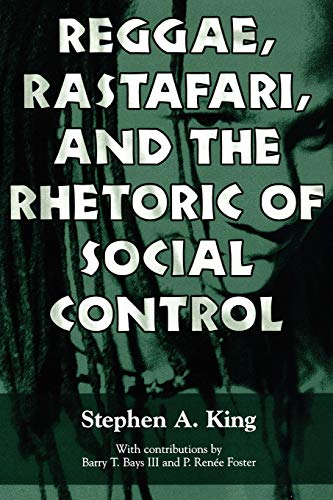
Drawing on research in social movement theory and protest music, Reggae, Rastafari, and the Rhetoric of Social Control traces the history and rise of reggae and the story of how an island nation commandeered the music to fashion an image and entice tourists.
Visitors to Jamaica are often unaware that reggae was a revolutionary music rooted in the suffering of Jamaica’s poor. Rastafarians were once a target of police harassment and public condemnation. Now the music is a marketing tool, and the Rastafarians are no longer a “violent counterculture” but an important symbol of Jamaica’s new cultural heritage.
This book attempts to explain how the Jamaican establishment’s strategies of social control influenced the evolutionary direction of both the music and the Rastafarian movement.
From 1959 to 1971, Jamaica’s popular music became identified with the Rastafarians, a social movement that gave voice to the country’s poor black communities. In response to this challenge, the Jamaican government banned politically controversial reggae songs from the airwaves and jailed or deported Rastafarian leaders.
Yet when reggae became internationally popular in the 1970s, divisions among Rastafarians grew wider, spawning a number of pseudo-Rastafarians who embraced only the external symbolism of this worldwide religion. Exploiting this opportunity, Jamaica’s new Prime Minister, Michael Manley, brought Rastafarian political imagery and themes into the mainstream. Eventually, reggae and Rastafari evolved into Jamaica’s chief cultural commodities and tourist attractions.
"synopsis" may belong to another edition of this title.
About the Author
Stephen A. King is chairperson and professor of communication at St. Edward’s University in Austin, Texas. He has written extensively about rhetoric, public memory, and cultural tourism and is author of Reggae, Rastafari, and the Rhetoric of Social Control and I’m Feeling the Blues Right Now: Blues Tourism and the Mississippi Delta and coauthor (with Roger Davis Gatchet) of Terror and Truth: Civil Rights Tourism and the Mississippi Movement, all published by University Press of Mississippi.
From the Back Cover
How Jamaica fashioned a tourist beacon from reggae music and the Rastafarian revolution
From the Inside Flap
How Jamaica fashioned a tourist beacon from reggae music and the Rastafarian revolution
"About this title" may belong to another edition of this title.
Search results for Reggae, Rastafari, and the Rhetoric of Social Control

Stock Image
Reggae, Rastafari, and the Rhetoric of Social Control
Published by
University Press of Mississippi (edition Illustrated), 2007
ISBN 10: 160473003X
ISBN 13: 9781604730036
Used
Paperback
Seller: BooksRun, Philadelphia, PA, U.S.A.
Seller rating 5 out of 5 stars

Paperback. Condition: Fair. Illustrated. The item might be beaten up but readable. May contain markings or highlighting, as well as stains, bent corners, or any other major defect, but the text is not obscured in any way. Seller Inventory # 160473003X-7-1
Stock Image
Reggae, Rastafari, and the Rhetoric of Social Control
Published by
University Press of Mississippi, 2007
ISBN 10: 160473003X
ISBN 13: 9781604730036
Used
paperback
Seller: Midtown Scholar Bookstore, Harrisburg, PA, U.S.A.
Seller rating 5 out of 5 stars
paperback. Condition: Good. Good - Bumped and creased book with tears to the extremities, but not affecting the text block, may have remainder mark or previous owner's name - GOOD PAPERBACK Standard-sized. Seller Inventory # M160473003XZ3
Stock Image
Reggae, Rastafari, and the Rhetoric of Social Control
Seller: AwesomeBooks, Wallingford, United Kingdom
Seller rating 5 out of 5 stars
Paperback. Condition: Very Good. Reggae, Rastafari, and the Rhetoric of Social Control This book is in very good condition and will be shipped within 24 hours of ordering. The cover may have some limited signs of wear but the pages are clean, intact and the spine remains undamaged. This book has clearly been well maintained and looked after thus far. Money back guarantee if you are not satisfied. See all our books here, order more than 1 book and get discounted shipping. Seller Inventory # 7719-9781604730036
Buy Used
US$ 8.09
US$ 5.45 shipping
Ships from United Kingdom to U.S.A.
Ships from United Kingdom to U.S.A.
Quantity: 2 available
Stock Image
Reggae, Rastafari, and the Rhetoric of Social Control
Published by
University Press of Mississippi 30/11/2007, 2007
ISBN 10: 160473003X
ISBN 13: 9781604730036
Used
Paperback
Seller: Bahamut Media, Reading, United Kingdom
Seller rating 4 out of 5 stars

Paperback. Condition: Very Good. Shipped within 24 hours from our UK warehouse. Clean, undamaged book with no damage to pages and minimal wear to the cover. Spine still tight, in very good condition. Remember if you are not happy, you are covered by our 100% money back guarantee. Seller Inventory # 6545-9781604730036
Buy Used
US$ 21.53
US$ 9.24 shipping
Ships from United Kingdom to U.S.A.
Ships from United Kingdom to U.S.A.
Quantity: 1 available
Seller Image
Reggae, Rastafari, and the Rhetoric of Social Control
Published by
University Press of Mississippi, 2007
ISBN 10: 160473003X
ISBN 13: 9781604730036
Used
Softcover
Seller: GreatBookPrices, Columbia, MD, U.S.A.
Seller rating 5 out of 5 stars
Condition: As New. Unread book in perfect condition. Seller Inventory # 5432859
Seller Image
Reggae, Rastafari, and the Rhetoric of Social Control
Published by
University Press of Mississippi, 2007
ISBN 10: 160473003X
ISBN 13: 9781604730036
New
Softcover
Seller: GreatBookPrices, Columbia, MD, U.S.A.
Seller rating 5 out of 5 stars
Condition: New. Seller Inventory # 5432859-n
Stock Image
Reggae, Rastafari, and the Rhetoric of Social Control
Published by
University Press of Mississippi, 2007
ISBN 10: 160473003X
ISBN 13: 9781604730036
New
PAP
Seller: PBShop.store UK, Fairford, GLOS, United Kingdom
Seller rating 5 out of 5 stars
PAP. Condition: New. New Book. Shipped from UK. Established seller since 2000. Seller Inventory # FW-9781604730036
Buy New
US$ 37.32
US$ 5.51 shipping
Ships from United Kingdom to U.S.A.
Ships from United Kingdom to U.S.A.
Quantity: 15 available
Stock Image
Reggae, Rastafari, and the Rhetoric of Social Control (eng)
Published by
University Press of Mississippi, 2007
ISBN 10: 160473003X
ISBN 13: 9781604730036
New
Softcover
Seller: Brook Bookstore On Demand, Napoli, NA, Italy
Seller rating 5 out of 5 stars
Condition: new. Seller Inventory # dea22096b9f9e041aeb9a2c32e883ea8
Buy New
US$ 41.03
US$ 6.16 shipping
Ships from Italy to U.S.A.
Ships from Italy to U.S.A.
Quantity: Over 20 available
Seller Image
Reggae, Rastafari, and the Rhetoric of Social Control
Published by
University Press of Mississippi, US, 2007
ISBN 10: 160473003X
ISBN 13: 9781604730036
New
Paperback
Seller: Rarewaves.com USA, London, LONDO, United Kingdom
Seller rating 5 out of 5 stars
Paperback. Condition: New. Who changed Bob Marley's famous peace-and-love anthem into ""Come to Jamaica and feel all right""? When did the Rastafarian fighting white colonial power become the smiling Rastaman spreading beach towels for American tourists? Drawing on research in social movement theory and protest music, Reggae, Rastafari, and the Rhetoric of Social Control traces the history and rise of reggae and the story of how an island nation commandeered the music to fashion an image and entice tourists. Visitors to Jamaica are often unaware that reggae was a revolutionary music rooted in the suffering of Jamaica's poor. Rastafarians were once a target of police harassment and public condemnation. Now the music is a marketing tool, and the Rastafarians are no longer a ""violent counterculture"" but an important symbol of Jamaica's new cultural heritage. This book attempts to explain how the Jamaican establishment's strategies of social control influenced the evolutionary direction of both the music and the Rastafarian movement. From 1959 to 1971, Jamaica's popular music became identified with the Rastafarians, a social movement that gave voice to the country's poor black communities. In response to this challenge, the Jamaican government banned politically controversial reggae songs from the airwaves and jailed or deported Rastafarian leaders. Yet when reggae became internationally popular in the 1970s, divisions among Rastafarians grew wider, spawning a number of pseudo-Rastafarians who embraced only the external symbolism of this worldwide religion. Exploiting this opportunity, Jamaica's new Prime Minister, Michael Manley, brought Rastafarian political imagery and themes into the mainstream. Eventually, reggae and Rastafari evolved into Jamaica's chief cultural commodities and tourist attractions. Stephen A. King is associate professor of speech communication at Delta State University. His work has been published in the Howard Journal of Communications, Popular Music and Society, and The Journal of Popular Culture. Seller Inventory # LU-9781604730036
Buy New
US$ 51.82
Free Shipping
Ships from United Kingdom to U.S.A.
Ships from United Kingdom to U.S.A.
Quantity: Over 20 available
Stock Image
Reggae, Rastafari, and the Rhetoric of Social Control
Print on DemandSeller: Revaluation Books, Exeter, United Kingdom
Seller rating 5 out of 5 stars
Paperback. Condition: Brand New. 173 pages. 9.00x6.25x0.75 inches. In Stock. This item is printed on demand. Seller Inventory # __160473003X
Buy New
US$ 39.64
US$ 13.23 shipping
Ships from United Kingdom to U.S.A.
Ships from United Kingdom to U.S.A.
Quantity: 2 available