Items related to COPO Camaro, Chevelle & Nova: Chevrolet's Ultimate...
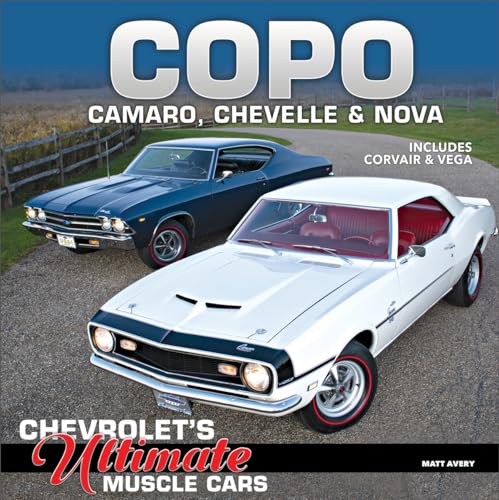

The COPO Camaros, Chevelles, and Novas of the 1960s and early 1970s were the ultimate high-performance GM muscle cars. While few knew about this back channel program at the time, it is now recognized as the origin of GM's top muscle cars. Dedicated Chevy racers and car owners were determined to compete head-to-head with Mopar and Ford at the racetrack and on the street. But in order to do so, they needed to circumvent the corporate ban on racing and resolve the restriction of 400-ci engines in intermediate vehicles. Don Yenko and some other creative individuals recognized the loophole in the COPO (Central Office Production Order) system at General Motors. The COPO program was designated for fleet vehicles such as taxicabs, but at the peak of the muscle car wars it was used to build the ultimate high-performance Chevy muscle cars. Some horrific on-track accidents compelled General Motors to drop out of racing, yet GM did not want to allow Chrysler and Ford to steal the glory on Sundays while they stood on the sidelines. As a result, GM inconspicuously ran the Chevy racing and high-performance program through back channels, and COPO was integral part of the program.
Don Yenko became the COPO muscle car program chief architect and champion. He ordered the Corvair through the COPO program and created the Corvair Stinger to mount a SCCA road race campaign. From these humble beginnings, the road map for creating the ultimate Camaros, Chevelles, and Novas was established. Factory Camaro V-8s came equipped with the 350 small-block or 396 big-block, which had to compete with the Mustang Cobra Jets and Mopar Wedge and Hemi cars. In response, building the big-block Camaro through the COPO program was devised. At the factory, Camaros were fitted with the 396 engines and shipped to dealers where the 427s were installed in the cars. From 1967 to 1969, the factory and dealers installed eight different 427 engines, including the all aluminum ZL1 427. Later on, others used the road map to build COPO Novas and Chevelles to similar spec, with similar results. The COPO performance car program did not end with these muscle cars. Yenko even ordered several hundred Vegas through the COPO program, so they could be fitted with turbochargers and raced in SCCA competition.
Author and automotive historian Matt Avery retraces the history of the COPO program and the creation of these premier muscle cars. He has scoured archives and tracked down owners and personnel involved in the program to deliver a comprehensive story and complete guide to the COPO cars. He's also delivered completely original and never seen before colorful photography of these legendary cars.
The COPO muscle car and racing program produced a storied and remarkable journey, and author Matt Avery captures all these facets in this entertaining and revealing history. The book won a 2019 Silver Journalism Award Winner from the Automotive Heritage Awards.
Don Yenko became the COPO muscle car program chief architect and champion. He ordered the Corvair through the COPO program and created the Corvair Stinger to mount a SCCA road race campaign. From these humble beginnings, the road map for creating the ultimate Camaros, Chevelles, and Novas was established. Factory Camaro V-8s came equipped with the 350 small-block or 396 big-block, which had to compete with the Mustang Cobra Jets and Mopar Wedge and Hemi cars. In response, building the big-block Camaro through the COPO program was devised. At the factory, Camaros were fitted with the 396 engines and shipped to dealers where the 427s were installed in the cars. From 1967 to 1969, the factory and dealers installed eight different 427 engines, including the all aluminum ZL1 427. Later on, others used the road map to build COPO Novas and Chevelles to similar spec, with similar results. The COPO performance car program did not end with these muscle cars. Yenko even ordered several hundred Vegas through the COPO program, so they could be fitted with turbochargers and raced in SCCA competition.
Author and automotive historian Matt Avery retraces the history of the COPO program and the creation of these premier muscle cars. He has scoured archives and tracked down owners and personnel involved in the program to deliver a comprehensive story and complete guide to the COPO cars. He's also delivered completely original and never seen before colorful photography of these legendary cars.
The COPO muscle car and racing program produced a storied and remarkable journey, and author Matt Avery captures all these facets in this entertaining and revealing history. The book won a 2019 Silver Journalism Award Winner from the Automotive Heritage Awards.
"synopsis" may belong to another edition of this title.
From the Author:
The COPO cars are some of the most legendary performance vehicles ever created by General Motors. I spent nearly two years researching and photographing the world's best examples to bring to readers the most comprehensive, authoritative and engaging story every written about them. All of the photography is brand new and captured specifically for this project. My travels took me around the US and up into Canada in my pursuit to learn about and capture the very best vehicles. I hope you enjoy the story and leave with a better understanding of these way cool cars and they way they came to be. See ya down the road!Matt
From the Back Cover:
Chevrolet responded to the big-block competition from Ford and Chrysler by creating ultra high-performance and secretive COPO Camaros, Chevelles, Novas, Corvairs, and Vegas. When traditional channels were unavailable, an ingenious few used the Central Office Purchase Order (COPO) system to create the ultimate Chevy muscle cars of the 1960s and early 1970s. While few knew about this back channel program at the time, it is now recognized as the origin of GM’s top muscle cars.
Dedicated Chevy racers and car owners were determined to compete head-to-head with Chrysler and Ford at the racetrack and on the street. But in order to do so, they needed to circumvent the corporate ban on racing and resolve the restriction of 400-ci engines in intermediate and smaller vehicles. Don Yenko and other creative individuals recognized the loophole in the COPO system, which was designed for fleet vehicles such as taxicabs, and at the peak of the muscle car era used it to build the ultimate high-performance Chevy muscle cars.
Chevy muscle car aficionado and author Matt Avery retraces this special muscle car history of the COPO program and the creation of these premier muscle cars. He has scoured archives and tracked down owners and personnel involved in the program to deliver a comprehensive story and complete history of COPO cars.
"About this title" may belong to another edition of this title.
- PublisherCarTech
- Publication date2018
- ISBN 10 1613253915
- ISBN 13 9781613253915
- BindingHardcover
- Number of pages204
- Rating
Buy New
Learn more about this copy
US$ 30.00
Shipping:
US$ 5.00
Within U.S.A.
Top Search Results from the AbeBooks Marketplace
Stock Image
COPO Camaro, Chevelle & Nova: Chevrolet's Ultimate Muscle Cars
Published by
CarTech/Forest Lake (MN)
(2018)
ISBN 10: 1613253915
ISBN 13: 9781613253915
New
Hardcover
First Edition
Quantity: 1
Seller:
Rating

Book Description Hardcover. Condition: New. Dust Jacket Condition: New. 1st Edition. 203 pp. Book/dust jacket condition: New/New. 1st Ed., 2nd Printing/First Edition, Second Printing (number line). "Includes Corvair & Vega". All orders are processed and shipped from MI or WI, USA. Seller Inventory # 004658
Buy New
US$ 30.00
Convert currency
Stock Image
COPO Camaro, Chevelle Nova: Chevrolet's Ultimate Muscle Cars
Seller:
Rating

Book Description Condition: new. Seller Inventory # FrontCover1613253915
Buy New
US$ 41.54
Convert currency
Stock Image
COPO Camaro, Chevelle Nova: Chevrolet's Ultimate Muscle Cars
Seller:
Rating
Book Description Hardcover. Condition: new. New. Fast Shipping and good customer service. Seller Inventory # Holz_New_1613253915
Buy New
US$ 44.13
Convert currency
Stock Image
COPO Camaro, Chevelle Nova: Chevrolet's Ultimate Muscle Cars
Seller:
Rating
Book Description Condition: new. Seller Inventory # newMercantile_1613253915
Buy New
US$ 45.29
Convert currency
Stock Image
COPO Camaro, Chevelle Nova: Chevrolet's Ultimate Muscle Cars
Seller:
Rating
Book Description Hardcover. Condition: new. Brand New Copy. Seller Inventory # BBB_new1613253915
Buy New
US$ 46.85
Convert currency
Stock Image
COPO Camaro, Chevelle & Nova: Chevrolet's Ultimate Muscle Cars
Seller:
Rating
Book Description Condition: New. Book is in NEW condition. 2.29. Seller Inventory # 1613253915-2-1
Buy New
US$ 62.31
Convert currency
Stock Image
COPO Camaro, Chevelle & Nova: Chevrolet's Ultimate Muscle Cars
Seller:
Rating
Book Description Condition: New. New! This book is in the same immaculate condition as when it was published 2.29. Seller Inventory # 353-1613253915-new
Buy New
US$ 62.32
Convert currency
Stock Image
COPO Camaro, Chevelle Nova: Chevrolet's Ultimate Muscle Cars
Seller:
Rating
Book Description Hardcover. Condition: new. New Copy. Customer Service Guaranteed. Seller Inventory # think1613253915
Buy New
US$ 58.10
Convert currency
Stock Image
Copo Camaro, Chevelle & Nova: Chevrolet's Ultimate Muscle Cars: Includes Corvair & Vega
Published by
Cartech Inc
(2018)
ISBN 10: 1613253915
ISBN 13: 9781613253915
New
Hardcover
Quantity: 1
Seller:
Rating
Book Description Hardcover. Condition: Brand New. 192 pages. 10.00x10.00x0.50 inches. In Stock. Seller Inventory # 1613253915
Buy New
US$ 77.80
Convert currency
Stock Image
COPO Camaro, Chevelle Nova: Chevrolet's Ultimate Muscle Cars
Seller:
Rating
Book Description Hardcover. Condition: new. New. Seller Inventory # Wizard1613253915
Buy New
US$ 101.94
Convert currency