
Items related to How to Identify a Forgery: A Guide to Spotting Fake...
How to Identify a Forgery: A Guide to Spotting Fake Art, Counterfeit Currencies, and More - Softcover
Synopsis
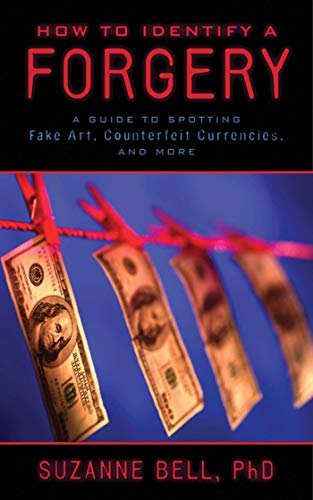
Fakes and counterfeits have existed since ancient times; and while the methods of forgery have surely advanced, so has the science necessary to identify them. Currency, art, and historical artifacts are only a few of the objects commonly forged; and scientists in forensic laboratories throughout the world work alongside artists, museums, linguists, and historians to authenticate these items. How to Identify a Forgery investigates how modern computers, printers, and scanners have presented new challenges for scientists and how objects suspected of being faked, forged, or fraudulent are examined forensically.
How to Identify a Forgery contains information on:
• Counterfeiting currency
• Electronic and digital signatures
• Dating ink
• Dyes and pigments
• Forging art
• Handwriting analysis
• Scientific methodology
• Visual examination and microscopy
How to Identify a Forgery contains illustrations, a glossary, and a detailed list of print and web resources. Sidebars on notable cases and pressing forensics issues throughout reinforce the text. Essential for students, teachers, collectors, and investigators who require information on proper forensic science practices, Dr. Bell’s book is as fascinating as it is useful.
"synopsis" may belong to another edition of this title.
About the Author
Suzanne Bell, PhD, holds a degree in chemistry from New Mexico State University and an MS in forensic science from the University of New Haven. She is currently an associate professor of chemistry and director of the Bell Research Group at West Virginia University. Bell’s previous work has been published in Journal of Chemical Education, Analytical Chemistry, and Journal of Forensic Science. Bell is author of The Facts on File Dictionary of Forensic Science, cited by Choice as an “Outstanding Academic Title, 2004.” She lives in Morgantown, West Virginia.
"About this title" may belong to another edition of this title.
Search results for How to Identify a Forgery: A Guide to Spotting Fake...

Stock Image
How to Identify a Forgery: A Guide to Spotting Fake Art, Counterfeit Currencies, and More
Seller: HPB-Ruby, Dallas, TX, U.S.A.
Seller rating 5 out of 5 stars

Paperback. Condition: Very Good. Connecting readers with great books since 1972! Used books may not include companion materials, and may have some shelf wear or limited writing. We ship orders daily and Customer Service is our top priority! Seller Inventory # S_466628604
Stock Image
How to Identify a Forgery: A Guide to Spotting Fake Art, Counterfeit Currencies, and More
Seller: ThriftBooks-Atlanta, AUSTELL, GA, U.S.A.
Seller rating 5 out of 5 stars
Paperback. Condition: Very Good. No Jacket. May have limited writing in cover pages. Pages are unmarked. ~ ThriftBooks: Read More, Spend Less. Seller Inventory # G1620875934I4N00
Stock Image
How to Identify a Forgery: A Guide to Spotting Fake Art, Counterfeit Currencies, and More
Seller: ThriftBooks-Atlanta, AUSTELL, GA, U.S.A.
Seller rating 5 out of 5 stars
Paperback. Condition: Good. No Jacket. Pages can have notes/highlighting. Spine may show signs of wear. ~ ThriftBooks: Read More, Spend Less. Seller Inventory # G1620875934I3N00
Stock Image
How to Identify a Forgery: A Guide to Spotting Fake Art, Counterfeit Currencies, and More
Seller: ThriftBooks-Dallas, Dallas, TX, U.S.A.
Seller rating 5 out of 5 stars
Paperback. Condition: Very Good. No Jacket. May have limited writing in cover pages. Pages are unmarked. ~ ThriftBooks: Read More, Spend Less. Seller Inventory # G1620875934I4N00
Stock Image
How to Identify a Forgery: A Guide to Spotting Fake Art, Counterfeit Currencies, and More
Seller: Book Outpost, Blawnox, PA, U.S.A.
Seller rating 5 out of 5 stars
Condition: Good. Cover has a crease/tear, book is in good condition. Seller Inventory # G-8-0011015
Stock Image
How to Identify a Forgery : A Guide to Spotting Fake Art, Counterfeit Currencies, and More
Published by
Skyhorse Publishing Inc., 2013
ISBN 10: 1620875934
ISBN 13: 9781620875933
Used
Softcover
Seller: Library House Internet Sales, Grand Rapids, OH, U.S.A.
Seller rating 5 out of 5 stars
Softcover. Condition: Good. No Jacket. A fascinating introduction to how scientists identify fraudulent copies, from signatures to oil paintings.%u201D. Due to age and/or environmental conditions, the pages of this book have darkened. Former library book. Solid binding. Moderate edgewear on the boards. Please note the image in this listing is a stock photo and may not match the covers of the actual item. Ex-Library. Seller Inventory # 123769937
Seller Image
How to Identify a Forgery
Seller: Rarewaves USA, HEBRON, KY, U.S.A.
Seller rating 5 out of 5 stars
Paperback. Condition: New. Fakes and counterfeits have existed since ancient times; and while the methods of forgery have surely advanced, so has the science necessary to identify them. Currency, art, and historical artifacts are only a few of the objects commonly forged; and scientists in forensic laboratories throughout the world work alongside artists, museums, linguists, and historians to authenticate these items. How to Identify a Forgery investigates how modern computers, printers, and scanners have presented new challenges for scientists and how objects suspected of being faked, forged, or fraudulent are examined forensically.How to Identify a Forgery contains information on: Counterfeiting currency Electronic and digital signatures Dating ink Dyes and pigments Forging art Handwriting analysis Scientific methodology Visual examination and microscopyHow to Identify a Forgery contains illustrations, a glossary, and a detailed list of print and web resources. Sidebars on notable cases and pressing forensics issues throughout reinforce the text. Essential for students, teachers, collectors, and investigators who require information on proper forensic science practices, Dr. Bell's book is as fascinating as it is useful. Seller Inventory # LU-9781620875933
Stock Image
How to Identify a Forgery: A Guide to Spotting Fake Art, Counterfeit Currencies, and More
Seller: Book Outpost, Blawnox, PA, U.S.A.
Seller rating 5 out of 5 stars
Condition: New. New. Seller Inventory # G-8-0010979
Stock Image
How to Identify a Forgery: A Guide to Spotting Fake Art, Counterfeit Currencies, and More
Seller: Revaluation Books, Exeter, United Kingdom
Seller rating 5 out of 5 stars
Paperback. Condition: Brand New. reprint edition. 108 pages. 9.00x6.00x0.50 inches. In Stock. Seller Inventory # 1620875934
Buy New
US$ 30.08
US$ 13.23 shipping
Ships from United Kingdom to U.S.A.
Ships from United Kingdom to U.S.A.
Quantity: 1 available
Seller Image
How to Identify a Forgery
Seller: Rarewaves USA United, HEBRON, KY, U.S.A.
Seller rating 5 out of 5 stars
Paperback. Condition: New. Fakes and counterfeits have existed since ancient times; and while the methods of forgery have surely advanced, so has the science necessary to identify them. Currency, art, and historical artifacts are only a few of the objects commonly forged; and scientists in forensic laboratories throughout the world work alongside artists, museums, linguists, and historians to authenticate these items. How to Identify a Forgery investigates how modern computers, printers, and scanners have presented new challenges for scientists and how objects suspected of being faked, forged, or fraudulent are examined forensically.How to Identify a Forgery contains information on: Counterfeiting currency Electronic and digital signatures Dating ink Dyes and pigments Forging art Handwriting analysis Scientific methodology Visual examination and microscopyHow to Identify a Forgery contains illustrations, a glossary, and a detailed list of print and web resources. Sidebars on notable cases and pressing forensics issues throughout reinforce the text. Essential for students, teachers, collectors, and investigators who require information on proper forensic science practices, Dr. Bell's book is as fascinating as it is useful. Seller Inventory # LU-9781620875933