
Items related to Cane
Synopsis
Karintha, at twelve, was a wild flash that told the other folks just what it was to live. At sunset, when there was no wind, and the pinesmoke 2from over by the sawmill hugged the earth, and you couldnt see more than a few feet in front, her sudden darting past you was a bit of vivid color, like a black bird that flashes in light. With the other children one could hear, some distance off, their feet flopping in the two-inch dust. Karintha’s running was a whir. It had the sound of the red dust that sometimes makes a spiral in the road. At dusk, during the hush just after the sawmill had closed down, and before any of the women had started their supper-getting-ready songs, her voice, high-pitched, shrill, would put one’s ears to itching. But no one ever thought to make her stop because of it. She stoned the cows, and beat her dog, and fought the other children... Even the preacher, who caught her at mischief, told himself that she was as innocently lovely as a November cotton flower.
- Taken from "Cane" written by Jean Toomer
"synopsis" may belong to another edition of this title.
Search results for Cane

Stock Image
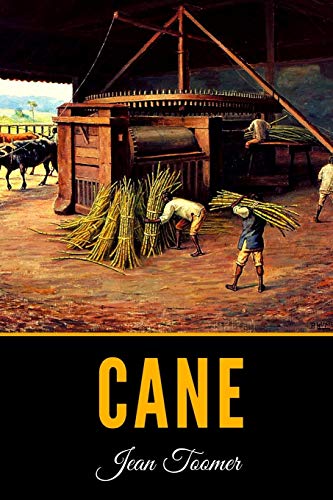
Cane
Published by
Independently Published, 2019
ISBN 10: 1692869094
ISBN 13: 9781692869090
Used
Paperback
Seller: World of Books (was SecondSale), Montgomery, IL, U.S.A.
Seller rating 5 out of 5 stars

Paperback. Condition: Very Good. The Harlem Renaissance writer's innovative and groundbreaking novel depicting African American life in the South and North, with a foreword by National Book Foundation 5 Under 35 honoree Zinzi Clemmons Jean Toomer's Cane is one of the most significant works to come out of the Harlem Renaissance, and is considered to be a masterpiece in American modernist literature because of its distinct structure and style. First published in 1923 and told through a series of vignettes, Cane uses poetry, prose, and play-like dialogue to create a window into the varied lives of African Americans living in the rural South and urban North during a time when Jim Crow laws pervaded and racism reigned. While critically acclaimed and known today as a pioneering text of the Harlem Renaissance, the book did not gain as much popularity as other works written during the period. Fellow Harlem Renaissance writer Langston Hughes believed Cane's lack of a wider readership was because it didn't reinforce the stereotypes often associated with African Americans during the time, but portrayed them in an accurate and entirely human way, breaking the mold and laying the groundwork for how African Americans are depicted in literature. For the first time in Penguin Classics, this edition of Cane features a new introduction, suggestions for further reading, and notes by scholar George Hutchinson, and National Book Award Foundation 5 Under 35 novelist Zinzi Clemmons contributes a foreword. Seller Inventory # CIN1692869094VG
Stock Image
Cane
Published by
Independently Published, 2019
ISBN 10: 1692869094
ISBN 13: 9781692869090
Used
Paperback
Seller: World of Books Inc, Montgomery, IL, U.S.A.
Seller rating 4 out of 5 stars

Paperback. Condition: Very Good. The Harlem Renaissance writer's innovative and groundbreaking novel depicting African American life in the South and North, with a foreword by National Book Foundation 5 Under 35 honoree Zinzi Clemmons Jean Toomer's Cane is one of the most significant works to come out of the Harlem Renaissance, and is considered to be a masterpiece in American modernist literature because of its distinct structure and style. First published in 1923 and told through a series of vignettes, Cane uses poetry, prose, and play-like dialogue to create a window into the varied lives of African Americans living in the rural South and urban North during a time when Jim Crow laws pervaded and racism reigned. While critically acclaimed and known today as a pioneering text of the Harlem Renaissance, the book did not gain as much popularity as other works written during the period. Fellow Harlem Renaissance writer Langston Hughes believed Cane's lack of a wider readership was because it didn't reinforce the stereotypes often associated with African Americans during the time, but portrayed them in an accurate and entirely human way, breaking the mold and laying the groundwork for how African Americans are depicted in literature. For the first time in Penguin Classics, this edition of Cane features a new introduction, suggestions for further reading, and notes by scholar George Hutchinson, and National Book Award Foundation 5 Under 35 novelist Zinzi Clemmons contributes a foreword. Seller Inventory # CIN1692869094VG