
Items related to Your Brain's Politics: How the Science of Mind...
Your Brain's Politics: How the Science of Mind Explains the Political Divide (Societas) - Softcover
Book 53 of 85: Societas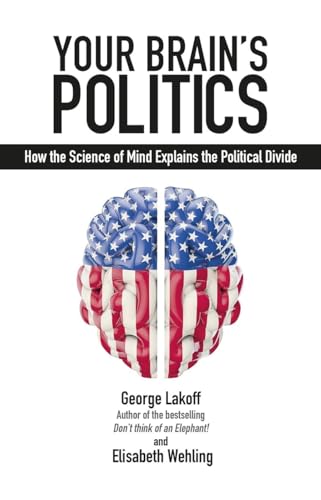
Synopsis
At first glance, issues like economic inequality, healthcare, climate change, and abortion seem unrelated. However, when thinking and talking about them, people reliably fall into two camps: conservative and liberal. What explains this divide? Why do conservatives and liberals hold the positions they do? And what is the conceptual nature of those who decide elections, commonly called the "political middle"?
The answers are profound. They have to do with how our minds and brains work. Political attitudes are the product of what cognitive scientists call Embodied Cognition -- the grounding of abstract thought in everyday world experience. Clashing beliefs about how to run nations largely arise from conflicting beliefs about family life: conservatives endorse a strict father and liberals a nurturant parent model. So-called "middle" voters are not in the middle at all. They are morally biconceptual, divided between both models, and as a result highly susceptible to moral political persuasion.
In this brief introduction, Lakoff and Wehling reveal how cognitive science research has advanced our understanding of political thought and language, forcing us to revise common folk theories about the rational voter.
"synopsis" may belong to another edition of this title.
About the Authors
George Lakoff is Goldman Distinguished Professor Emeritus of Cognitive Science and Linguistics at the University of California, Berkeley. He is a founder of the field of cognitive linguistics and author of many books including The All New Don't Think of an Elephant! (2015 edition) and Moral Politics: How Liberals and Conservatives Think (2016, third edition).
Elisabeth Wehling, Ph.D., is a cognitive scientist at the University of California, Berkeley. She researches political morality using discourse analytical, behavioral, and neuroscience methods and has written several books including The Little Blue Book (2012) together with George Lakoff.
"About this title" may belong to another edition of this title.
Search results for Your Brain's Politics: How the Science of Mind...

Stock Image
Your Brain's Politics: How the Science of Mind Explains the Political Divide
Seller: World of Books (was SecondSale), Montgomery, IL, U.S.A.
Seller rating 5 out of 5 stars

Paperback. Condition: Fair. At first glance, issues like economic inequality, healthcare, climate change, and abortion seem unrelated. However, when thinking and talking about them, people reliably fall into two camps: conservative and liberal. What explains this divide? Why do conservatives and liberals hold the positions they do? And what is the conceptual nature of those who decide elections, commonly called the "political middle"? The answers are profound. They have to do with how our minds and brains work. Political attitudes are the product of what cognitive scientists call Embodied Cognition -- the grounding of abstract thought in everyday world experience. Clashing beliefs about how to run nations largely arise from conflicting beliefs about family life: conservatives endorse a strict father and liberals a nurturant parent model. So-called "middle" voters are not in the middle at all. They are morally biconceptual, divided between both models, and as a result highly susceptible to moral political persuasion. In this brief introduction, Lakoff and Wehling reveal how cognitive science research has advanced our understanding of political thought and language, forcing us to revise common folk theories about the rational voter. Seller Inventory # 00105163269
Stock Image
Your Brain's Politics: How the Science of Mind Explains the Political Divide
Seller: World of Books (was SecondSale), Montgomery, IL, U.S.A.
Seller rating 5 out of 5 stars
Paperback. Condition: Good. At first glance, issues like economic inequality, healthcare, climate change, and abortion seem unrelated. However, when thinking and talking about them, people reliably fall into two camps: conservative and liberal. What explains this divide? Why do conservatives and liberals hold the positions they do? And what is the conceptual nature of those who decide elections, commonly called the "political middle"? The answers are profound. They have to do with how our minds and brains work. Political attitudes are the product of what cognitive scientists call Embodied Cognition -- the grounding of abstract thought in everyday world experience. Clashing beliefs about how to run nations largely arise from conflicting beliefs about family life: conservatives endorse a strict father and liberals a nurturant parent model. So-called "middle" voters are not in the middle at all. They are morally biconceptual, divided between both models, and as a result highly susceptible to moral political persuasion. In this brief introduction, Lakoff and Wehling reveal how cognitive science research has advanced our understanding of political thought and language, forcing us to revise common folk theories about the rational voter. Seller Inventory # 00106756525
Seller Image
Your Brain's Politics: How the Science of Mind Explains the Political Divide (Societas)
Seller: 3Brothers Bookstore, Egg harbor township, NJ, U.S.A.
Seller rating 5 out of 5 stars
Condition: very_good. Cover may have light wear, pages in very good condition and binding is sturdy; may have other light shelf wear or creases. May have notes or highlighting. Seller Inventory # EVV.1845409213.VG
Stock Image
Your Brain's Politics: How the Science of Mind Explains the Political Divide
Seller: ThriftBooks-Atlanta, AUSTELL, GA, U.S.A.
Seller rating 5 out of 5 stars
Paperback. Condition: Very Good. No Jacket. May have limited writing in cover pages. Pages are unmarked. ~ ThriftBooks: Read More, Spend Less. Seller Inventory # G1845409213I4N00
Stock Image
Your Brain's Politics: How the Science of Mind Explains the Political Divide
Seller: ThriftBooks-Dallas, Dallas, TX, U.S.A.
Seller rating 5 out of 5 stars
Paperback. Condition: As New. No Jacket. Pages are clean and are not marred by notes or folds of any kind. ~ ThriftBooks: Read More, Spend Less. Seller Inventory # G1845409213I2N00
Stock Image
Your Brain's Politics: How the Science of Mind Explains the Political Divide
Seller: ThriftBooks-Dallas, Dallas, TX, U.S.A.
Seller rating 5 out of 5 stars
Paperback. Condition: Very Good. No Jacket. May have limited writing in cover pages. Pages are unmarked. ~ ThriftBooks: Read More, Spend Less. Seller Inventory # G1845409213I4N00
Stock Image
Your Brain's Politics: How the Science of Mind Explains the Political Divide
Seller: World of Books Inc, Montgomery, IL, U.S.A.
Seller rating 4 out of 5 stars

Paperback. Condition: Good. At first glance, issues like economic inequality, healthcare, climate change, and abortion seem unrelated. However, when thinking and talking about them, people reliably fall into two camps: conservative and liberal. What explains this divide? Why do conservatives and liberals hold the positions they do? And what is the conceptual nature of those who decide elections, commonly called the "political middle"? The answers are profound. They have to do with how our minds and brains work. Political attitudes are the product of what cognitive scientists call Embodied Cognition -- the grounding of abstract thought in everyday world experience. Clashing beliefs about how to run nations largely arise from conflicting beliefs about family life: conservatives endorse a strict father and liberals a nurturant parent model. So-called "middle" voters are not in the middle at all. They are morally biconceptual, divided between both models, and as a result highly susceptible to moral political persuasion. In this brief introduction, Lakoff and Wehling reveal how cognitive science research has advanced our understanding of political thought and language, forcing us to revise common folk theories about the rational voter. Seller Inventory # CIN1845409213G
Stock Image
Your Brain's Politics: How the Science of Mind Explains the Political Divide
Seller: World of Books Inc, Montgomery, IL, U.S.A.
Seller rating 4 out of 5 stars
Paperback. Condition: Fair. At first glance, issues like economic inequality, healthcare, climate change, and abortion seem unrelated. However, when thinking and talking about them, people reliably fall into two camps: conservative and liberal. What explains this divide? Why do conservatives and liberals hold the positions they do? And what is the conceptual nature of those who decide elections, commonly called the "political middle"? The answers are profound. They have to do with how our minds and brains work. Political attitudes are the product of what cognitive scientists call Embodied Cognition -- the grounding of abstract thought in everyday world experience. Clashing beliefs about how to run nations largely arise from conflicting beliefs about family life: conservatives endorse a strict father and liberals a nurturant parent model. So-called "middle" voters are not in the middle at all. They are morally biconceptual, divided between both models, and as a result highly susceptible to moral political persuasion. In this brief introduction, Lakoff and Wehling reveal how cognitive science research has advanced our understanding of political thought and language, forcing us to revise common folk theories about the rational voter. Seller Inventory # CIN1845409213A
Stock Image
Your Brain's Politics: How the Science of Mind Explains the Political Divide (Societas)
Seller: Wonder Book, Frederick, MD, U.S.A.
Seller rating 5 out of 5 stars
Condition: Very Good. Very Good condition. A copy that may have a few cosmetic defects. May also contain light spine creasing or a few markings such as an owner's name, short gifter's inscription or light stamp. Seller Inventory # O08G-01559
Stock Image
Your Brain's Politics: How the Science of Mind Explains the Political Divide (Societas)
Seller: HPB-Diamond, Dallas, TX, U.S.A.
Seller rating 5 out of 5 stars
Paperback. Condition: Very Good. Connecting readers with great books since 1972! Used books may not include companion materials, and may have some shelf wear or limited writing. We ship orders daily and Customer Service is our top priority! Seller Inventory # S_472043114