Items related to Hollywood Goes to War: How Politics, Profits &...
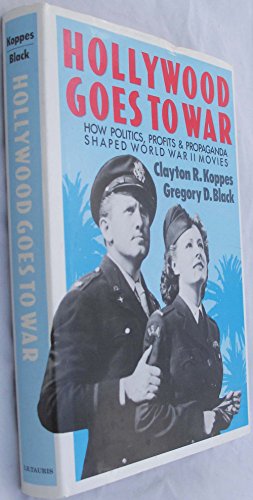

Conflicting interests and conflicting attitudes toward the war characterized the uneasy relationship between Washington and Hollywood during World War II. There was deep disagreement within the film-making community as to the stance towards the war that should be taken by one of America's most lucrative industries. Hollywood Goes to War reveals the powerful role played by President Franklin D. Roosevelt's Office of War Information--staffed by some of America's most famous intellectuals including Elmer Davis, Robert Sherwood, and Archibald MacLeish--in shaping the films that were released during the war years. Ironically, it was the film industry's own self-censorship system, the Hays Office and the Production Code Administration, that paved the way for government censors to cut and shape movies to portray an idealized image of a harmonious American society united in the fight against a common enemy. Clayton R. Koppes and Gregory D. Black reconstruct the power struggles between the legendary producers, writers, directors, stars and politicians all seeking to project their own visions onto the silver screen and thus to affect public perceptions and opinion.
"synopsis" may belong to another edition of this title.
About the Author:
Clayton R. Koppes is Houck Professor of Humanities and Chairman of the History Department at Oberlin College. Gregory D. Black is Chairman of the Communications Department at the University of Missouri, Kansas City, and Director of the American Culture program there.
Review:
"Beware of censors bearing high ideals. That's the message of "Hollywood Goes to War, a careful account of America's flirtation with cultural commissarship during World War II. . . . The descriptions of behind-the-scenes fiddling by bureaucrats (particularly with King Vidor's ambitious flop, 'An American Romance, ' which was 'transformed from a paean to rugged individualism into a celebration of management-labor cooperation') are instructive. They expose the political mentality of the time and the mentality of propagandists of all times."--Walter Goodman, "New York Times Book Review
"About this title" may belong to another edition of this title.
- PublisherTauris Parke
- Publication date1988
- ISBN 10 1850430748
- ISBN 13 9781850430742
- BindingHardcover
- Edition number1
- Number of pages384
- Rating
Buy New
Learn more about this copy
US$ 84.00
Shipping:
FREE
Within U.S.A.
Top Search Results from the AbeBooks Marketplace
Stock Image
Hollywood Goes to War: How Politics, Profits & Propaganda SHaped World War II Movies
Published by
Tauris Parke
(1988)
ISBN 10: 1850430748
ISBN 13: 9781850430742
New
Hardcover
Quantity: 1
Seller:
Rating

Book Description Hardcover. Condition: New. Seller Inventory # Abebooks470261
Buy New
US$ 84.00
Convert currency