Items related to Trollope On the Net
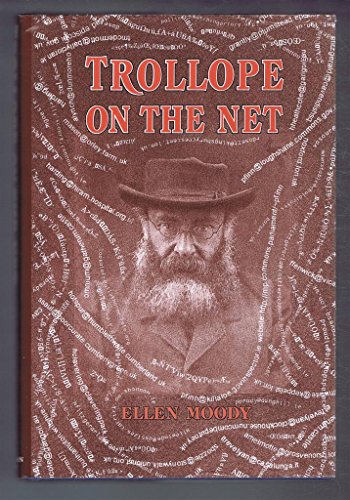

This book takes up two topics. The first is the British novelist Anthony Trollope (1815-1882), author of 47 novels and five volumes of short stories. The second is the Internet, specifically the creation of virtual communities through email and discussion lists, focusing, naturally enough, on discussion of the works of Trollope.
The first chapter tells how the group began and focuses on the conversation that ensued on Trollopes first novel: The Macdermots of Ballycloran. The second chapter widens the discussion to take in all of Trollope's Irish novels. The third records the conversation of the group on Trollope's novel of jealousy: He Knew He Was Right. The fourth chapter discusses Trollope's shorter novels. The fifth returns to the group conversations; this time the discussion of The Claverings. The sixth chapter discusses the illustrations of Trollope's novels. The seventh chapter records the group conversation on Trollope's most class-ridden novel, Lady Anna. The eighth chapter discusses trollope's life, through his An Autobiography. The last chapter sets the group conversation on Can You Forgive Her? into the context of the Palliser (or Parliamentary) novel sequence.
The Preface is by John Letts, Chairman of the (British) Trollope Society. The book contains twenty-four illustrations from the original editions of Trollope's novels.
The first chapter tells how the group began and focuses on the conversation that ensued on Trollopes first novel: The Macdermots of Ballycloran. The second chapter widens the discussion to take in all of Trollope's Irish novels. The third records the conversation of the group on Trollope's novel of jealousy: He Knew He Was Right. The fourth chapter discusses Trollope's shorter novels. The fifth returns to the group conversations; this time the discussion of The Claverings. The sixth chapter discusses the illustrations of Trollope's novels. The seventh chapter records the group conversation on Trollope's most class-ridden novel, Lady Anna. The eighth chapter discusses trollope's life, through his An Autobiography. The last chapter sets the group conversation on Can You Forgive Her? into the context of the Palliser (or Parliamentary) novel sequence.
The Preface is by John Letts, Chairman of the (British) Trollope Society. The book contains twenty-four illustrations from the original editions of Trollope's novels.
"synopsis" may belong to another edition of this title.
From the Inside Flap:
Anthony Trollope, whose range was greater than any other Victorian novelist and whose depth was equal to the greatest of them, retains the power to surprise us. His work, with its subtle analysis of human motives and feelings, keeps its relevance today. On the eve of the Millennium he is. in many ways, the most modern of the Victorians. It is therefore apt that he should lead the great Victorian writers into cyberspace. Trollope on the Net is an account, by its leader, Ellen Moody, of a group discussion of Trollope's works on Trollope-l, the world-wide Internet discussion group devoted to his study.
About the Author:
Many of Trollope's books, from massive three-deckers to his novellas and short stories, certainly deserve to be better known. Members of the group read an agreed programme of works. Most were lesser known ones, including the Irish books, The Claverings, Lady Anna and The Golden Lion of Granpere, but the group also discussed An Autobiography, He Knew He Was Right, Can You Forgive Her?, The Way We Live Now, Orley Farm and the Barsetshire novels, commenting on their form, content, structure, detail and meaning. The Internet discussion was both serious and informal, mostly harmonious, but with occasional tensions. It allowed a close focus on the works. These discussions are reported and the nature of the works summarized by Ellen Moody, whose scholarship and incisive analysis pervades the book. She argues that the Irish books, beginning with The Macdermots of Ballycloran, should be seen as a set to rival Barchester and the Pallisers, and discusses the part played by the original illustrations to Trollope's work as a whole.
It can be argued that Trollope's works until a few years ago commanded greater respect from readers than from academics. This pioneering work takes a giant step in redressing the balance. It will certainly send readers out for copies of the books they haven't read; it should encourage many more in the future to join in the discussion on Trollope-l of an author who continues to engage new readers 120 years after his death.
Ellen Moody lives in Alexandria, near Washington DC. She has taught at various colleges in and around New York City and Washington DC and is now at George Mason University. Her academic publications range from Elizabethan sonnet sequences to Jane Austen's Sense and Sensibility. She has been active on the Net since 1994.
"About this title" may belong to another edition of this title.
- PublisherBloomsbury Academic
- Publication date2003
- ISBN 10 1852851902
- ISBN 13 9781852851903
- BindingHardcover
- Edition number1
- Number of pages285
Buy New
Learn more about this copy
US$ 9.28
Shipping:
US$ 16.73
From United Kingdom to U.S.A.
Top Search Results from the AbeBooks Marketplace
Stock Image
Trollope On the Net
Published by
The Trollope Society, London, 1999
ISBN 10: 1852851902
ISBN 13: 9781852851903
New
Hardcover
First Edition
Quantity: 1 available
Seller: R.D.HOOKER, Christchurch, United Kingdom

Hardcover. Condition: New. Dust Jacket Condition: New. Plates (illustrator). 1st Edition. New. Seller Inventory # 024799
Stock Image
Trollope On the Net
Published by
Bloomsbury Academic, 2003
ISBN 10: 1852851902
ISBN 13: 9781852851903
New
Hardcover
Quantity: 1 available
Seller: GoldenWavesOfBooks, Fayetteville, TX, U.S.A.
Hardcover. Condition: new. New. Fast Shipping and good customer service. Seller Inventory # Holz_New_1852851902
Stock Image
Trollope On the Net
Published by
Bloomsbury Academic, 2003
ISBN 10: 1852851902
ISBN 13: 9781852851903
New
Hardcover
Quantity: 1 available
Seller: zeebooks, Foley, AL, U.S.A.
hardcover. Condition: New. May have light shelf wear due to warehouse storage and handling. Seller Inventory # 230401059
Stock Image
Trollope On the Net
Published by
Bloomsbury Academic, 2003
ISBN 10: 1852851902
ISBN 13: 9781852851903
New
Hardcover
Quantity: 1 available
Seller: Big Bill's Books, Wimberley, TX, U.S.A.
Hardcover. Condition: new. Brand New Copy. Seller Inventory # BBB_new1852851902
Stock Image
Trollope On The Net
Published by
Bloomsbury Academic, 2003
ISBN 10: 1852851902
ISBN 13: 9781852851903
New
Hardcover
Quantity: 1 available
Seller: Basi6 International, Irving, TX, U.S.A.
Condition: Brand New. New. US edition. Expediting shipping for all USA and Europe orders excluding PO Box. Excellent Customer Service. Seller Inventory # ABEJUNE24-248556
Stock Image
Trollope On the Net
Published by
Bloomsbury Academic, 2003
ISBN 10: 1852851902
ISBN 13: 9781852851903
New
Hardcover
Quantity: 1 available
Seller: The Book Spot, Sioux Falls, SD, U.S.A.
Hardcover. Condition: New. Seller Inventory # Abebooks528384
Stock Image
TROLLOPE ON THE NET
Published by
Bloomsbury Academic, 2003
ISBN 10: 1852851902
ISBN 13: 9781852851903
New
Hardcover
Quantity: 1 available
Seller: BennettBooksLtd, North Las Vegas, NV, U.S.A.
Condition: New. New. In shrink wrap. Looks like an interesting title! 1.2. Seller Inventory # Q-1852851902