
Items related to Angels: Selected Lectures
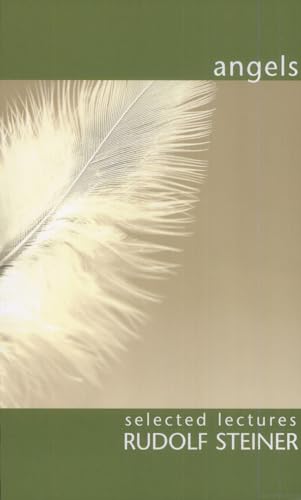
Synopsis
“Traditions or belief or theology cannot help us if we are to attain knowledge of the reality of higher beings through spiritual self-development and independence. Adherence to any such tradition would hinder our spiritual freedom, as would any categorized teaching or doctrine about the higher hierarchies.... Rudolf Steiner’s descriptions do not form a doctrine; this would be antagonistic to a new knowledge of the angels based on our spiritual individuality. The Illumine a path rather than asserting a truth.” ―Wolf-Ulrich Klünker
Religious and spiritual writings have always referred to beings of the spiritual hierarchies, especially those understood in Christian tradition as Angels, which are the closest to human beings and act as invisible human guides and companions. They influence the lives of individuals, the evolution of humanity, and the cosmos as a whole.
Through his own clairvoyant vision, Rudolf Steiner confirmed the existence of such spiritual beings and showed how modern minds can gain access to their world. As he explains in these inspiring lectures, it is important for us to understand and cooperate with the work of the angels today, as this is crucial for the continued development of humanity.
This collection of lectures was first published in German as Vom Wirken der Engel und anderer hierarchischer Wesenheiten by Verlag Geistesleben, Stuttgart (1991).
"synopsis" may belong to another edition of this title.
About the Author
Rudolf Steiner (1861-1925) was born in the small village of Kraljevec, Austro-Hungarian Empire (now in Croatia), where he grew up. As a young man, he lived in Weimar and Berlin, where he became a well-published scientific, literary, and philosophical scholar, known especially for his work with Goethe's scientific writings. At the beginning of the twentieth century, he began to develop his early philosophical principles into an approach to systematic research into psychological and spiritual phenomena. Formally beginning his spiritual teaching career under the auspices of the Theosophical Society, Steiner came to use the term Anthroposophy (and spiritual science) for his philosophy, spiritual research, and findings. The influence of Steiner's multifaceted genius has led to innovative and holistic approaches in medicine, various therapies, philosophy, religious renewal, Waldorf education, education for special needs, threefold economics, biodynamic agriculture, Goethean science, architecture, and the arts of drama, speech, and eurythmy. In 1924, Rudolf Steiner founded the General Anthroposophical Society, which today has branches throughout the world. He died in Dornach, Switzerland.
"About this title" may belong to another edition of this title.
Search results for Angels: Selected Lectures

Stock Image
Angels
Seller: Better World Books, Mishawaka, IN, U.S.A.
Seller rating 5 out of 5 stars

Condition: Very Good. Pages intact with possible writing/highlighting. Binding strong with minor wear. Dust jackets/supplements may not be included. Stock photo provided. Product includes identifying sticker. Better World Books: Buy Books. Do Good. Seller Inventory # 9087533-6
Stock Image
Angels
Seller: Better World Books, Mishawaka, IN, U.S.A.
Seller rating 5 out of 5 stars
Condition: Good. Pages intact with minimal writing/highlighting. The binding may be loose and creased. Dust jackets/supplements are not included. Stock photo provided. Product includes identifying sticker. Better World Books: Buy Books. Do Good. Seller Inventory # 51722616-75
Stock Image
Angels: Selected Lectures
Seller: ThriftBooks-Atlanta, AUSTELL, GA, U.S.A.
Seller rating 5 out of 5 stars
Paperback. Condition: Good. No Jacket. Pages can have notes/highlighting. Spine may show signs of wear. ~ ThriftBooks: Read More, Spend Less. Seller Inventory # G185584060XI3N00
Stock Image
Angels: Selected Lectures
Published by
Rudolf Steiner Press, lo, 1996
ISBN 10: 185584060X
ISBN 13: 9781855840607
Used
Soft cover
Seller: Blue Skye Books, Novato, CA, U.S.A.
Seller rating 5 out of 5 stars
Soft cover. Condition: Good. No Jacket. First edition thus. London: Rudolf Steiner Press, 1996. 1st edition, G/. Paperback has margin notes throughout, a few bent corners. A few illustrations. Includes notes and further reading. 10 lectures. 187 pp. LS2. Seller Inventory # 008392
Seller Image
Angels: Selected Lectures
Seller: WeBuyBooks, Rossendale, LANCS, United Kingdom
Seller rating 5 out of 5 stars
paperback. Condition: Good. Most items will be dispatched the same or the next working day. A copy that has been read but remains in clean condition. All of the pages are intact and the cover is intact and the spine may show signs of wear. The book may have minor markings which are not specifically mentioned. Seller Inventory # rev7527335703
Buy Used
US$ 9.68
US$ 7.02 shipping
Ships from United Kingdom to U.S.A.
Ships from United Kingdom to U.S.A.
Quantity: 1 available
Stock Image
Angels Selected Lectures
Seller: J. HOOD, BOOKSELLERS, ABAA/ILAB, Baldwin City, KS, U.S.A.
Seller rating 5 out of 5 stars
Paperback. 192pp. Discreet owner's blind-stamp and inked date inside, else near new, clean, tight and bright condition. Seller Inventory # 207406
Stock Image
ANGELS. Selected Lectures By Rudolf Steiner
Published by
Rudolf Steiner Press, Forest Row, East Sussex, 2001
ISBN 10: 185584060X
ISBN 13: 9781855840607
Used
Soft cover
Seller: Cornerstone Books, Santa Ana, CA, U.S.A.
Seller rating 5 out of 5 stars
Soft cover. Condition: Near Fine. Dust Jacket Condition: No Dust Jacket. In this work, the author confirmed the existence of angels as spiritual beings, and showed how modern minds could gain access to their world. As he explains in these lectures, it is important for us to understand and cooperate with the work of the angels today as this is crucial for the further development of humanity. The book contains illustrations, notes, sources for the lectures, and a list for further reading, This copy is clean and solid. Appears to be unread. Seller Inventory # 020290
Seller Image
Angels : Selected Lectures
Seller: GreatBookPrices, Columbia, MD, U.S.A.
Seller rating 5 out of 5 stars
Condition: As New. Unread book in perfect condition. Seller Inventory # 1485804
Seller Image
Angels : Selected Lectures
Seller: GreatBookPrices, Columbia, MD, U.S.A.
Seller rating 5 out of 5 stars
Condition: New. Seller Inventory # 1485804-n
Seller Image
Angels
Published by
Rudolf Steiner Press, GB, 1998
ISBN 10: 185584060X
ISBN 13: 9781855840607
New
Paperback
Seller: Rarewaves.com USA, London, LONDO, United Kingdom
Seller rating 5 out of 5 stars
Paperback. Condition: New. Religious and spiritual writings have always made reference to beings from the spiritual hierarchies, especially those known in Christian tradition as Angels. These spirits are the closest to human beings and act as our invisible guides and companions. They influence the life of the individual as well as the evolution of humanity and the cosmos. From his own clairvoyant vision, Rudolf Steiner confirmed the existence of such spiritual beings and showed how modern minds could gain access to their world. As he explains in these inspiring lectures, it is important for us to understand and cooperate with the work of the Angels today as this is crucial for the further development of humanity. Seller Inventory # LU-9781855840607
Buy New
US$ 22.00
Free Shipping
Ships from United Kingdom to U.S.A.
Ships from United Kingdom to U.S.A.
Quantity: 1 available