
Items related to Venice: The Rough Guide, Second Edition
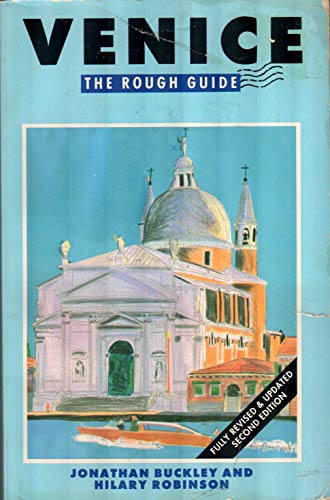
Synopsis
Slim, stylish and pocketable, Rough Guide DIRECTIONS Venice is full of ideas for long-weekends or flying visits to one of Europe''s most popular city break destinations. Providing accurate, up-to-date information this full-colour guide includes 28 themed sections – from "Death in Venice" to "Eighteenth-century Art" – to help you decide what to do, 24 hours a day. There are critical reviews of all the best places to stay, the best bars and the shops, all keyed to accompanying easy-to-use maps. Additional chapters cover festivals and special events from the Film Festival to the spectacular Regata Storica. The language section has a useful menu reader and handy phrases to have you speaking a little Italian by the time you arrive. All you need to get the most out of Venice.
"synopsis" may belong to another edition of this title.
About the Author
Written and researched by Jonathan Buckley with additional research by Charles Hebbert and Kate Hughes. Jonathan Buckley is the co-author of the Rough Guides to Tuscany and Umbria and Florence, and has published three novels: The Biography of Thomas Lang, Xerxes and Ghost MacIndoe.
Excerpt. © Reprinted by permission. All rights reserved.
When to go
Venice's tourist season is very nearly an all-year affair. Peak season is from April to October, when hotel rooms are virtually impossible to come by at short notice; if possible give the central part of this period a miss, and at all costs don't try to stay in July and August, when the crowds are at their fullest, the climate becomes oppressively hot and clammy, and many of the restaurants close down anyway. The other two popular spells are the Carnevale (leading up to Lent) and the weeks on each side of Christmas; again, hotels tend to be heavily booked, but at least the authentic life of the city isn't submerged during these festive periods, as it is by the summer inundation.
For the ideal combination of comparative peace and pleasant climate, the two or three weeks immediately preceding Easter is perhaps the best time of year. The days should be mostly mild - though the weather can be capricious - and finding accommodation won't present insuperable problems. Climatically the months at the end of the high season are somewhat less reliable: some November days are so clear that the Dolomites seem to start on the edge of the mainland, while others bring fogs that make it difficult to see from one bank of the Canal Grande to the other. However, the desertion of the streets in winter is magical, and the sight of the Piazza under floodwater is unforgettable. This aqua alta, as Venice's seasonal flooding is called, is an increasingly common occurrence between November and March, and you should be prepared for at least a couple of inconvenient days in the course of a two-week visit in winter. Duck-boards enable people to move dry-footed around the busiest parts of the city, but some low-lying areas - such as around Campo San Polo - become impassable to anyone without gumboots, and on certain freakish days the water rises so high that boats can be rowed along some of the streets.
If you want to see the city at its quietest, January is the month to go - take plenty of warm clothes, though, as the winds of the Adriatic can be savage, and you should be prepared to spend a while looking for a room, as many of the cheaper hotels close down for the really slack period.
"About this title" may belong to another edition of this title.
Search results for Venice: The Rough Guide, Second Edition

Seller Image
Venice: The Rough Guide, Second Edition
Seller: -OnTimeBooks-, Phoenix, AZ, U.S.A.
Seller rating 5 out of 5 stars

Condition: good. A copy that has been read, remains in good condition. All pages are intact, and the cover is intact. The spine and cover show signs of wear. Pages can include notes and highlighting and show signs of wear, and the copy can include "From the library of" labels or previous owner inscriptions. 100% GUARANTEE! Shipped with delivery confirmation, if you're not satisfied with purchase please return item! Ships via media mail. Seller Inventory # OTV.1858280362.G
Stock Image
Venice
Published by
Dorling Kindersley Publishing, Incorporated, 1994
ISBN 10: 1858280362
ISBN 13: 9781858280363
Used
Softcover
Seller: Better World Books, Mishawaka, IN, U.S.A.
Seller rating 5 out of 5 stars
Condition: Good. Pages intact with minimal writing/highlighting. The binding may be loose and creased. Dust jackets/supplements are not included. Stock photo provided. Product includes identifying sticker. Better World Books: Buy Books. Do Good. Seller Inventory # 68079264-6
Stock Image
Venice: The Rough Guide (Rough Guide Travel Guides)
Seller: AwesomeBooks, Wallingford, United Kingdom
Seller rating 5 out of 5 stars
Paperback. Condition: Very Good. Venice: The Rough Guide (Rough Guide Travel Guides) This book is in very good condition and will be shipped within 24 hours of ordering. The cover may have some limited signs of wear but the pages are clean, intact and the spine remains undamaged. This book has clearly been well maintained and looked after thus far. Money back guarantee if you are not satisfied. See all our books here, order more than 1 book and get discounted shipping. Seller Inventory # 7719-9781858280363
Buy Used
US$ 41.21
US$ 5.57 shipping
Ships from United Kingdom to U.S.A.
Ships from United Kingdom to U.S.A.
Quantity: 2 available
Stock Image
Venice: The Rough Guide (Rough Guide Travel Guides)
Seller: Bahamut Media, Reading, United Kingdom
Seller rating 5 out of 5 stars
Paperback. Condition: Very Good. This book is in very good condition and will be shipped within 24 hours of ordering. The cover may have some limited signs of wear but the pages are clean, intact and the spine remains undamaged. This book has clearly been well maintained and looked after thus far. Money back guarantee if you are not satisfied. See all our books here, order more than 1 book and get discounted shipping. Seller Inventory # 6545-9781858280363
Buy Used
US$ 40.50
US$ 9.44 shipping
Ships from United Kingdom to U.S.A.
Ships from United Kingdom to U.S.A.
Quantity: 2 available