
Items related to Tunisia: The Rough Guide, Second Edition
Synopsis
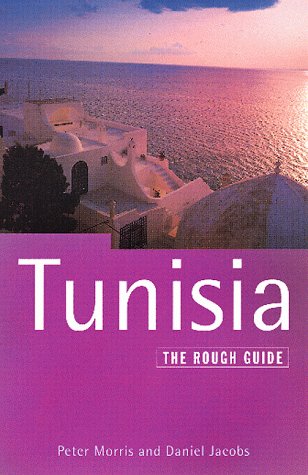
This is a practical and up-to-date handbook to North Africa's most popular and accessible destination. As well as a realistic round-up of the best beach resorts, the most accessible mountain hikes and the most luxuriant southern oases, the book gives a detailed perspective on the country's Roman, Arab and European background, with critical appraisal of the great sights from the medinas of Tunis and Kairouan to the spectacular Roman sites of El Jem and Dougga. Features of this new edition include a comprehensive guide to the Mediterranean beach resorts, whether you're fully independent or on an organized holiday; critical listings for every town on where to stay and eat, plus transport details; maps and plans showing locations of sites, hotels and restaurants; and many boxed supplements and context articles on history and culture, women's issues; politics and society; wildlife; Islam; and books and language.
"synopsis" may belong to another edition of this title.
About the Author
Daniel Jacobs has contributed to several Rough Guides, including West Africa, Morocco, Egypt and India. Peter Morris wrote the original edition of this book in 1985 and once played a game of football with Glen Hoddle.
Excerpt. © Reprinted by permission. All rights reserved.
Climate and seasons
Tunisia follows usual Mediterranean patterns of climate. The best time to travel, from a scenic point of view, is spring, when the south has not yet reached full heat and the north looks astonishingly fertile - above all, around the orchards and vineyards of Cap Bon. Be warned, though, that March and April are the dampest months of the year in the south and it can bucket down in the north.
Summer has mixed virtues. July and August are much the hottest months of the year - if only slightly more so than in the southern parts of Italy or Greece - and the one time you really do need to lapse into a local way of life, for example resting through the midday hours at a cafŽ or taking a siesta at your hotel. Obviously this goes above all for the deep south and the ksour (see Chapter Nine). On the more exposed beaches of the north coast, midsummer is actually a pull - some of them are only warm enough for swimming from around May until October. If you wait until autumn, you get the best of both worlds, with warm swimming and few crowds, even at the big resorts.
In winter, the north and the Tell can get distinctly cold; A·n Draham, the highest mountain town, commonly has a metre of snow, and in 1985 it even snowed at Bizerte on the Mediterranean coast. Tunis, Cap Bon and Sousse are not so much cold in winter as dull, with sporadic rains. But this is an ideal time for covering the ancient sites at leisure and then migrating south to Jerba's beaches and the Sahara.
"About this title" may belong to another edition of this title.
Search results for Tunisia: The Rough Guide, Second Edition

Stock Image
Tunisia: The Rough Guide, Second Edition
Published by
Rough Guides (edition 2), 1995
ISBN 10: 1858281393
ISBN 13: 9781858281391
Used
Paperback
Seller: BooksRun, Philadelphia, PA, U.S.A.
Seller rating 5 out of 5 stars

Paperback. Condition: Very Good. 2. It's a well-cared-for item that has seen limited use. The item may show minor signs of wear. All the text is legible, with all pages included. It may have slight markings and/or highlighting. Seller Inventory # 1858281393-11-1
Stock Image
Tunisia: The Rough Guide, Second Edition (4th ed)
Seller: Wonder Book, Frederick, MD, U.S.A.
Seller rating 5 out of 5 stars
Condition: Good. Good condition. 4th edition. A copy that has been read but remains intact. May contain markings such as bookplates, stamps, limited notes and highlighting, or a few light stains. Seller Inventory # A07A-05083
Stock Image
Tunisia: The Rough Guide, Second Edition
Seller: Half Price Books Inc., Dallas, TX, U.S.A.
Seller rating 5 out of 5 stars
paperback. Condition: Very Good. Connecting readers with great books since 1972! Used books may not include companion materials, and may have some shelf wear or limited writing. We ship orders daily and Customer Service is our top priority! Seller Inventory # S_324693501
Stock Image
Tunisia: The Rough Guide, Second Edition
Seller: ThriftBooks-Atlanta, AUSTELL, GA, U.S.A.
Seller rating 5 out of 5 stars
Paperback. Condition: Good. No Jacket. Pages can have notes/highlighting. Spine may show signs of wear. ~ ThriftBooks: Read More, Spend Less. Seller Inventory # G1858281393I3N00
Stock Image
Tunisia The Rough Guide
Published by
APA Publications, United Kingdom, London, 1995
ISBN 10: 1858281393
ISBN 13: 9781858281391
Used
Paperback
Seller: WorldofBooks, Goring-By-Sea, WS, United Kingdom
Seller rating 5 out of 5 stars
Paperback. Condition: Very Good. This is a practical and up-to-date handbook to North Africa's most popular and accessible destination. As well as a realistic round-up of the best beach resorts, the most accessible mountain hikes and the most luxuriant southern oases, the book gives a detailed perspective on the country's Roman, Arab and European background, with critical appraisal of the great sights from the medinas of Tunis and Kairouan to the spectacular Roman sites of El Jem and Dougga. Features of this new edition include a comprehensive guide to the Mediterranean beach resorts, whether you're fully independent or on an organized holiday; critical listings for every town on where to stay and eat, plus transport details; maps and plans showing locations of sites, hotels and restaurants; and many boxed supplements and context articles on history and culture, women's issues; politics and society; wildlife; Islam; and books and language. The book has been read, but is in excellent condition. Pages are intact and not marred by notes or highlighting. The spine remains undamaged. Seller Inventory # GOR004456261
Buy Used
US$ 3.85
US$ 7.49 shipping
Ships from United Kingdom to U.S.A.
Ships from United Kingdom to U.S.A.
Quantity: 3 available
Stock Image
Tunisia
Published by
Dorling Kindersley Publishing, Incorporated, 1995
ISBN 10: 1858281393
ISBN 13: 9781858281391
Used
Softcover
Seller: Better World Books Ltd, Dunfermline, United Kingdom
Seller rating 5 out of 5 stars
Condition: Very Good. Former library copy. Pages intact with possible writing/highlighting. Binding strong with minor wear. Dust jackets/supplements may not be included. Includes library markings. Stock photo provided. Product includes identifying sticker. Better World Books: Buy Books. Do Good. Seller Inventory # 56389185-20
Buy Used
US$ 6.26
US$ 6.69 shipping
Ships from United Kingdom to U.S.A.
Ships from United Kingdom to U.S.A.
Quantity: 1 available
Seller Image
Tunisia: The Rough Guide
Published by
Rough Guides, USA, 1995
ISBN 10: 1858281393
ISBN 13: 9781858281391
Used
Medium Trade Paperback
Seller: Manyhills Books, Traralgon, VIC, Australia
Seller rating 4 out of 5 stars

Medium Trade Paperback. Condition: Very Good. Medium Trade Paperback. *** PUBLISHING DETAILS: Rough Guides, USA, 1995. *** CONDITION: This book is in very good condition. *** ABOUT THIS BOOK: This is a practical and up-to-date handbook to North Africa's most popular and accessible destination. As well as a realistic round-up of the best beach resorts, the most accessible mountain hikes and the most luxuriant southern oases, the book gives a detailed perspective on the country's Roman, Arab and European background, with critical appraisal of the great sights from the medinas of Tunis and Kairouan to the spectacular Roman sites of El Jem and Dougga. Features of this new edition include a comprehensive guide to the Mediterranean beach resorts, whether you're fully independent or on an organized holiday; critical listings for every town on where to stay and eat, plus transport details; maps and plans showing locations of sites, hotels and restaurants; and many boxed supplements and context articles on history and culture, women's issues; politics and society; wildlife; Islam; and books and language. *** Quantity Available: 1. Category: Travel & Places; ISBN: 1858281393. ISBN/EAN: 9781858281391. Inventory No: 10020053. The photo of this book is of the actual book for sale. Seller Inventory # 10020053
Buy Used
US$ 9.78
US$ 42.00 shipping
Ships from Australia to U.S.A.
Ships from Australia to U.S.A.
Quantity: 1 available