
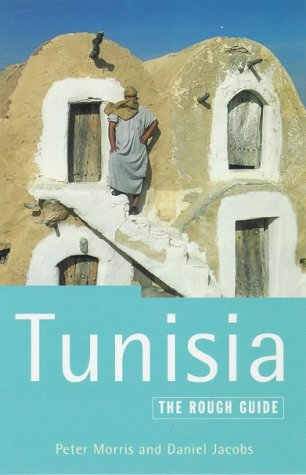
Items related to Tunisia: The Rough Guide, Fifth Edition
Synopsis
INTRODUCTION
Tunisia, the Arab world's most liberal nation, is recognizably Mediterranean in character and, in the north at least, predominantly European in style. Indeed, its popular image seems, at times, to verge on blandness, dominated as it is by the package holiday clichŽs of reliable sunshine, beautiful beaches and just a touch of the exotic. If this seems predictable, however, be assured that it forms only one side of the picture. Beyond the white sands of Jerba and Hammamet, there is a great deal to encourage more independent-minded travel: sub-Saharan oases and fortresses, medieval Islamic cities, and some of the finest of the world's surviving Roman sites.
Being such a compact country, especially when compared to its North African neighbours, Tunisia is also very easy to get around. Even with a fortnight's holiday, it is quite feasible to take in something of each of the country's aspects of coast, mountains and desert. The journey from Tunis, the capital on the north coast, to Tataouine, in the heart of the desert, can be made in a little over ten hours by bus or shared taxi and, while most trips are considerably shorter, the majority of journeys in Tunisia leave an impression of real travel in the transformation from one type of landscape and culture to another. This immediacy makes the country very satisfying to explore - an accessible introduction to the Arab world and to the African continent.
The country, sited strategically at a bottleneck in the Mediterranean, has long played an important role in North Africa's history. In antiquity it was the centre of Carthaginian civilization - the ruins of Carthage lie just outside modern Tunis - and, as that empire folded, it became the heartland of Roman Africa. Later, as Islam spread west, it was invaded and settled by Arabs, providing, in the cities of Kairouan, Tunis, Sousse and Sfax, vital power bases for North Africa's successive medieval dynasties. By the fifteenth century, the Europeans and Turks were also turning their attentions to Tunisia - a process that ultimately resulted in French colonization in the nineteenth century. Today, in its fourth decade of independence, Tunisia is a fully established modern nation and, by regional standards, relatively prosperous.
Where to go
If the diversity of Tunisia's past cultures and their legacy of monuments comes as a surprise to most first-time visitors, the range of scenery can be even more unexpected. In the north you find shady oak forests reminiscent of the south of France; in southern Tunisia, the beginning of the Sahara Desert, with colossal dunes, oases and rippling mirages. Between the extremes are lush citrus plantations, bare steppes with table-top mountains, and rolling hills as green and colourful (in spring) as any English county. Just offshore lie the sandy, palm-scattered islands of Jerba and Kerkennah.
In terms of monuments, the Roman sites of the north are the best-known, and, even if your interest is very casual, many are quite spectacular. At El Jem, in the Sahel, an amphitheatre which rivals Rome's Colosseum towers above the plain; at Dougga you can wander around a marvellously preserved Roman city, complete with all the accoutrements and buildings of second- and third-century prosperity; and there are sites, scarcely less grand, at Utica, Bulla Regia, Maktar and Sbe•tla, as well as the legendary, extensive and much-battered Carthage. They're all atmospheric places to visit and at the smaller sites off the excursion routes, you'll find yourself, as often as not, enjoying them alone.
Islamic Tunisia has a varied architectural legacy, taking in early Arab mosques - most outstandingly at Kairouan, the first Arab capital of North Africa - and the sophisticated Turkish buildings of Tunis, as well as the strange Berber fortresses of the south. The latter are accompanied by equally weird structures known as ghorfas, honeycombed storage and living quarters, and, at Matmata, by underground houses. All reward the small effort it takes to get off the more beaten tracks.
For more hedonistic pleasures, the coast is at its most beautiful - and most commercialized - around Hammamet, Sousse-Monastir and the island of Jerba (connected by causeway to the mainland). Hammamet is a genuinely international resort and its satellites are spreading; but, by Spanish or Greek island standards, developments remain relatively small-scale and unusually well planned. Escaping them entirely is not hard either: even within sight of Hammamet, on Cap Bon, there is still wild coastline; Bizerte, on the north coast, has good sands and more character; whilst the Kerkennah islands still retain genuine fishing villages. Your time should ideally include a spell in the desert and mountains as well as on the coast. The oases at Nefta and Tozeur are classically luxuriant, while further south, the ksour (extraordinary, fortified granaries) around Tataouine and dunes around Remada give the region an almost expeditionary feel (indeed, many people choose to go on organized "safaris", easily arranged locally). In the mountains of the northwest, Le Kef is an ideal place to rest up for a few days.
All of this ignores one of Tunisia's best facets - its people. While the hassle of some tourist areas (particularly for women) shouldn't be underestimated, visitors are often startled - and exhilarated - by the hospitality which they're shown when away from the major resorts. Few independent travellers leave Tunisia without having been invited, quite spontaneously, to stay with a family. Even during the 1991 Gulf War, when the government did not support the US and allied forces, and there was a certain amount of anti-Western rhetoric on the street, the slogans were usually transcended by Tunisians' extraordinary pleasure in meeting visitors. The politics of the wider world rarely hinder personal contact.
"synopsis" may belong to another edition of this title.
Excerpt. © Reprinted by permission. All rights reserved.
Climate and seasons
Tunisia follows usual Mediterranean patterns of climate. The best time to travel, from a scenic point of view, is spring, when the south has not yet reached full heat and the north looks astonishingly fertile - above all, around the orchards and vineyards of Cap Bon. Be warned, though, that March and April are the dampest months of the year in the south and it can bucket down in the north.
Summer has mixed virtues. July and August are much the hottest months of the year - if only slightly more so than in the southern parts of Italy or Greece - and the one time you really do need to lapse into a local way of life, for example resting through the midday hours at a caf or taking a siesta at your hotel. Obviously this goes above all for the deep south and the ksour (see Chapter Nine). On the more exposed beaches of the north coast, midsummer is actually a pull - some of them are only warm enough for swimming from around May until October. If you wait until autumn, you get the best of both worlds, with warm swimming and few crowds, even at the big resorts.
In winter, the north and the Tell can get distinctly cold; A n Draham, the highest mountain town, commonly has a metre of snow, and in 1985 it even snowed at Bizerte on the Mediterranean coast. Tunis, Cap Bon and Sousse are not so much cold in winter as dull, with sporadic rains. But this is an ideal time for covering the ancient sites at leisure and then migrating south to Jerba's beaches and the Sahara.
"About this title" may belong to another edition of this title.
Search results for Tunisia: The Rough Guide, Fifth Edition

Stock Image
Tunisia: The Rough Guide (5th Edn)
Seller: AwesomeBooks, Wallingford, United Kingdom
Seller rating 5 out of 5 stars

paperback. Condition: Very Good. Tunisia: The Rough Guide (5th Edn) This book is in very good condition and will be shipped within 24 hours of ordering. The cover may have some limited signs of wear but the pages are clean, intact and the spine remains undamaged. This book has clearly been well maintained and looked after thus far. Money back guarantee if you are not satisfied. See all our books here, order more than 1 book and get discounted shipping. Seller Inventory # 7719-9781858283364
Buy Used
US$ 3.88
US$ 5.51 shipping
Ships from United Kingdom to U.S.A.
Ships from United Kingdom to U.S.A.
Quantity: 2 available
Seller Image
Tunisia: The Rough Guide (5th Edn)
Seller: WeBuyBooks, Rossendale, LANCS, United Kingdom
Seller rating 5 out of 5 stars
paperback. Condition: Good. Most items will be dispatched the same or the next working day. A copy that has been read but remains in clean condition. All of the pages are intact and the cover is intact and the spine may show signs of wear. The book may have minor markings which are not specifically mentioned. Seller Inventory # rev9092831697
Buy Used
US$ 1.51
US$ 8.40 shipping
Ships from United Kingdom to U.S.A.
Ships from United Kingdom to U.S.A.
Quantity: 1 available
Seller Image
Tunisia: The Rough Guide, Fifth Edition
Seller: MusicMagpie, Stockport, United Kingdom
Seller rating 5 out of 5 stars
Condition: Very Good. 1791466143. 10/8/2026 1:29:03 PM. Seller Inventory # U9781858283364
Buy Used
US$ 3.87
US$ 7.34 shipping
Ships from United Kingdom to U.S.A.
Ships from United Kingdom to U.S.A.
Quantity: 1 available
Stock Image
Tunisia
Published by
Dorling Kindersley Publishing, Incorporated, 1998
ISBN 10: 1858283361
ISBN 13: 9781858283364
Used
Softcover
Seller: Better World Books Ltd, Dunfermline, United Kingdom
Seller rating 5 out of 5 stars
Condition: Good. Pages intact with minimal writing/highlighting. The binding may be loose and creased. Dust jackets/supplements are not included. Stock photo provided. Product includes identifying sticker. Better World Books: Buy Books. Do Good. Seller Inventory # 51787395-20
Buy Used
US$ 6.22
US$ 6.69 shipping
Ships from United Kingdom to U.S.A.
Ships from United Kingdom to U.S.A.
Quantity: 1 available
Stock Image
Tunisia: The Rough Guide (5th Edn)
Seller: Bahamut Media, Reading, United Kingdom
Seller rating 4 out of 5 stars

paperback. Condition: Very Good. This book is in very good condition and will be shipped within 24 hours of ordering. The cover may have some limited signs of wear but the pages are clean, intact and the spine remains undamaged. This book has clearly been well maintained and looked after thus far. Money back guarantee if you are not satisfied. See all our books here, order more than 1 book and get discounted shipping. Seller Inventory # 6545-9781858283364
Buy Used
US$ 4.68
US$ 9.34 shipping
Ships from United Kingdom to U.S.A.
Ships from United Kingdom to U.S.A.
Quantity: 2 available
Seller Image
Tunisia: The Rough Guide
Seller: Hamelyn, Madrid, M, Spain
Seller rating 5 out of 5 stars
Condition: As New. : Descubre Túnez con esta guía de Rough Guides, una compañera esencial para explorar este fascinante destino. Esta quinta edición ofrece una visión completa de las mejores playas y resorts, recomendaciones de lugares para comer y hospedarse, relatos de todos los lugares de interés y consejos para moverse por el país. Sumérgete en la historia, la cultura y la vida salvaje de Túnez, desde las ruinas de Cartago hasta los oasis del Sahara. Ideal para viajeros independientes que buscan una experiencia auténtica y enriquecedora. EAN: 9781858283364 Tipo: Libros Categoría: Otros Título: Tunisia: The Rough Guide Autor: Peter Morris| Daniel Jacobs Editorial: Rough Guides Idioma: en Páginas: 496 Formato: tapa blanda. Seller Inventory # Happ-2025-02-27-d10a2d70
Seller Image
The Rough Guide - 5: Tunisia: Fifth Edition
Seller: Bookbot, Prague, Czech Republic
Seller rating 5 out of 5 stars
Softcover. Condition: Fine. Leichte Kratzer / Abnutzungen / Druckstellen; Leichte Verschmutzung / Farbtonveränderung. Seller Inventory # e2f2cda2-94f9-4294-892e-ebc0914d744b
Buy Used
US$ 4.38
US$ 21.27 shipping
Ships from Czech Republic to U.S.A.
Ships from Czech Republic to U.S.A.
Quantity: 1 available
Stock Image
Tunisia: The Rough Guide (Tunisia (Rough Guides), 5th ed)
Seller: Brit Books, Milton Keynes, United Kingdom
Seller rating 4 out of 5 stars
Paperback. Condition: Used; Very Good. ***Simply Brit*** Welcome to our online used book store, where affordability meets great quality. Dive into a world of captivating reads without breaking the bank. We take pride in offering a wide selection of used books, from classics to hidden gems, ensuring there is something for every literary palate. All orders are shipped within 24 hours and our lightning fast-delivery within 48 hours coupled with our prompt customer service ensures a smooth journey from ordering to delivery. Discover the joy of reading with us, your trusted source for affordable books that do not compromise on quality. Seller Inventory # 2262803
Buy Used
US$ 5.06
US$ 21.39 shipping
Ships from United Kingdom to U.S.A.
Ships from United Kingdom to U.S.A.
Quantity: 1 available