
Items related to The Rough Guide to Kenya, 6th Edition
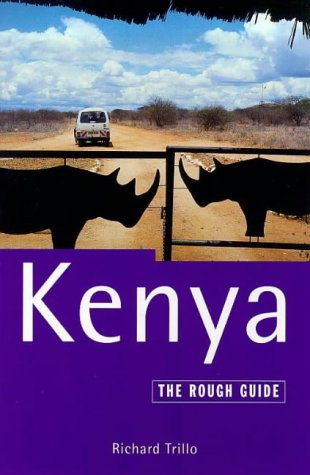
Synopsis
Introduction
With its long, tropical beaches and dramatic wildlife parks, Kenya has an exotic tourist image. Justifiably, for this is one of the most beautiful lands in Africa and a satisfyingly exciting and relatively easy place to travel, whether on a short holiday or an extended stay. The glossy hype of the brochures ignores the country's less salubrious images - its share of post-colonial poverty and political tension - but is true in its way and a valid enough reason for visiting. Treating Kenya as a succession of tourist sights, however, is neither the best nor the most enjoyable way of experiencing the country. Travelling independently, or at least with eyes open (something this book is designed to facilitate), you can enter the more genuine and very different world inhabited by most Kenyans: a ceaselessly active, contrasting landscape of farm and field, of streams and bush paths, of wooden and corrugated-iron shacks, tea shops and lodging houses, of crammed buses and pick-up vans, of overloaded bicycles, and of streets wandered by goats and chickens and toddlers.
You'll find a rewarding degree of openness and curiosity in Kenya's towns and villages, especially off the more heavily trodden tourist routes. Out in the wilds, there is an abundance of authentic scenic glamour - vistas of rolling savannah dotted with Maasai and their herds, high Kikuyu moorlands, dense forests bursting with bird song and insect noise, and stony, shimmering desert - all of which comes crisply into focus when experienced in the intense African context of an economically beleaguered country nearly four decades after Independence.
On the Indian Ocean coast, the palm-shaded strands of beach and an almost continuous, reef-protected lagoon are even better than the holiday brochures would have you imagine - no photo can really do it justice. And, of course, everywhere you go, Kenya's wildlife (see the colour section in the centre of this book and the complementary piece in Contexts) adds a startling and rapidly addictive dimension.
Shape and divisions
Physically, Kenya consists mostly of broad plateaux. The majority of the population live in the rugged highland areas in the southwest quarter of the country, where the ridges are a sea of shamba smallholdings and plantations. Ripping through the heart of these highlands sprawls the Great Rift Valley, an archetypal east African scene of dry, thorntree savannah, splashed with lakes and hot springs and studded by volcanoes. The walls of the Rift, and Mount Kenya itself, dominate the horizon for much of the time. Nairobi, the capital, feels like the centre of Kenya, but it lies at the highlands' southeastern edge, only a three-hour drive from the Tanzanian border. The famous game parks, watered by seasonal streams, are mostly located in savannah country on the highland fringes.
Further west, towards Lake Victoria, lies gentler countryside, less often visited. And in the north the land is desert or semi-desert - a surprise for many visitors - broken only by the natural highlight of Lake Turkana, almost unnaturally blue and gigantic in the wilderness.
Southeast of the highlands, separating the interior from the Indian Ocean, there are further arid lands. There, the barrier of the Taru Desert accounts in large part for the very different history and culture of the coast: a surprising and quite distinct Islamic Swahili civilization with a long historical record in its mosques, tombs, and ruins of ancient towns cut from the jungle.
"synopsis" may belong to another edition of this title.
Excerpt. © Reprinted by permission. All rights reserved.
Where to go
Where to travel clearly depends on your personal interests, and the time you have available. Nairobi (p.79) is usually only used as a gateway. The coast (p.408) and major game parks (p.356) are the most obvious targets, and if you come to Kenya on an inclusive tour you're likely to have your time divided between these two attractions. If you like the idea of walking or climbing, there's the hot, dry Rift Valley (p.232) and the high forests and moors of the Central Highlands - Mount Kenya itself is a major target and feasible for most people (p.190). For the best immersion in Kenyan life and culture, the western region (p.270) stands out as accessible and untouristy. For serious adventure, the north (p.545) is one of the most spectacular and memorable of all African regions.
More detailed rundowns on the specific character and appeal of each area are given in the chapter introductions. There too, and at times within the main text, you will find brief backgrounds on the various Kenyan peoples. The ten main language groups can no longer be wholly identified with the regions (and moves towards the cities and intermarriage are blurring distinctions), but some understanding of cultural differences is worth achieving. See also "People and Languages" (p.71) and "Religion and Etiquette" (p.73) in Basics.
When to go
As far as climate is concerned, Kenya has complicated and unpredictable shifts. Broadly, the pattern is that January and February are hot and dry, while from March to May it is hot and wet - this period is known as the "long rains". From June until October the weather is warm and dry, and then come the "short rains", making November and December warm and wet.
Temperatures, though, are determined largely by altitude. Nairobi's are surprisingly moderate compared with, say, London's (see box opposite). You can reckon on a drop of 6C (or 11F) in temperature for every 1000m you climb from sea level. The low-lying coast and the north remain hot all year round, while the highlands (which range to over 4000m and peak above 5000m) are generally warm or mild during the day but much cooler at night. Nairobi, higher than the Cairngorms or the Appalachians, can drop to 5C (41F).
At the highest altitudes, it may rain at almost any time. Western Kenya has a scattered rainfall pattern influenced by Lake Victoria. Temperatures tend to climb towards the end of the dry seasons, particularly in late February and early March, when it can become very humid before the rains break. It's worth noting that Kenya's climate has been drying out in recent years - the chart opposite paints a slightly rainier picture than you'll find in the country now.
The main tourist seasons tie in with the rainfall patterns: the biggest influxes are in December and January and, to a lesser extent, July and August. Dry season travel does have a number of advantages, not least a greater visibility of wildlife as animals are concentrated along the diminishing watercourses. July and August are probably the best months, overall, for game-viewing. October to January are the months with the clearest seas for snorkelling and diving - especially November. In the "long rains", the mountain parks are sometimes closed, as tracks are no longer drivable. But the rainy seasons shouldn't deter travel unduly: the rains usually come only in short afternoon or evening cloudbursts, and the landscape is strikingly green and fresh even if the skies may be cloudy. There are bonuses, too, in the lack of tourists: hotel and often car rental prices are reduced and people generally have more time for you.
If you're concerned about being part of a horde of tourist arrivals, don't let it bother you too much. Kenya's million-odd annual visitors are few compared with the tens of millions that descend on many Mediterranean countries. There is nothing to prevent you escaping the predictable bottlenecks and tourist "oases" for a completely separate experience and, even on an organized tour, you should not feel constrained to follow the prescribed plan.
"About this title" may belong to another edition of this title.
Search results for The Rough Guide to Kenya, 6th Edition

Stock Image
Kenya: The Rough Guide (Rough Guide Travel Guides)
Seller: AwesomeBooks, Wallingford, United Kingdom
Seller rating 5 out of 5 stars

Paperback. Condition: Very Good. Kenya: The Rough Guide (Rough Guide Travel Guides) This book is in very good condition and will be shipped within 24 hours of ordering. The cover may have some limited signs of wear but the pages are clean, intact and the spine remains undamaged. This book has clearly been well maintained and looked after thus far. Money back guarantee if you are not satisfied. See all our books here, order more than 1 book and get discounted shipping. . Seller Inventory # 7719-9781858284484
Buy Used
US$ 3.97
US$ 5.51 shipping
Ships from United Kingdom to U.S.A.
Ships from United Kingdom to U.S.A.
Quantity: 2 available
Stock Image
Kenya: The Rough Guide (Rough Guide Travel Guides)
Seller: WorldofBooks, Goring-By-Sea, WS, United Kingdom
Seller rating 5 out of 5 stars
Paperback. Condition: Very Good. The book has been read, but is in excellent condition. Pages are intact and not marred by notes or highlighting. The spine remains undamaged. Seller Inventory # GOR005139204
Buy Used
US$ 2.62
US$ 7.49 shipping
Ships from United Kingdom to U.S.A.
Ships from United Kingdom to U.S.A.
Quantity: 3 available
Seller Image
The Rough Guide to Kenya, 6th Edition
Seller: -OnTimeBooks-, Phoenix, AZ, U.S.A.
Seller rating 5 out of 5 stars
Condition: good. A copy that has been read, remains in good condition. All pages are intact, and the cover is intact. The spine and cover show signs of wear. Pages can include notes and highlighting and show signs of wear, and the copy can include "From the library of" labels or previous owner inscriptions. 100% GUARANTEE! Shipped with delivery confirmation, if you're not satisfied with purchase please return item! Ships via media mail. Seller Inventory # OTV.1858284481.G
Stock Image
The Rough Guide to Kenya, 6th Edition
Seller: HPB-Diamond, Dallas, TX, U.S.A.
Seller rating 5 out of 5 stars
paperback. Condition: Very Good. Connecting readers with great books since 1972! Used books may not include companion materials, and may have some shelf wear or limited writing. We ship orders daily and Customer Service is our top priority! Seller Inventory # S_483710781
Stock Image
The Rough Guide to Kenya
Seller: Better World Books: West, Reno, NV, U.S.A.
Seller rating 5 out of 5 stars
Condition: Very Good. Pages intact with possible writing/highlighting. Binding strong with minor wear. Dust jackets/supplements may not be included. Stock photo provided. Product includes identifying sticker. Better World Books: Buy Books. Do Good. Seller Inventory # 38478353-6
Stock Image
Kenya: The Rough Guide (Rough Guide Travel Guides)
Published by
Rough Guides 30/09/1999, 1999
ISBN 10: 1858284481
ISBN 13: 9781858284484
Used
Softcover
Seller: Bahamut Media, Reading, United Kingdom
Seller rating 4 out of 5 stars

Condition: Very Good. Shipped within 24 hours from our UK warehouse. Clean, undamaged book with no damage to pages and minimal wear to the cover. Spine still tight, in very good condition. Remember if you are not happy, you are covered by our 100% money back guarantee. Seller Inventory # 6545-9781858284484
Buy Used
US$ 6.33
US$ 9.34 shipping
Ships from United Kingdom to U.S.A.
Ships from United Kingdom to U.S.A.
Quantity: 2 available
Stock Image
Kenya: The Rough Guide (Rough Guide Travel)
Seller: BookEnds Bookstore & Curiosities, Ojai, CA, U.S.A.
Seller rating 5 out of 5 stars
Soft cover. Condition: Near Fine. 5th or later Edition. Softcover includes Maps, color and b/w illustrations and Index, 698 pages. Seller Inventory # 012666
Stock Image
The Rough Guide to Kenya, 6th Edition
Seller: Robinson Street Books, IOBA, Binghamton, NY, U.S.A.
Seller rating 4 out of 5 stars
Paperback. Condition: Very Good. Prompt Shipment, shipped in Boxes, Tracking PROVIDEDVery good used book, minor creasing and wear. Pressestimmen BY FAR THE MOST THOROUGH, ACCURATE AND ENTERTAINING GUIDE ON THE MARKET Wanderlust Africa Environment & Wildlife, Spring 2000 A good travel guide.most informative. Seller Inventory # bing89313477
Stock Image
Kenya: The Rough Guide (Rough Guide Travel Guides)
Seller: Orbiting Books, Hereford, United Kingdom
Seller rating 5 out of 5 stars
paperback. Condition: Very Good. Slight scratches to cover. Creased cover. Tanning to edge of pages Appears unread, may have minor damage from transit/storage. Next day dispatch from the UK (Mon-Fri). Please contact us with any queries. Seller Inventory # mon0000720011
Buy Used
US$ 7.00
US$ 16.05 shipping
Ships from United Kingdom to U.S.A.
Ships from United Kingdom to U.S.A.
Quantity: 1 available
Stock Image
Kenya: The Rough Guide (Rough Guide Travel Guides)
Seller: Revaluation Books, Exeter, United Kingdom
Seller rating 5 out of 5 stars
Paperback. Condition: Brand New. 6th edition. 8.00x5.25x1.00 inches. In Stock. Seller Inventory # 1858284481
Buy New
US$ 33.43
US$ 16.72 shipping
Ships from United Kingdom to U.S.A.
Ships from United Kingdom to U.S.A.
Quantity: 1 available