
Items related to The Rough Guide to Scotland (4th Edition)
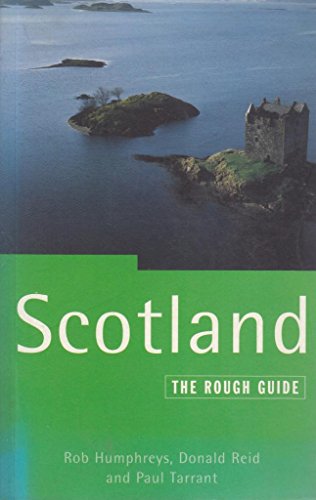
Synopsis
INTRODUCTION
Despite the best efforts of an unreliable climate, Scotland is, quite simply, a wonderfully rewarding and diverse country to visit, encompassing everything from the rolling countryside of the Borders to the wild and weather-beaten islands that arc around its west and north coasts. Many parts of the mainland are surprisingly accessible, with remote lochs, glens and Highland mountains lying less than two hours' travel from Edinburgh and Glasgow, two of Britain's most complex and intriguing cities.
For centuries Scotland was a divided nation, with Gaelic-speaking, cattle-raising clans concentrated to the north and west, and Lowland Scots, distinguished by their Norman-style feudal loyalties and allegiances, dominant to the south and east. These two linguistically distinct Scotlands developed along separate lines, their mutually antagonistic populations creating the first of several overlapping sources of national tension. After the Reformation, religion became another flashpoint, not just between Catholic and Protestant, but also amongst a host of reformist sects. Later still, industrialization divided the rural from the urban, generating the class-conscious, socialist-minded cities of central and eastern Scotland. Such tensions are still apparent today in the complex relationships between incomers and natives, between the landed and the stranded, and between the progressive core of the cities and the drug-ridden poverty of their fringes.
In the background lurks Scotland's problematic relationship with England. In 1707, the Act of Union united the English and Scottish parliaments, ending centuries of political strife and, shortly afterwards, in 1745, the failure of Bonnie Prince Charlie's Jacobite rebellion gave the English and their Scottish allies the chance to bring the Gaels to heel. However, the union only partly integrated the two nations, with Scotland retaining separate legal and education systems, and, to this day, its relationship with its southern neighbour remains anomalous. During the Conservative rule of the 1980s and 1990s, many Scots were left feeling disenfranchized by and resentful of the Westminster government. However, with the Labour party victory in the 1997 general election came manifesto promises of dramatic constitutional reform, endorsed in September of that year by a referendum in which Scots voted resoundingly in favour of their own parliament, with control over issues such as health, education, law and order and the environment. Elections for the historic Parliament, the first to be convened in Scotland for nearly 300 years, were held in May 1999, and it was officially vested with power by the Queen in an inspiring ceremony in Edinburgh on July 1, 1999. As the new Scottish government begins to make its mark on the day-to-day running of the country, larger questions about the future of the United Kingdom linger. The debate remains fierce, both within the new Parliament and without, over whether this quasi-federal devolution of power or complete independence within the European Union will better serve Scotland, and while most Scots welcome the way in which recent events have heightened their sense of identity and importance, they also acknowledge the challenges inherent in converting expectation and optimism into tangible progress.
"synopsis" may belong to another edition of this title.
About the Author
Rob Humphreys has been writing for Rough Guides since 1989. He has traveled extensively, writing Pocket Rough Guide London (with S. Cook), Pocket Rough Guide Prague, and The Rough Guide to London (with S. Cook). Rob is also the coauthor of The Rough Guide to Scotland, The Rough Guide to Scottish Highlands & Islands, and The Great Glen Rough Guides Snapshot Scotland.
Donald Reid was brought up in Glasgow, studied law in Edinburgh, and took to the high seas afterward to avoid the threat of an office. He worked on travel books and magazines in Cape Town, and has now settled back in Edinburgh, where he works as a freelance writer and editor. Reid is the author of The Rough Guide to Edinburgh and the coauthor of The Rough Guide to Scotland.
"About this title" may belong to another edition of this title.
Search results for The Rough Guide to Scotland (4th Edition)

Seller Image
The Rough Guide to Scotland (4th Edition)
Seller: Kayleighbug Books, IOBA, Cedar Grove, WV, U.S.A.
Seller rating 5 out of 5 stars

Trade Paperback. Condition: Very Good. No Stock Photos! We photograph every item. cover crease. From the cities of Glasgow and Edinburgh to the remote wilderness areas, this comprehensive guide explores Scotland's unique culture, history, music, and food, and points out the best pubs, bed and breakfasts, historical landmarks, and other places to visit. 32 maps. color photos. Seller Inventory # 051180
Stock Image
Scotland: The Rough Guide (Rough Guide Travel Guides)
Seller: AwesomeBooks, Wallingford, United Kingdom
Seller rating 5 out of 5 stars
Paperback. Condition: Very Good. Scotland: The Rough Guide (Rough Guide Travel Guides) This book is in very good condition and will be shipped within 24 hours of ordering. The cover may have some limited signs of wear but the pages are clean, intact and the spine remains undamaged. This book has clearly been well maintained and looked after thus far. Money back guarantee if you are not satisfied. See all our books here, order more than 1 book and get discounted shipping. Seller Inventory # 7719-9781858285085
Buy Used
US$ 3.87
US$ 5.49 shipping
Ships from United Kingdom to U.S.A.
Ships from United Kingdom to U.S.A.
Quantity: 2 available
Stock Image
The Rough Guide to Scotland
Published by
Penguin Publishing Group, 2000
ISBN 10: 1858285089
ISBN 13: 9781858285085
Used
Softcover
Seller: Better World Books, Mishawaka, IN, U.S.A.
Seller rating 5 out of 5 stars
Condition: Good. Pages intact with minimal writing/highlighting. The binding may be loose and creased. Dust jackets/supplements are not included. Stock photo provided. Product includes identifying sticker. Better World Books: Buy Books. Do Good. Seller Inventory # 51277731-20
Stock Image
Scotland: The Rough Guide (Rough Guide Travel Guides)
Seller: WorldofBooks, Goring-By-Sea, WS, United Kingdom
Seller rating 5 out of 5 stars
Paperback. Condition: Very Good. The book has been read, but is in excellent condition. Pages are intact and not marred by notes or highlighting. The spine remains undamaged. Seller Inventory # GOR002718645
Buy Used
US$ 4.43
US$ 7.46 shipping
Ships from United Kingdom to U.S.A.
Ships from United Kingdom to U.S.A.
Quantity: 2 available
Stock Image
The Rough Guide to Scotland
Published by
Penguin Publishing Group, 2000
ISBN 10: 1858285089
ISBN 13: 9781858285085
Used
Softcover
Seller: Better World Books Ltd, Dunfermline, United Kingdom
Seller rating 5 out of 5 stars
Condition: Good. Pages intact with minimal writing/highlighting. The binding may be loose and creased. Dust jackets/supplements are not included. Stock photo provided. Product includes identifying sticker. Better World Books: Buy Books. Do Good. Seller Inventory # 51277731-20
Buy Used
US$ 6.22
US$ 6.66 shipping
Ships from United Kingdom to U.S.A.
Ships from United Kingdom to U.S.A.
Quantity: 1 available
Stock Image
Scotland: The Rough Guide (Rough Guide Travel Guides)
Published by
Rough Guides 27/01/2000, 2000
ISBN 10: 1858285089
ISBN 13: 9781858285085
Used
Softcover
Seller: Bahamut Media, Reading, United Kingdom
Seller rating 4 out of 5 stars

Condition: Very Good. Shipped within 24 hours from our UK warehouse. Clean, undamaged book with no damage to pages and minimal wear to the cover. Spine still tight, in very good condition. Remember if you are not happy, you are covered by our 100% money back guarantee. Seller Inventory # 6545-9781858285085
Buy Used
US$ 4.33
US$ 9.30 shipping
Ships from United Kingdom to U.S.A.
Ships from United Kingdom to U.S.A.
Quantity: 3 available
Seller Image
The Rough Guide to Scotland
Seller: Hamelyn, Madrid, M, Spain
Seller rating 5 out of 5 stars
Condition: Fair. : La cuarta edición de 'The Rough Guide to Scotland' es una guía de viaje completa que ofrece información detallada sobre Escocia. Cubre una amplia gama de temas, desde vuelos y alojamiento hasta lugares de interés y actividades. Escrita por expertos como Paul Tarrant, Rob Humphreys y Donald Reid, esta guía es ideal para aquellos que planean un viaje a Escocia y desean explorar todo lo que este hermoso país tiene para ofrecer. EAN: 9781858285085 Tipo: Libros Categoría: Otros Título: The Rough Guide to Scotland Autor: Paul Tarrant| Rob Humphreys| Donald Reid Idioma: eng Páginas: 720 Formato: tapa blanda. Seller Inventory # Happ-2025-11-20-465a5ae2
Buy Used
US$ 11.59
US$ 13.48 shipping
Ships from Spain to U.S.A.
Ships from Spain to U.S.A.
Quantity: 1 available
Stock Image
Scotland: The Rough Guide (Rough Guide Travel Guides)
Seller: Brit Books, Milton Keynes, United Kingdom
Seller rating 4 out of 5 stars
Paperback. Condition: Used; Good. ***Simply Brit*** Welcome to our online used book store, where affordability meets great quality. Dive into a world of captivating reads without breaking the bank. We take pride in offering a wide selection of used books, from classics to hidden gems, ensuring there is something for every literary palate. All orders are shipped within 24 hours and our lightning fast-delivery within 48 hours coupled with our prompt customer service ensures a smooth journey from ordering to delivery. Discover the joy of reading with us, your trusted source for affordable books that do not compromise on quality. Seller Inventory # mon0000031546
Buy Used
US$ 5.04
US$ 21.31 shipping
Ships from United Kingdom to U.S.A.
Ships from United Kingdom to U.S.A.
Quantity: 4 available
Stock Image
Scotland: The Rough Guide (Rough Guide Travel Guides)
Seller: Brit Books, Milton Keynes, United Kingdom
Seller rating 4 out of 5 stars
Paperback. Condition: Used; Very Good. ***Simply Brit*** Welcome to our online used book store, where affordability meets great quality. Dive into a world of captivating reads without breaking the bank. We take pride in offering a wide selection of used books, from classics to hidden gems, ensuring there is something for every literary palate. All orders are shipped within 24 hours and our lightning fast-delivery within 48 hours coupled with our prompt customer service ensures a smooth journey from ordering to delivery. Discover the joy of reading with us, your trusted source for affordable books that do not compromise on quality. Seller Inventory # 3896896
Buy Used
US$ 5.04
US$ 21.31 shipping
Ships from United Kingdom to U.S.A.
Ships from United Kingdom to U.S.A.
Quantity: 7 available
Stock Image
Scotland: The Rough Guide (Rough Guide Travel Guides)
Seller: Greener Books, London, United Kingdom
Seller rating 4 out of 5 stars
Paperback. Condition: Used; Very Good. **SHIPPED FROM UK** We believe you will be completely satisfied with our quick and reliable service. All orders are dispatched as swiftly as possible! Buy with confidence! Greener Books. Seller Inventory # 4960110
Buy Used
US$ 5.04
US$ 26.66 shipping
Ships from United Kingdom to U.S.A.
Ships from United Kingdom to U.S.A.
Quantity: 7 available