
Items related to The Rough Guide to Brussels 2 (Rough Guide Mini Guides)
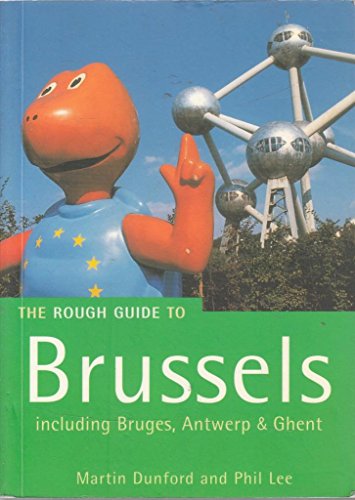
Synopsis
INTRODUCTION
Amongst Europeans, Brussels is best known as the home of the EU, which, given recent developments, is something of a poisoned chalice. But in fact, the EU neither dominates nor defines Brussels, merely forming one layer of a city that has become, in postwar years at least, a thriving, cosmopolitan metropolis. It’s a vibrant and fascinating place, with architecture and museums to rank among the best of Europe’s capitals, not to mention a superb restaurant scene and an energetic nightlife. Moreover, most of the key attractions are crowded into a centre that is small enough to be absorbed over a few days, its boundaries largely defined by a ring of boulevards known as the "petit ring".
The layout of this city centre embodies historic class divisions. For centuries, the ruling class has lived in the Upper Town, an area of wide boulevards and grand mansions which looks down on the maze of tangled streets that characterize the Lower Town, traditionally home to shopkeepers and workers. This fundamental class divide has in recent decades been further complicated by discord between Belgium’s two main linguistic groups, the Walloons (the French-speakers) and the Flemish (basically Dutch-speakers). As a cumbersome compromise, the city is Belgium’s only officially bilingual region and by law all road signs, street names and virtually all published information must be in both languages, even though French-speakers make up nearly eighty percent of Brussels’ population. As if this was not complex enough, since the 1960s the city has become much more ethnically diverse, with communities of immigrants from North Africa, Turkey, the Mediterranean and Belgium’s former colonies as well as European administrators, diplomats and business people, now comprising a quarter of the population.
Each of these communities leads a very separate, distinct existence and this is reflected in the number and variety of affordable ethnic restaurants. But, even without these, Brussels would still be a wonderful place to eat: its gastronomic reputation rivals that of Paris and London, and though restaurants are rarely inexpensive, there is great-value food to be had in many of the bars. The bars themselves can be sumptuous, basic, traditional or very fashionable – and one of the city’s real pleasures. Another pleasure is shopping: Belgian chocolates and lace are de rigueur, but it’s also hard to resist the charms of the city’s designer clothes shops and antique markets, not to mention the numerous specialist shops devoted to anything and everything from comic books to costume jewellery.
Many of the city’s best bars and restaurants are dotted round the city centre, within the petit ring, and this is where you’ll find the key sights. The Lower Town centres on the Grand-Place, one of Europe’s most magnificent squares, boasting a superb ensemble of Baroque guildhouses and an imposing Gothic town hall, while the Upper Town weighs in with a splendid cathedral and a fine art museum of international standing, the Musées Royaux des Beaux Arts. Few visitors stray beyond the petit ring, but there are delights here too, principally in St Gilles and Ixelles, two communes (or boroughs) just to the south of the centre, whose streets are studded with fanciful Art Nouveau residences, including the old home and studio of Victor Horta, the style’s prime exponent.
Belgium is such a small country, and the rail network so fast and efficient, that Brussels also makes a feasible base for many other day-trips. In Chapter Eight, we’ve selected five prime destinations, all within an hour’s travelling time – the battlefield at Waterloo, the abbey ruins of Villers-la-Ville and a trio of fascinating Flemish towns: Antwerp, Ghent and Bruges.
"synopsis" may belong to another edition of this title.
About the Author
Phil Lee is an experienced Rough Guides author whose taste for adventure began when he joined the Danish merchant navy. He has written Rough Guides to Amsterdam, Brussels, Mallorca and Menorca, England, the Netherlands, and Canada.
Martin Dunford is cofounder of the Rough Guides and the author of Rough Guide to Rome, Rough Guide to New York, and Rough Guide Directions Rome. Dunford is also coauthor of the Rough Guides to Belgium and Luxembourg, Brussels, the Netherlands, Italy, and Amsterdam.
Excerpt. © Reprinted by permission. All rights reserved.
CLIMATE
Brussels and Belgium enjoys a fairly standard temperate climate, with warm, if mild, summers and cold winters, without much snow. The warmest months are usually June, July and August, the coldest December and January, when short daylight hours and weak sunlight can make the weather seem colder (and wetter) than it actually is. Rain is always a possibility, even in summer, which actually sees a greater degree of rainfall than autumn or winter. Warm days in April and May, when the light has the clarity of springtime, are especially appealing.
"About this title" may belong to another edition of this title.
Search results for The Rough Guide to Brussels 2 (Rough Guide Mini Guides)

Seller Image
Brussels: The Mini Rough Guide (Second Edition) (Miniguides S.)
Seller: WeBuyBooks, Rossendale, LANCS, United Kingdom
Seller rating 5 out of 5 stars

paperback. Condition: Very Good. Most items will be dispatched the same or the next working day. A copy that has been read, but is in excellent condition. Pages are intact and not marred by notes or highlighting. The spine remains undamaged. Seller Inventory # rev5548758766
Buy Used
US$ 1.35
US$ 6.51 shipping
Ships from United Kingdom to U.S.A.
Ships from United Kingdom to U.S.A.
Quantity: 1 available
Stock Image
The Rough Guide to Brussels: Including Bruges, Ghent and Antwerp (Miniguides S.)
Published by
Rough Guides 29/11/2001, 2001
ISBN 10: 1858286832
ISBN 13: 9781858286839
Used
Softcover
Seller: AwesomeBooks, Wallingford, United Kingdom
Seller rating 5 out of 5 stars
Condition: Very Good. This book is in very good condition and will be shipped within 24 hours of ordering. The cover may have some limited signs of wear but the pages are clean, intact and the spine remains undamaged. This book has clearly been well maintained and looked after thus far. Money back guarantee if you are not satisfied. See all our books here, order more than 1 book and get discounted shipping. . Seller Inventory # 7719-9781858286839
Buy Used
US$ 4.68
US$ 5.45 shipping
Ships from United Kingdom to U.S.A.
Ships from United Kingdom to U.S.A.
Quantity: 1 available
Seller Image
The Rough Guide to Brussels 2 (Rough Guide Mini Guides)
Seller: MusicMagpie, Stockport, United Kingdom
Seller rating 5 out of 5 stars
Condition: Very Good. 1785946232. 8/5/2026 4:10:32 PM. Seller Inventory # U9781858286839
Buy Used
US$ 3.29
US$ 7.26 shipping
Ships from United Kingdom to U.S.A.
Ships from United Kingdom to U.S.A.
Quantity: 1 available
Stock Image
The Rough Guide to Brussels: Including Bruges, Ghent and Antwerp (Miniguides)
Seller: Reuseabook, Gloucester, GLOS, United Kingdom
Seller rating 5 out of 5 stars
Paperback. Condition: Used; Good. Dispatched, from the UK, within 48 hours of ordering. This book is in good condition but will show signs of previous ownership. Please expect some creasing to the spine and/or minor damage to the cover. Seller Inventory # CHL1253092
Buy Used
US$ 3.39
US$ 9.26 shipping
Ships from United Kingdom to U.S.A.
Ships from United Kingdom to U.S.A.
Quantity: 2 available
Stock Image
The Rough Guide to Brussels
Published by
Dorling Kindersley Publishing, Incorporated, 2002
ISBN 10: 1858286832
ISBN 13: 9781858286839
Used
Softcover
Seller: Better World Books Ltd, Dunfermline, United Kingdom
Seller rating 5 out of 5 stars
Condition: Good. Pages intact with minimal writing/highlighting. The binding may be loose and creased. Dust jackets/supplements are not included. Stock photo provided. Product includes identifying sticker. Better World Books: Buy Books. Do Good. Seller Inventory # 1595067-20
Buy Used
US$ 6.20
US$ 6.61 shipping
Ships from United Kingdom to U.S.A.
Ships from United Kingdom to U.S.A.
Quantity: 2 available
Stock Image
Brussels: The Mini Rough Guide (Second Edition) (Miniguides S.)
Seller: WorldofBooks, Goring-By-Sea, WS, United Kingdom
Seller rating 5 out of 5 stars
Paperback. Condition: Very Good. The book has been read, but is in excellent condition. Pages are intact and not marred by notes or highlighting. The spine remains undamaged. Seller Inventory # GOR003746817
Buy Used
US$ 6.10
US$ 7.41 shipping
Ships from United Kingdom to U.S.A.
Ships from United Kingdom to U.S.A.
Quantity: 4 available
Stock Image
The Rough Guide to Brussels: Including Bruges, Ghent and Antwerp (Miniguides S.)
Published by
Rough Guides 29/11/2001, 2001
ISBN 10: 1858286832
ISBN 13: 9781858286839
Used
Softcover
Seller: Bahamut Media, Reading, United Kingdom
Seller rating 4 out of 5 stars

Condition: Very Good. Shipped within 24 hours from our UK warehouse. Clean, undamaged book with no damage to pages and minimal wear to the cover. Spine still tight, in very good condition. Remember if you are not happy, you are covered by our 100% money back guarantee. Seller Inventory # 6545-9781858286839
Buy Used
US$ 4.34
US$ 9.23 shipping
Ships from United Kingdom to U.S.A.
Ships from United Kingdom to U.S.A.
Quantity: 1 available
Stock Image
Brussels: The Mini Rough Guide (Second Edition) (Miniguides S.)
Seller: Sell Books, Elland, YORKS, United Kingdom
Seller rating 5 out of 5 stars
paperback. Condition: Good. Our good condition books are generally good for reading but not for gifting or collecting. They could have imperfections such as creasing, fanning, inscriptions, margin notes, yellowing, staining on edge or cover or pages, bumps, scuffs, etc etc (sometimes multiple of these). It's a wide category that encompasses anything that isn't almost-new down to anything that is slightly better than poor. We would NOT recommend gifting Good books - these should be considered reading copies. Our books are dispatched from a Yorkshire former cotton mill. We list via barcode/ISBN so please note that the images are stock images and may not be the exact copy you receive, furthermore the details about edition and year might not be accurate as many publishers reuse the same ISBN for multiple editions and as we simply scan a barcode or enter an ISBN we do not check the validity of the edition data when listing. If you're looking for an exact edition please don't order (at least not without checking with us first, although we don't always have time to check). We aim to dispatch prompty, the service used will depend on order value and book size. We can ship to most countries, see our shipping policies. Payment is via Abe only. Seller Inventory # SBAB-L-BET00009-RAG-20231114-G
Buy Used
US$ 1.03
US$ 16.07 shipping
Ships from United Kingdom to U.S.A.
Ships from United Kingdom to U.S.A.
Quantity: 1 available
Stock Image
The Rough Guide to Brussels 2
Seller: Ammareal, Morangis, France
Seller rating 5 out of 5 stars
Softcover. Condition: Bon. Edition 2001. Ammareal reverse jusqu'à 15% du prix net de cet article à des organisations caritatives. ENGLISH DESCRIPTION Book Condition: Used, Good. Edition 2001. Ammareal gives back up to 15% of this item's net price to charity organizations. Seller Inventory # F-185-728
Buy Used
US$ 4.05
US$ 18.50 shipping
Ships from France to U.S.A.
Ships from France to U.S.A.
Quantity: 1 available