
Items related to The Mini Rough Guide to New York City
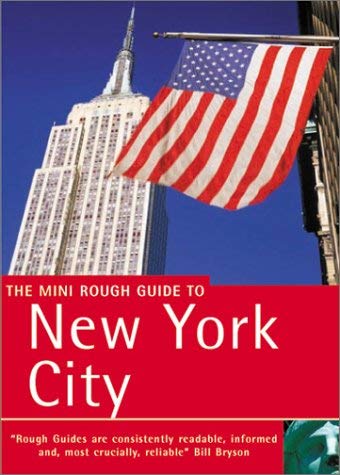
Synopsis
INTRODUCTION
The most beguiling city in the world, New York is an adrenaline-charged, history-laden place that holds immense romantic appeal for visitors. Wandering the streets here, you’ll cut between buildings that are icons to the modern age – and whether gazing at the flickering lights of the midtown skyscrapers as you speed across the Queensboro bridge, experiencing the 4am half-life downtown, or just wasting the morning on the Staten Island ferry, you really would have to be made of stone not to be moved by it all. There’s no place quite like it.
While the events of September 11, 2001, which demolished the World Trade Center, shook New York to its core, the populace responded resiliently under the composed aegis of then-Mayor Rudy Giuliani. Until the attacks, many New Yorkers loved to hate Giuliani, partly because they saw him as committed to making their city too much like everyone else’s. To some extent he succeeded, and during the late Nineties New York seemed cleaner, safer, and more liveable, as the city took on a truly international allure and shook off the more notorious aspects to its reputation. However, the maverick quality of New York and its people still shines as brightly as it ever did. Even in the aftermath of the World Trade Center’s collapse, New York remains a unique and fascinating city – and one you’ll want to return to again and again.
You could spend weeks in New York and still barely scratch the surface, but there are some key attractions – and some pleasures – that you won’t want to miss. There are the different ethnic neighborhoods, like lower Manhattan’s Chinatown and the traditionally Jewish Lower East Side (not so much anymore); and the more artsy concentrations of SoHo, TriBeCa, and the East and West Villages. Of course, there is the celebrated architecture of corporate Manhattan, with the skyscrapers in downtown and midtown forming the most indelible images. There are the museums, not just the Metropolitan and MoMA, but countless other smaller collections that afford weeks of happy wandering. In between sights, you can eat just about anything, at any time, cooked in any style; you can drink in any kind of company; and sit through any number of obscure movies. The more established arts – dance, theater, music – are superbly catered for; and New York’s clubs are as varied and exciting as you might expect. And for the avid consumer, the choice of shops is vast, almost numbingly exhaustive in this heartland of the great capitalist dream.
"synopsis" may belong to another edition of this title.
Excerpt. © Reprinted by permission. All rights reserved.
SOME ORIENTATION AND HIGHLIGHTS
New York City comprises the central island of Manhattan along with four outer boroughs Brooklyn, Queens, the Bronx, and Staten Island. Manhattan, to many, is New York whatever your interests, it s here that you ll spend the most time and are likely to stay. New York is very much a city of neighborhoods and is best explored on foot a fact reflected in the chapters of this guide, which are divided to reflect the best walking tours.
The guide starts at the southern tip of the island and moves north: offshore, the Statue of Liberty and Ellis Island comprise the first section of New York (and America) that most nineteenth-century immigrants would have seen. The Financial District takes in the skyscrapers and historic buildings of Manhattan s southern reaches and was hardest hit by the destruction of perhaps its most famous landmarks, the Twin Towers of the World Trade Center. Just northeast is the area around City Hall, New York s well-appointed municipal center, which adjoins TriBeCa, known for its swanky restaurants, galleries, and nightlife. Moving east, Chinatown is Manhattan s most populous ethnic neighborhood, a vibrant locale that s great for food and shopping. Nearby, Little Italy bears few traces of the once-strong immigrant presence, while the Lower East Side, the city s traditional gateway neighborhood for new immigrants, is nowadays scattered with trendy bars and clubs. To the west, SoHo is one of the premier districts for galleries and the commercial art scene, not to mention designer shopping. Continuing north, the West and East Villages form a focus of bars, restaurants, and shops catering to students and would-be bohemians and of course tourists. Chelsea is a largely residential neighborhood that is now mostly known for its gay scene and art galleries that borders on Manhattan s old Garment District. Murray Hill contains the city s largest skyscraper and most enduring symbol, the Empire State Building.
Beyond 42nd Street, the main east west artery of midtown, the character of the city changes quite radically, and the skyline becomes more high-rise and home to some of New York s most awe-inspiring, neck-cricking architecture. There are also some superb museums and the city s best shopping as you work your way north up Fifth Avenue as far as 59th Street. Here, the classic Manhattan vistas are broken by the broad expanse of Central Park, a supreme piece of nineteenth-century landscaping, without which life in Manhattan would be unthinkable. Flanking the park, the mostly residential and fairly affluent Upper West Side boasts Lincoln Center, Manhattan s temple to the performing arts, the American Museum of Natural History, and Riverside Park along the Hudson River. On the other side of the park, the Upper East Side is wealthier and more grandiose, with its nineteenth-century millionaires mansions now transformed into a string of magnificent museums known as the "Museum Mile," the most prominent being the vast Metropolitan Museum of Art. Alongside is a patrician residential neighborhood that boasts some of the swankiest addresses in Manhattan, and a nest of designer shopping along Madison Avenue in the seventies. Immediately above Central Park, Harlem, the historic black city-within-a-city, has a healthy sense of an improving go-ahead community; a jaunt further north is most likely required only to see the unusual Cloisters, a nineteenth-century mock-up of a medieval monastery, packed with great European Romanesque and Gothic art and (transplanted) architecture.
WHEN TO GO
New York s climate ranges from the stickily hot and humid in mid-summer to well below freezing in January and February: deep midwinter and high summer (many people find the city unbearable in July and August) are much the worst time you could come. Spring is gentle, if unpredictable, and usually wet, while fall is perhaps the best season: come at either time and you ll find it easier to get things done and the people more welcoming. Whatever time of year you come, dress in layers: buildings tend to be overheated during winter months and air-conditioned to the point of iciness in summer. Also bring comfortable and sturdy shoes you re going to be doing a lot of walking.
"About this title" may belong to another edition of this title.
Search results for The Mini Rough Guide to New York City

Seller Image
The Rough Guide To New York (Mini) (Miniguides S.)
Seller: WeBuyBooks, Rossendale, LANCS, United Kingdom
Seller rating 5 out of 5 stars

paperback. Condition: Like New. Most items will be dispatched the same or the next working day. An apparently unread copy in perfect condition. Dust cover is intact with no nicks or tears. Spine has no signs of creasing. Pages are clean and not marred by notes or folds of any kind. Seller Inventory # rev5502232896
Buy Used
US$ 1.50
US$ 6.85 shipping
Ships from United Kingdom to U.S.A.
Ships from United Kingdom to U.S.A.
Quantity: 1 available
Stock Image
The Mini Rough Guide to New York City (Miniguides S.)
Published by
Rough Guides 30/05/2002, 2002
ISBN 10: 1858288762
ISBN 13: 9781858288765
Used
Softcover
Seller: AwesomeBooks, Wallingford, United Kingdom
Seller rating 5 out of 5 stars
Condition: Very Good. This book is in very good condition and will be shipped within 24 hours of ordering. The cover may have some limited signs of wear but the pages are clean, intact and the spine remains undamaged. This book has clearly been well maintained and looked after thus far. Money back guarantee if you are not satisfied. See all our books here, order more than 1 book and get discounted shipping. . Seller Inventory # 7719-9781858288765
Buy Used
US$ 3.20
US$ 5.46 shipping
Ships from United Kingdom to U.S.A.
Ships from United Kingdom to U.S.A.
Quantity: 4 available
Stock Image
The Rough Guide to New York
Published by
Dorling Kindersley Publishing, Incorporated, 2002
ISBN 10: 1858288762
ISBN 13: 9781858288765
Used
Softcover
Seller: Better World Books: West, Reno, NV, U.S.A.
Seller rating 5 out of 5 stars
Condition: Fine. Miniature. Used book that is in almost brand-new condition. May contain a remainder mark. Better World Books: Buy Books. Do Good. Seller Inventory # 48425051-75
Stock Image
The Mini Rough Guide to New York City (Miniguides)
Seller: Reuseabook, Gloucester, GLOS, United Kingdom
Seller rating 5 out of 5 stars
Paperback. Condition: Used; Good. Dispatched, from the UK, within 48 hours of ordering. This book is in good condition but will show signs of previous ownership. Please expect some creasing to the spine and/or minor damage to the cover. Seller Inventory # CHL1290377
Buy Used
US$ 3.06
US$ 9.27 shipping
Ships from United Kingdom to U.S.A.
Ships from United Kingdom to U.S.A.
Quantity: 2 available
Stock Image
The Mini Rough Guide to New York City (Miniguides S.)
Published by
Rough Guides 30/05/2002, 2002
ISBN 10: 1858288762
ISBN 13: 9781858288765
Used
Softcover
Seller: Bahamut Media, Reading, United Kingdom
Seller rating 4 out of 5 stars

Condition: Very Good. Shipped within 24 hours from our UK warehouse. Clean, undamaged book with no damage to pages and minimal wear to the cover. Spine still tight, in very good condition. Remember if you are not happy, you are covered by our 100% money back guarantee. Seller Inventory # 6545-9781858288765
Buy Used
US$ 4.34
US$ 9.24 shipping
Ships from United Kingdom to U.S.A.
Ships from United Kingdom to U.S.A.
Quantity: 4 available
Stock Image
The Mini Rough Guide to New York City (Miniguides)
Seller: Greener Books, London, United Kingdom
Seller rating 4 out of 5 stars
Paperback. Condition: Used; Good. **SHIPPED FROM UK** We believe you will be completely satisfied with our quick and reliable service. All orders are dispatched as swiftly as possible! Buy with confidence! Greener Books. Seller Inventory # mon0001995087
Buy Used
US$ 5.00
US$ 26.48 shipping
Ships from United Kingdom to U.S.A.
Ships from United Kingdom to U.S.A.
Quantity: 6 available
Stock Image
The Mini Rough Guide to New York City (Miniguides)
Seller: Greener Books, London, United Kingdom
Seller rating 4 out of 5 stars
Paperback. Condition: Used; Very Good. **SHIPPED FROM UK** We believe you will be completely satisfied with our quick and reliable service. All orders are dispatched as swiftly as possible! Buy with confidence! Greener Books. Seller Inventory # 4920274
Buy Used
US$ 5.00
US$ 26.48 shipping
Ships from United Kingdom to U.S.A.
Ships from United Kingdom to U.S.A.
Quantity: 6 available
Stock Image
The Rough Guide To New York (Mini) (Miniguides S.)
Seller: AZ Books, Tonbridge, KENT, United Kingdom
Seller rating 1 out of 5 stars

Condition: Very Good. Seller Inventory # 39522
Buy Used
US$ 5.32
US$ 34.56 shipping
Ships from United Kingdom to U.S.A.
Ships from United Kingdom to U.S.A.
Quantity: 1 available
Stock Image
The Rough Guide To New York (Mini) (Miniguides S.)
Published by
Rough Guides, 2002
ISBN 10: 1858288762
ISBN 13: 9781858288765
New
Softcover
First Edition
Seller: AZ Books, Tonbridge, KENT, United Kingdom
Seller rating 1 out of 5 stars
Softcover. Condition: New. First Edition. Free shipping. Dispatch on all orders before 3pm same day. | SHOP & WAREHOUSE OVERSTOCK - LOWEST PRICE ONLINE! This book is in New condition. | The Rough Guide To New York (Mini) (Miniguides S.) | Publication Date: 2002-05-30 00:00:00 | Language: english | Pages: 400 | Format: Softcover | Weight: 0.53 pounds | ISBN: 9781858288765 | Seller SKU: U1-S-PZ-new_HK_12304. Seller Inventory # 24098
Buy New
US$ 10.91
US$ 34.56 shipping
Ships from United Kingdom to U.S.A.
Ships from United Kingdom to U.S.A.
Quantity: 1 available