
Items related to Crossing Borders
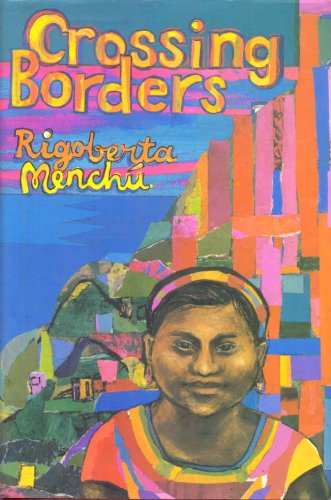
Synopsis
The second installment of the life of the Nobel Peace prize-winning activist. Rigoberta Menchu is a worldwide symbol of courage in the continuing fight of indigenous peoples for justice. The Guatemalan Indian leader first came to the world’s attention with the publication of her autobiography “I, Rigoberta Menchu” in 1984. The book chronicled the terrible hardship of her childhood in Guatemala, including the murder of her brother, father and mother at the hands of a ruthless military. But it also captured the dignity of Indian daily life in a cadence that was beautifully simple. “I, Rigoberta Menchu” has become an international bestseller with one million copies in print. In “Crossing Borders,” Menchu picks up her story where the first volume left off. In 1981 she fled from Guatemala to Mexico City, deeply traumatized by the violence against her family and community. She resolved to dedicate her life to the Indian cause and painstakingly built a solidarity movement with the Indians living as outlaws in Guatemala’s mountains. In 1988 she returned to Guatemala as a representative of the opposition in exile. She was immediately arrested and was released only after an international outcry. Danielle Mitterand and Desmond Tutu were amongst the leading names in an international campaign to secure the Nobel Peace Prize for Menchu which she was awarded in 1992. The long haul to build effective representation for indigenous peoples has taken Menchu around the world and its telling is a thread throughout this book. But “Crossing Borders” is more than an account of a political campaign. In these pages Menchu also talks with deep affection about her mother and the traditions of her Mayan background. In her introduction to “I, Rigoberta Menchu” the ethnologist Elizabeth Burgos Debray writes: ‘Her voice is so heart-rendingly beautiful because it speaks to us of every facet of the life of a people and their oppressed culture. Her story is overwhelming because what she has to say is simple and true’. In “Crossing Borders” that story continues to enchant and inspire.
"synopsis" may belong to another edition of this title.
About the Author
Since 1981, Rigoberta Menchu has labored tirelessly to increase international awareness of the plight of Guatemala's indigenous people. She was awarded the Nobel Peace Prize in 1992 for her efforts to bring about an enduring reconciliation in Guatemala, as well as her defense of indigenous rights around the world.
Reviews
Crossing Borders bears thoughtful reading. It is not a perfectly argued work; Menchu often undercuts herself by lapsing into polemical hyperbole.... But Menchu's critiques of the modern bureaucrats and systems she discovered abroad are nakedly devastating.
Part memoir, part political manifesto, this impassioned testimony by the Guatemalan Maya human-rights activist and winner of the 1992 Nobel Peace Prize is a stirring sequel to her 1984 autobiography, I, Rigoberta Menchu. The author, who fled Guatemala in 1980 after both her parents were murdered by a right-wing military regime, launched, while in exile in Mexico, a movement for the rights of indigenous peoples. Although she notes that Guatemala has made progress toward becoming a pluralistic, multi-ethnic society, it remains, she charges, "a bloodthirsty, repressive, racist, dirty, backward country," where big landowners and the military oppress the poor and deprive native peoples of basic rights. Menchu-Tum explicates Maya customs, myths and a moral cosmology rooted in reverence for Mother Earth, writing movingly of her close relationship with her mother, who was a peasant leader, midwife and healer. Recounting her 12 years of lobbying at the U.N., she argues that that world body can become the main problem-solving force only if it gives a greater voice to nongovernmental organizations representing the dispossessed. Menchu-Tum makes a good case for the U.N.'s adoption of a proposed universal declaration to protect the world's indigenous peoples from ethnocide, massacres and discrimination. Her political agenda of equitable land distribution and struggle against racism gives her book broad appeal. Illustrations not seen by PW. (Aug.) FYI: I, Rigoberta Menchu has sold more than 500,000 copies worldwide in 13 languages.
Copyright 1998 Reed Business Information, Inc.
The author continues and deepens the testimony first presented in her 1980s autobiography, I, Rigoberta Mench (not reviewed). Mench begins here with her being awarded the Nobel Peace Prize in 1992 and her subsequent return to her native Guatemala in 1994. In exile for most of the 20 years previous, she had spent her time campaigning ceaselessly against the murderous counterinsurgency campaigns in Guatemala that claimed the lives of thousands, including her parents and several siblings. She became a strong advocate for human rights, especially for the rights of the indigenous people of her own land and throughout the world. The Nobel Peace Prize has, in fact, brought her little peace. Upon his return to Guatemala, her nephew, mistaken for her son, is immediately kidnaped (and, thankfully, returned). Weeks before the countrys first reasonably open elections in a generation, the army carries out yet another massacre, in the village of Xaman. Amid this setting of hope and despair, Mench meditates on several themes. She speaks lyrically (the translation seems wonderful) of the sweet mysteries of her Mayan childhood, of the ``cosmovision'' of her people, of the wisdom, boldness, and courage of her mother. These make up her identity, her nawaal, the shadow that accompanies her and sustains her. She tells of the frustrations of her work at the United Nations, where the simple recognition of the existence of indigenous people was a major struggle. She reveals dreams, spiritual and political, that are yet to be. She dreams of a world accepting of difference, of ``pluri-cultural'' societies, of a time when her ``Indian'' face will not mark her as the other, of a time of justice. She dreams of her hair growing white, a symbol of wisdom that her mother, whose life was cut short, was denied. Mench emerges here as precisely what she is, a hero. (maps, not seen) -- Copyright ©1998, Kirkus Associates, LP. All rights reserved.
Menchu, awarded the Nobel Peace Prize in 1992 for her efforts to end the oppression of indigenous groups in Guatemala, vividly juxtaposes human rights violations with the beautiful customs and dignity of her people in this continuation of her life story (following I, Rigoberta Menchu, LJ 11/1/84). Menchu's simple, eloquent voice recounts her arrest in Guatemala City in 1988, the massacre of villagers in 1995, her worldwide travels as an ambassador for indigenous peoples, her return to her childhood village of Chimel, and the ideal of community and natural beauty that, nevertheless, was razed by the Guatemalan military. Wright's translation captures Menchu's courage and empathy in this inspiring tale. Recommended for collections on human rights and for all public libraries.?Rebecca Martin, Northern Illinois Univ., DeKalb
Copyright 1998 Reed Business Information, Inc.
"About this title" may belong to another edition of this title.
Search results for Crossing Borders

Stock Image
Crossing Borders
Seller: World of Books (was SecondSale), Montgomery, IL, U.S.A.
Seller rating 5 out of 5 stars

Condition: Acceptable. Item in acceptable condition! Textbooks may not include supplemental items i.e. CDs, access codes etc. Seller Inventory # 00100257528
Stock Image
Crossing Borders
Seller: World of Books (was SecondSale), Montgomery, IL, U.S.A.
Seller rating 5 out of 5 stars
Condition: Good. Item in good condition. Textbooks may not include supplemental items i.e. CDs, access codes etc. Seller Inventory # 00099519181
Seller Image
Crossing Borders
Seller: Greenworld Books, Arlington, TX, U.S.A.
Seller rating 5 out of 5 stars
Condition: very_good. Fast Free Shipping â" Very Good condition book with a firm cover and clean pages. Shows normal use and some light wear or limited notes markings. A solid, nice copy to enjoy. Seller Inventory # GWV.1859848931.VG
Stock Image
Crossing Borders
Published by
Verso (edition First Edition), 1998
ISBN 10: 1859848931
ISBN 13: 9781859848937
Used
Hardcover
First Edition
Seller: BooksRun, Philadelphia, PA, U.S.A.
Seller rating 5 out of 5 stars
Hardcover. Condition: Very Good. First Edition. With dust jacket. It's a well-cared-for item that has seen limited use. The item may show minor signs of wear. All the text is legible, with all pages included. It may have slight markings and/or highlighting. Seller Inventory # 1859848931-11-6-29
Stock Image
Crossing Borders
Seller: Once Upon A Time Books, Siloam Springs, AR, U.S.A.
Seller rating 4 out of 5 stars

hardcover. Condition: Acceptable. This is a used book. It may contain highlighting/underlining and/or the book may show heavier signs of wear . It may also be ex-library or without dustjacket. This is a used book. It may contain highlighting/underlining and/or the book may show heavier signs of wear . It may also be ex-library or without dustjacket. Seller Inventory # mon0001401416
Stock Image
Crossing Borders
Seller: HPB-Ruby, Dallas, TX, U.S.A.
Seller rating 5 out of 5 stars
Hardcover. Condition: Very Good. Connecting readers with great books since 1972! Used books may not include companion materials, and may have some shelf wear or limited writing. We ship orders daily and Customer Service is our top priority! Seller Inventory # S_397351883
Stock Image
Crossing Borders
Seller: HPB-Movies, Dallas, TX, U.S.A.
Seller rating 4 out of 5 stars
hardcover. Condition: Very Good. Connecting readers with great books since 1972! Used books may not include companion materials, and may have some shelf wear or limited writing. We ship orders daily and Customer Service is our top priority! Seller Inventory # S_474236191
Stock Image
Crossing Borders : An Autobiography
Seller: Better World Books, Mishawaka, IN, U.S.A.
Seller rating 5 out of 5 stars
Condition: Very Good. Pages intact with possible writing/highlighting. Binding strong with minor wear. Dust jackets/supplements may not be included. Stock photo provided. Product includes identifying sticker. Better World Books: Buy Books. Do Good. Seller Inventory # 9298326-6
Stock Image
Crossing Borders : An Autobiography
Seller: Better World Books, Mishawaka, IN, U.S.A.
Seller rating 5 out of 5 stars
Condition: Good. Pages intact with minimal writing/highlighting. The binding may be loose and creased. Dust jackets/supplements are not included. Stock photo provided. Product includes identifying sticker. Better World Books: Buy Books. Do Good. Seller Inventory # 5961171-6
Stock Image
Crossing Borders : An Autobiography
Seller: Better World Books, Mishawaka, IN, U.S.A.
Seller rating 5 out of 5 stars
Condition: Good. Former library copy. Pages intact with minimal writing/highlighting. The binding may be loose and creased. Dust jackets/supplements are not included. Includes library markings. Stock photo provided. Product includes identifying sticker. Better World Books: Buy Books. Do Good. Seller Inventory # GRP47894113