
Items related to Managing and Treating Urinary Incontinence
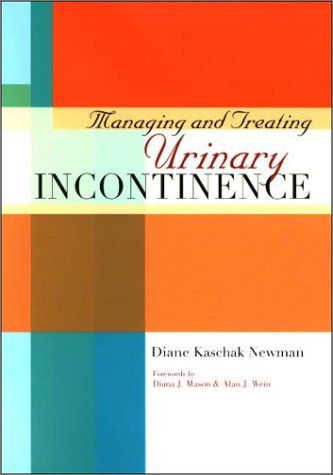
Synopsis
After reading "Managing and Treating Urinary Incontinence," you will be armed with all the available methods for successfully managing or even eliminating incontinence methods far more diverse and effective than many professionals today are aware.
In pragmatic, easy-to-understand language, this book presents the full range of treatment options, explaining how each method works and who benefits most from its use. Nursing staff will measurably improve the health and independence of residents or patients, and managers will reduce facility costs and staff burden.
This single, concise source provides the most essential information you need for understanding the types and causes of incontinence/overactive bladder; the use and care of products available for collecting or absorbing urine or feces; the efficacy of behavioral treatments, such as bladder retraining and toileting programs; the role of surgery and drug therapy in managing incontinence; the positive impact of incontinence education (valuable teaching guides and record-keeping forms provided); and
the psychological, social, health, and economic implications of poorly managed incontinence
This book is a must-have for nurses, physical therapists, social workers, and other health care professionals who work with older adults.
"synopsis" may belong to another edition of this title.
About the Author
Diane Kaschak Newman, R.N.C., M.S.N., C.R.N.P., F.A.A.N., is co-director of the Penn Center for Continence and Pelvic Health, Division of Urology, University of Pennsylvania, Philadelphia. She is the 2002 winner of the Continence Champion Award, National Association for Continence.
From the Inside Flap
Forewords by Diana J. Mason, R.N., Ph.D., F.A.A.N., editor-in-chief, American Journal of Nursing; and Alan J. Wein, M.D., Chair, Division of Urology, University of Pennsylvania
Reviews
Today, 20 to 25 million Americans endure difficulties in controlling bladder function something vast numbers of them are not willing to disclose. Most of those afflicted are women, and they are not all elderly. There is a thus real and pressing need for books like these, which address the issue of incontinence in a compassionate manner and explain that most of these individuals can be cured, many quite easily, without surgery. It is also clear from both of these authoritative publications that incontinence must be viewed as an important medical problem, deserving the same attention as elevated blood pressure or an endocrine disorder. Newman, a nurse who is codirector of the Penn Center for Continence and Pelvic Health at the University of Pennsylvania, previously wrote The Urinary Incontinence Sourcebook for consumers. Aiming this new book at nurses, social workers, and other healthcare professionals, she is strongly pragmatic, covering a long list of topics, from causes of incontinence to evaluation and therapy. There is also a chapter on self-care practices that will minimize urinary symptoms. The appendixes consist of tools for health professionals that can be used to train staff and educate patients; included are sections on how to prevent bladder infections, diet habits that can affect your bladder, bladder retraining, and other topics relating to mechanical devices used to reduce incontinence. The book is well referenced and includes a glossary as well as appendixes with useful ancillary information, e.g., a directory of manufacturers of products that aid in treating incontinence. In The Incontinence Solution, gynecologist Parker and his coauthors (a gynecologist and a health educator) also provide a comprehensive and reassuring approach to incontinence, but the advice is intended primarily for consumers/patients. The question-and-answer format allows for easy reading and reference and, after an initial discussion of causes and diagnosis, focuses on the wide range of available treatments for incontinence. Specific chapters also address childbirth and incontinence, interstitial cystitis, and defining and diagnosing prolapse. Anecdotal reports of patients' experiences add interest and information. Also provided is a section on finding the right doctor. While both titles provide extensive coverage of the topic, Newman's is the more scholarly and is highly recommended for health sciences libraries and for large public libraries. For its readability, Parker's book is suggested for all consumer health collections. Linda M.G. Katz, MCP Hahnemann Univ. Libs., Philadelphia
Copyright 2002 Reed Business Information, Inc.
"About this title" may belong to another edition of this title.
Search results for Managing and Treating Urinary Incontinence

Seller Image
Managing and Treating Urinary Incontinence
Seller: -OnTimeBooks-, Phoenix, AZ, U.S.A.
Seller rating 5 out of 5 stars

Condition: good. A copy that has been read, remains in good condition. All pages are intact, and the cover is intact. The spine and cover show signs of wear. Pages can include notes and highlighting and show signs of wear, and the copy can include "From the library of" labels or previous owner inscriptions. 100% GUARANTEE! Shipped with delivery confirmation, if you're not satisfied with purchase please return item! Ships via media mail. Seller Inventory # OTV.1878812823.G
Stock Image
Managing and Treating Urinary Incontinence
Published by
Health Professions Press, 2002
ISBN 10: 1878812823
ISBN 13: 9781878812827
Used
Softcover
First Edition
Seller: Better World Books, Mishawaka, IN, U.S.A.
Seller rating 5 out of 5 stars
Condition: Good. 1st. Former library copy. Pages intact with minimal writing/highlighting. The binding may be loose and creased. Dust jackets/supplements are not included. Includes library markings. Stock photo provided. Product includes identifying sticker. Better World Books: Buy Books. Do Good. Seller Inventory # 45566317-75
Stock Image
Managing and Treating Urinary Incontinence
Published by
Health Professions Press, 2002
ISBN 10: 1878812823
ISBN 13: 9781878812827
Used
Softcover
First Edition
Seller: Better World Books, Mishawaka, IN, U.S.A.
Seller rating 5 out of 5 stars
Condition: Very Good. 1st. Former library copy. Pages intact with possible writing/highlighting. Binding strong with minor wear. Dust jackets/supplements may not be included. Includes library markings. Stock photo provided. Product includes identifying sticker. Better World Books: Buy Books. Do Good. Seller Inventory # GRP102388582
Stock Image
Managing and treating urinary incontinence
Published by
Health Professions Press, 2002
ISBN 10: 1878812823
ISBN 13: 9781878812827
Used
paperback
First Edition
Seller: Red's Corner LLC, Tucker, GA, U.S.A.
Seller rating 5 out of 5 stars
paperback. Condition: Very Good. 1st Edition. Grade 3 out 5 points. Book has wear on cover and pages. May have personalized notes/names, stickers/labels. Has no markings on pages. May not include extra materials like access codes, CDs, accessories, etc. All orders ship by next business day! We are a small company and very thankful for your business! Seller Inventory # REDH63VF9K8K
Stock Image
Managing and Treating Urinary Incontinence Newman, Diane Kaschak
Seller: Textstyles LLC, Coatesville, IN, U.S.A.
Seller rating 5 out of 5 stars
Condition: As New. Paperback is new. Has slight shelf wear. Free tracking. Seller Inventory # 50etc61913
Stock Image
Managing and Treating Urinary Incontinence
Published by
Health Professions Press, 2002
ISBN 10: 1878812823
ISBN 13: 9781878812827
Used
Softcover
First Edition
Seller: Better World Books Ltd, Dunfermline, United Kingdom
Seller rating 5 out of 5 stars
Condition: Very Good. 1st. Former library copy. Pages intact with possible writing/highlighting. Binding strong with minor wear. Dust jackets/supplements may not be included. Includes library markings. Stock photo provided. Product includes identifying sticker. Better World Books: Buy Books. Do Good. Seller Inventory # GRP102388582
Buy Used
US$ 15.89
US$ 6.69 shipping
Ships from United Kingdom to U.S.A.
Ships from United Kingdom to U.S.A.
Quantity: 1 available
Stock Image
Managing and Treating Urinary Incontinence
Seller: BennettBooksLtd, Los Angeles, CA, U.S.A.
Seller rating 5 out of 5 stars
Paperback. Condition: New. In shrink wrap. Looks like an interesting title! Seller Inventory # Q-1878812823