
Items related to Little Red Riding Hood in the Red Light District
Synopsis
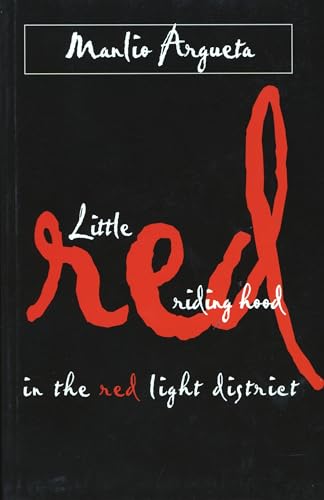
Little Red Riding Hood in the Red Light District is Manlio Argueta's most popular novel in El Salvador, translated into English for the first time by Edward Waters Hood. A kaleidoscopic tale of political romance, the story revolves around the relationship of two young lovers in a time of social upheaval, evoking characters and themes from the classic fairy tale within the wartime environment of El Salvador and its capital, San Salvador.
"synopsis" may belong to another edition of this title.
About the Author
Manlio Argueta was born in San Miguel, El Salvador in 1935. He left the country in 1972 and lived in exile in Costa Rica, where he taught literature and creative writing until the end of the Salvadoran Civil War. His second novel, Caperucita en la zona rosa, received the Casa de las Americas Prize in 1977. His third, Un día en la vida, was banned in El Salvador during the civil war but earned fifth place on the Modern Library's 100 best Latin American novels of the twentieth century. He currently lives in San Salvador.
Edward Waters Hood has translated works by several prominent Central American authors. He is currently a professor of Latin American Literature at Northern Arizona University.
Reviews
Little Red Riding Hood in the Red Light District reminds us why for the poor in Latin America guerrilla warfare (as well as drug trafficking) is often the only alternative to unemployment and hunger.
Argueta's charmingly elusive political romance, Caperucita en la zona roja, first appeared in 1978 and received the Casa de las Americas Prize; it is newly revised for this English translation. Alfonso, the "wolf," is a poet and university student who gradually becomes entangled in the revolution against El Salvador's military dictatorship of the late 1970s, whose abusive reign Argueta allegorizes as the "red light district." The plot unfolds in voice-shifting narrative backtracks, from the time Alfonso is still living "in the forest" with "Little Red Riding Hood," his young peasant lover Ant (who is referred to alternately in the second and third person), to his later departure, while Ant is pregnant, to become "a bandolier of liberation." Ant's trusting simplicity emerges from her letters to her lover, while the naively ferocious dedication of Alfonso's compa?eros, who attempt to disseminate literature by an illegal printing press, demonstrates the power of a poor, beleaguered people's spirit to prevail. Argueta's use of allegory is coy and not altogether successful; he unaccountably compares the "wolves" in question to Alfonso and his revolutionaries, rather than to the more logical choice of soldiers and military men. Still, through the voices of his characters, Argueta portrays the aspirations of an entire generation. "I've never thought about having a child as long as I live in this sublimation of a man disappeared," Alfonso muses, revealing the author's ability to maintain a lightness of tone while tackling serious political issues.
Copyright 1998 Reed Business Information, Inc.
"About this title" may belong to another edition of this title.
Search results for Little Red Riding Hood in the Red Light District

Stock Image
Little Red Riding Hood in the Red Light District
Published by
Curbstone Books (edition ), 1998
ISBN 10: 1880684322
ISBN 13: 9781880684320
Used
Paperback
Seller: BooksRun, Philadelphia, PA, U.S.A.
Seller rating 5 out of 5 stars

Paperback. Condition: Fair. The item might be beaten up but readable. May contain markings or highlighting, as well as stains, bent corners, or any other major defect, but the text is not obscured in any way. Seller Inventory # 1880684322-7-1
Stock Image
Little Red Riding Hood in the Red Light District
Seller: Better World Books, Mishawaka, IN, U.S.A.
Seller rating 5 out of 5 stars
Condition: Very Good. Former library copy. Pages intact with possible writing/highlighting. Binding strong with minor wear. Dust jackets/supplements may not be included. Includes library markings. Stock photo provided. Product includes identifying sticker. Better World Books: Buy Books. Do Good. Seller Inventory # 13058131-6
Stock Image
Little Red Riding Hood in the Red Light District
Seller: Better World Books, Mishawaka, IN, U.S.A.
Seller rating 5 out of 5 stars
Condition: Very Good. Pages intact with possible writing/highlighting. Binding strong with minor wear. Dust jackets/supplements may not be included. Stock photo provided. Product includes identifying sticker. Better World Books: Buy Books. Do Good. Seller Inventory # 13432728-6
Stock Image
Little Red Riding Hood in the Red Light District
Seller: HPB Inc., Dallas, TX, U.S.A.
Seller rating 5 out of 5 stars
paperback. Condition: Very Good. Connecting readers with great books since 1972! Used books may not include companion materials, and may have some shelf wear or limited writing. We ship orders daily and Customer Service is our top priority! Seller Inventory # S_473935990
Stock Image
Little Red Riding Hood in the Red Light District
Seller: ThriftBooks-Dallas, Dallas, TX, U.S.A.
Seller rating 5 out of 5 stars
Paperback. Condition: Good. No Jacket. Pages can have notes/highlighting. Spine may show signs of wear. ~ ThriftBooks: Read More, Spend Less. Seller Inventory # G1880684322I3N00
Stock Image
Little Red Riding Hood in the Red Light District
Seller: ThriftBooks-Dallas, Dallas, TX, U.S.A.
Seller rating 5 out of 5 stars
Paperback. Condition: Fair. No Jacket. Readable copy. Pages may have considerable notes/highlighting. ~ ThriftBooks: Read More, Spend Less. Seller Inventory # G1880684322I5N00
Stock Image
Little Red Riding Hood in the Red Light District
Seller: ThriftBooks-Atlanta, AUSTELL, GA, U.S.A.
Seller rating 5 out of 5 stars
Paperback. Condition: As New. No Jacket. Pages are clean and are not marred by notes or folds of any kind. ~ ThriftBooks: Read More, Spend Less. Seller Inventory # G1880684322I2N00
Stock Image
Little Red Riding Hood in the Red Light District
Seller: Hawking Books, Edgewood, TX, U.S.A.
Seller rating 4 out of 5 stars

Condition: Very Good. Very Good Condition. Five star seller - Buy with confidence! Seller Inventory # X1880684322X2
Seller Image
Little Red Riding Hood in the Red Light District
Seller: The Haunted Bookshop, LLC, Iowa City, IA, U.S.A.
Seller rating 5 out of 5 stars
Trade Paperback. Condition: Good. Water stain affecting bottom right corners of first 60pp., otherwise clean. Seller Inventory # 00082065
Stock Image
Little Red Riding Hood in the Red Light District
Seller: BookManBookWoman Books, Nashville, TN, U.S.A.
Seller rating 5 out of 5 stars
Soft cover. Condition: Fine. Shelf 1091 An excellent copy; clean and tight; Not a book club (BC)copy. No previous owner name, not ex library, not a remainder, smoke free. PHOTOS POSTED WITH OUR BOOKS ARE STOCK AND DO NOT NECESSARILY REFLECT CONDITION OR EDITION OF BOOK OFFERED FOR SALE. WE DO NOT POST THE PHOTOS . Seller Inventory # 319927