
Items related to Writing Life Stories
Synopsis
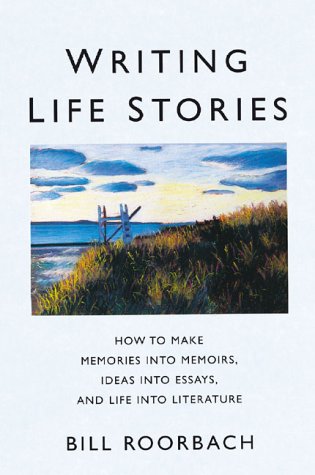
How to Make Memories into Memoirs, Ideas into Essays, and Life into Literature From drawing a map of a remembered neighborhood to signing a form releasing yourself to take risks in your work, Roorbach offers innovative techniques that will trigger ideas for all writers. Writing Life Stories is a classic text that appears on countless creative nonfiction and composition syllabi the world over. This updated 10th anniversary edition gives you the same friendly instruction and stimulating exercises along with updated information on current memoir writing trends, ethics, internet research, and even marketing ideas. You'll discover how to turn your untold life stories into vivid personal essays and riveting memoirs by learning to open up memory, access emotions, shape scenes from experience, develop characters, and research supporting details. This guide will teach you to see your life more clearly and show you why real stories are often the best ones.
"synopsis" may belong to another edition of this title.
Review
Bill Roorbach is a chatty writer: his instruction is informal, colloquial, abounding in parenthetical remarks and droll asides. But Roorbach (Summers with Juliet) seems able to inspire even the most recalcitrant writers to uncover memories and ideas they didn't know they had and turn them into something the rest of us would want to read. An early exercise in Writing Life Stories involves making a map of the earliest neighborhood you can remember: "Where did the weird people live?" Roorbach asks. "Where were the off-limits places?" And then, "Tell us a story from your map." Many of the book's subsequent assignments are equally enticing.
Roorbach elaborates on the many elements involved in writing creative nonfiction, including memory, scene setting, ideation, character development, and research. He eschews introductions and conclusions (scaffolding, he says, is for building purposes only) and, "at least in a first draft," embraces truth-telling. "Those places where you catch yourself changing the facts," he warns, "should be alarms, grand signals, signposts saying here's the place to examine most closely for meaning."
Though his writing may be casual, Roorbach is a great believer in precision. "Every person you mention," he says, "should get a quick, sharp, devastatingly exact sketch" (for examples, he refers to the minor characters in books by Paul Theroux, Joan Didion, and John McPhee). Ambiguity, he says, is anathema: "Do what it takes to properly name a tree, a piece of hardware, a street, a town, a school, a neighbor." And finally, be wary of polishing--"you can spend days adjusting sentences in a first paragraph that ought to be cut altogether"--but make sure every paragraph in your memoir or essay is as good as, has as much "urgency" as, the first one. "How much can you get into a sentence?" he asks. "How much can you get into every sentence?" --Jane Steinberg
"About this title" may belong to another edition of this title.
Search results for Writing Life Stories

Stock Image
Writing Life Stories
Seller: World of Books (was SecondSale), Montgomery, IL, U.S.A.
Seller rating 5 out of 5 stars

Condition: Very Good. Item in very good condition! Textbooks may not include supplemental items i.e. CDs, access codes etc. Seller Inventory # 00099211033
Stock Image
Writing Life Stories
Seller: World of Books (was SecondSale), Montgomery, IL, U.S.A.
Seller rating 5 out of 5 stars
Condition: Acceptable. Item in acceptable condition! Textbooks may not include supplemental items i.e. CDs, access codes etc. Seller Inventory # 00099473727
Stock Image
Writing Life Stories
Seller: World of Books (was SecondSale), Montgomery, IL, U.S.A.
Seller rating 5 out of 5 stars
Condition: Good. Item in good condition. Textbooks may not include supplemental items i.e. CDs, access codes etc. Seller Inventory # 00098346114
Seller Image
Writing Life Stories
Seller: Zoom Books East, Glendale Heights, IL, U.S.A.
Seller rating 5 out of 5 stars
Condition: very_good. Book is in very good condition and may include minimal underlining highlighting. The book can also include "From the library of" labels. May not contain miscellaneous items toys, dvds, etc. . We offer 100% money back guarantee and 24 7 customer service. Seller Inventory # ZEV.1884910475.VG
Stock Image
Writing Life Stories
Seller: BooksRun, Philadelphia, PA, U.S.A.
Seller rating 5 out of 5 stars
Paperback. Condition: Very Good. It's a well-cared-for item that has seen limited use. The item may show minor signs of wear. All the text is legible, with all pages included. It may have slight markings and/or highlighting. Seller Inventory # 1884910475-8-1
Stock Image
Writing Life Stories
Seller: Once Upon A Time Books, Siloam Springs, AR, U.S.A.
Seller rating 4 out of 5 stars

paperback. Condition: Good. This is a used book in good condition and may show some signs of use or wear . This is a used book in good condition and may show some signs of use or wear . Seller Inventory # mon0003501599
Stock Image
Writing Life Stories
Seller: ThriftBooks-Dallas, Dallas, TX, U.S.A.
Seller rating 5 out of 5 stars
Paperback. Condition: Very Good. No Jacket. May have limited writing in cover pages. Pages are unmarked. ~ ThriftBooks: Read More, Spend Less. Seller Inventory # G1884910475I4N00
Stock Image
Writing Life Stories
Seller: The Maryland Book Bank, Baltimore, MD, U.S.A.
Seller rating 5 out of 5 stars
paperback. Condition: Very Good. Used - Very Good. Seller Inventory # 4-DD-5-0129
Stock Image
Writing Life Stories : How to Make Memories into Memoirs, Ideas into Essays and Life into Literature
Seller: Better World Books, Mishawaka, IN, U.S.A.
Seller rating 5 out of 5 stars
Condition: Good. Pages intact with minimal writing/highlighting. The binding may be loose and creased. Dust jackets/supplements are not included. Stock photo provided. Product includes identifying sticker. Better World Books: Buy Books. Do Good. Seller Inventory # 1615601-6
Stock Image
Writing Life Stories
Seller: Wonder Book, Frederick, MD, U.S.A.
Seller rating 5 out of 5 stars
Condition: Very Good. Very Good condition. A copy that may have a few cosmetic defects. May also contain light spine creasing or a few markings such as an owner's name, short gifter's inscription or light stamp. Bundled media such as CDs, DVDs, floppy disks or access codes may not be included. Seller Inventory # Q11N-00048