
Items related to Kipling
Synopsis
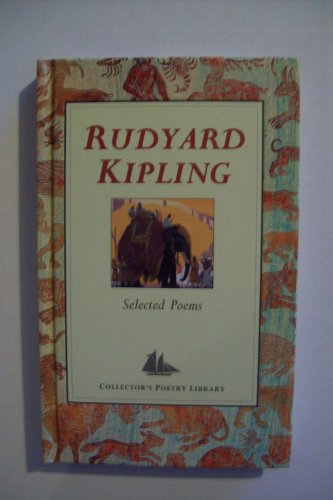
"Now this is the Law of the Jungle—as old and as true as the sky;And the Wolf that shall keep it may prosper,but the Wolf that shall break it must die."— The Law of the JungleKipling's innovative experiments with language—especially the dialects of the ordinary soldier—won him many admirers, and still stand out as truly modern today. Compiled here, this selection of his eclectic poetry shows the development of Kipling's talent, his deepening maturity and the growing somberness of his poetic vision. Ranging from early, exhilarating celebrations of British expansion overseas, including and , to the dignified and inspirational and the later, deeply moving —inspired by the death of Kipling's only son—it clearly illustrates the scope and originality of his work. It also offers a compelling insight into the Empire both at its peak and during its decline in the early years of the twentieth century.(1865-1936) is often regarded as the unofficial Laureate of the British Empire. Yet his writing reveals a ferociously independent figure, at times violently opposed to the dominant political and literary tendencies of his age. He was awarded the Nobel Prize in Literature in 1907 "in consideration of the power of observation, originality of imagination, virility of ideas and remarkable talent for narration which characterize the creations of this world-famous author."
"synopsis" may belong to another edition of this title.
About the Author
Joseph Rudyard Kipling (December 3, 1865 - January 18, 1936) was a British author and poet, born in India, and best known today for his children's books, including The Jungle Book (1894), The Second Jungle Book (1895), Just So Stories (1902), and Puck of Pook's Hill (1906); his novel, Kim (1901); his poems, including Mandalay (1890), Gunga Din (1890), and "If-" (1910); and his many short stories, including "The Man Who Would Be King" (1888) and the collections Life's Handicap (1891), The Day's Work (1898), and Plain Tales from the Hills (1888). He is regarded as a major "innovator in the art of the short story";[2] his children's books are enduring classics of children's literature; and his best work speaks to a versatile and luminous narrative gift.
"About this title" may belong to another edition of this title.
Search results for Kipling

Stock Image
Selected Poems (Collector's Poetry Library)
Published by
Macmillan Collector's Library 01/09/2004, 2004
ISBN 10: 1904919243
ISBN 13: 9781904919247
Used
Hardcover
Seller: AwesomeBooks, Wallingford, United Kingdom
Seller rating 5 out of 5 stars

Condition: Very Good. This book is in very good condition and will be shipped within 24 hours of ordering. The cover may have some limited signs of wear but the pages are clean, intact and the spine remains undamaged. This book has clearly been well maintained and looked after thus far. Money back guarantee if you are not satisfied. See all our books here, order more than 1 book and get discounted shipping. . Seller Inventory # 7719-9781904919247
Buy Used
US$ 5.45
US$ 5.45 shipping
Ships from United Kingdom to U.S.A.
Ships from United Kingdom to U.S.A.
Quantity: 2 available
Stock Image
Kipling
Published by
Pan Macmillan, United Kingdom, London, 2004
ISBN 10: 1904919243
ISBN 13: 9781904919247
Used
Paperback
Seller: WorldofBooks, Goring-By-Sea, WS, United Kingdom
Seller rating 5 out of 5 stars
Paperback. Condition: Very Good. Shows Kipling to be thoughtful, compassionate, witty and a dextrous manipulator of dramatic verse. His poems are some of the best known and most widely-quoted in the English language, and have continued to give enjoyment long after the sun finally set on his beloved British Empire. The book has been read, but is in excellent condition. Pages are intact and not marred by notes or highlighting. The spine remains undamaged. Seller Inventory # GOR000915256
Buy Used
US$ 4.34
US$ 7.41 shipping
Ships from United Kingdom to U.S.A.
Ships from United Kingdom to U.S.A.
Quantity: 3 available
Stock Image
Selected Verse
Seller: Better World Books Ltd, Dunfermline, United Kingdom
Seller rating 5 out of 5 stars
Condition: Good. Former library copy. Pages intact with minimal writing/highlighting. The binding may be loose and creased. Dust jackets/supplements are not included. Includes library markings. Stock photo provided. Product includes identifying sticker. Better World Books: Buy Books. Do Good. Seller Inventory # 51605978-20
Buy Used
US$ 6.22
US$ 6.62 shipping
Ships from United Kingdom to U.S.A.
Ships from United Kingdom to U.S.A.
Quantity: 1 available
Stock Image
Selected Poems (Collector's Poetry Library)
Published by
Macmillan Collector's Library 01/09/2004, 2004
ISBN 10: 1904919243
ISBN 13: 9781904919247
Used
Hardcover
Seller: Bahamut Media, Reading, United Kingdom
Seller rating 4 out of 5 stars

Condition: Very Good. Shipped within 24 hours from our UK warehouse. Clean, undamaged book with no damage to pages and minimal wear to the cover. Spine still tight, in very good condition. Remember if you are not happy, you are covered by our 100% money back guarantee. Seller Inventory # 6545-9781904919247
Buy Used
US$ 4.84
US$ 9.24 shipping
Ships from United Kingdom to U.S.A.
Ships from United Kingdom to U.S.A.
Quantity: 2 available
Stock Image
Selected Poems (Collector's Poetry Library)
Published by
Macmillan Collector's Library, 2004
ISBN 10: 1904919243
ISBN 13: 9781904919247
Used
Hardcover
Seller: Hay-on-Wye Booksellers, Hay-on-Wye, HEREF, United Kingdom
Seller rating 4 out of 5 stars
Condition: Used Like New. NEW & UNREAD. Light storage marks to the textblock edge. Content as new. Seller Inventory # 98126-19-11-2025-LMC
Buy Used
US$ 10.91
US$ 33.09 shipping
Ships from United Kingdom to U.S.A.
Ships from United Kingdom to U.S.A.
Quantity: 1 available
Stock Image
Selected Poems (Collector's Poetry Library)
Published by
Macmillan Collector's Library, 2004
ISBN 10: 1904919243
ISBN 13: 9781904919247
Used
Hardcover
First Edition
Seller: Forster Books, Chelwood Gate, SUSSE, United Kingdom
Seller rating 2 out of 5 stars

Hardcover. Condition: As New. Dust Jacket Condition: As New. 1st Edition. Lovely pocket-sized Kipling, ideal gift and in very clean condition - one owner from new. Seller Inventory # ABE-1700410995136
Buy Used
US$ 24.54
US$ 26.67 shipping
Ships from United Kingdom to U.S.A.
Ships from United Kingdom to U.S.A.
Quantity: 1 available