
Items related to Meditations
Synopsis
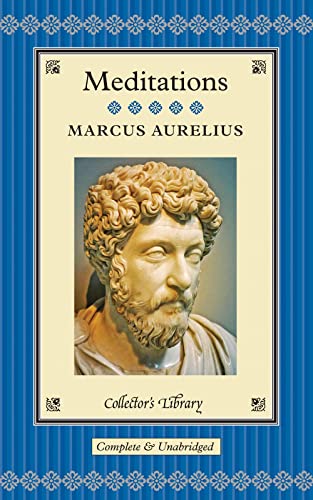
"The Meditations of Marcus Aurelius (AD 121-180)" offer a wide range of fascinating spiritual reflections and exercises developed as the Roman Emperor struggled to understand himself and make sense of the universe. Spanning doubt and despair to conviction and exaltation, they cover such diverse topics as the question of virtue, human rationality, the nature of the gods and Aurelius' own emotions. The Meditations are a readable exposition of the system of metaphysics known as stoicism. Stoics maintained that by putting aside great passions, unjust thoughts and indulgence, man could acquire virtue and live at one with nature. This classic translation is by A.S.L. Farquharson.
"synopsis" may belong to another edition of this title.
From the Inside Flap
Introduction by D. A. Rees; Translation by A. S. L. Farquarson
About the Author
Marcus Aurelius Antoninus was born to an upper-class Roman family in A.D. 121 and was later adopted by the future emperor Antoninus Pius, whom he succeeded in 161. His reign was marked by a successful campaign against Parthia, but was overshadowed in later years by plague, an abortive revolt in the eastern provinces, and the deaths of friends and family, including his co-emperor Lucius Verus. A student of philosophy from his earliest youth, he was especially influenced by the first-century Stoic thinker Epictetus. His later reputation rests on his Meditations, written during his later years and never meant for formal publication. He died in 180, while campaigning against the barbarian tribes on Rome’s northern frontier.
A. S. L. Farquharson (1871—1942) spent a lifetime on his edition of the Meditations, which is one of the outstanding twentieth-century achievements of classical scholarship. All the notes to the Farquharson translation, amplifying the twelve books of the Meditations, are included in this volume.
"About this title" may belong to another edition of this title.