
Items related to Islamic Design: A Genius For Geometry (Wooden Books...
Synopsis
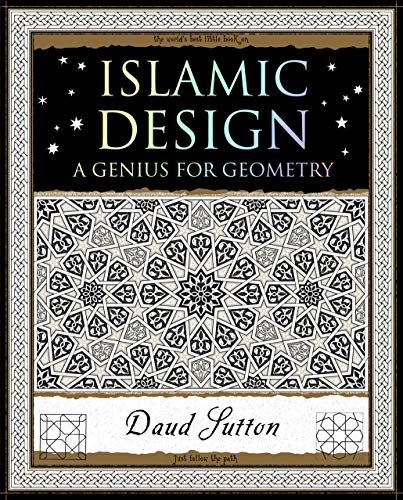
Across the Islamic world, illuminating Korans from Morocco to Malaysia, and adorning mosques, mausoleums and palaces, are hidden some of the most exquisite geometrical devices ever conceived by man. In this excellent pocket book, geometer Daud Sutton unravels the mystery of Islamic patterns, explaining where they come from, how to draw them, and hinting at the Divine messages they encode.
"synopsis" may belong to another edition of this title.
About the Author
Daud Sutton is Director of the Thesaurus Islamicus Foundation’s design studio Editio Electrum, based in Cairo, and also author of Platonic & Archimedean Solids in this series.
Excerpt. © Reprinted by permission. All rights reserved.
The role of sacred art is to support the spiritual life of those whom it surrounds, to instill a way of perceiving the world and the subtle realities behind it. The challenge thus facing the traditional artisan is how to build with matter so as to best embody spirit. The great temples, churches and mosques of the world are the legacy of our attempts to do just this, each determined by the spiritual perspective in question.
Throughout their long history the craft traditions of the Islamic world evolved a multitude of styles applied to a great variety of media, but always with unifying factors that make them instantly recognisable. It is perhaps no surprise that an art form that seeks explicitly to explore the relationship between Unity and multiplicity should be at the same time unified yet diverse. Harmony is central.
The visual structure of Islamic design has two key aspects: calligraphy using Arabic script – one of the world's great scribal traditions – and abstract ornamentation using a varied but remarkably integrated visual language. This art of pure ornament revolves around two poles: geometric pattern, the harmonic and symmetrical subdivision of the plane giving rise to intricately interwoven designs that speak of infinity and the omnipresent center; and idealised plant form or arabesque, spiraling tendrils, leaves, buds and flowers embodying organic life and rhythm. This book focuses on Islamic geometric patterns, exploring their structure and meaning.
"About this title" may belong to another edition of this title.
Search results for Islamic Design: A Genius For Geometry (Wooden Books...

Stock Image
Islamic Design: A Genius For Geometry (Wooden Books North America Editions)
Seller: HPB-Ruby, Dallas, TX, U.S.A.
Seller rating 5 out of 5 stars

paperback. Condition: Very Good. Connecting readers with great books since 1972! Used books may not include companion materials, and may have some shelf wear or limited writing. We ship orders daily and Customer Service is our top priority! Seller Inventory # S_475741184
Stock Image
Islamic Design: A Genius For Geometry (Wooden Books North America Editions)
Seller: Wonder Book, Frederick, MD, U.S.A.
Seller rating 5 out of 5 stars
Condition: As New. Like New condition. A near perfect copy that may have very minor cosmetic defects. Seller Inventory # D05O-00576
Stock Image
Islamic Design: A Genius For Geometry (Wooden Books North America Editions)
Seller: Books From California, Simi Valley, CA, U.S.A.
Seller rating 4 out of 5 stars

paperback. Condition: Very Good. Seller Inventory # mon0004135904
Seller Image
Islamic Design : A Genius for Geometry
Seller: GreatBookPrices, Columbia, MD, U.S.A.
Seller rating 5 out of 5 stars
Condition: New. Seller Inventory # 42559342-n
Seller Image
Islamic Design
Seller: Rarewaves USA, HEBRON, KY, U.S.A.
Seller rating 5 out of 5 stars
Paperback. Condition: New. Seller Inventory # LU-9781952178054
Seller Image
Islamic Design : A Genius for Geometry
Seller: GreatBookPrices, Columbia, MD, U.S.A.
Seller rating 5 out of 5 stars
Condition: As New. Unread book in perfect condition. Seller Inventory # 42559342
Stock Image
Islamic Design A Genius For Geometry (Wooden Books North America Editions)
Seller: Lakeside Books, Benton Harbor, MI, U.S.A.
Seller rating 5 out of 5 stars
Condition: New. Brand New! Not Overstocks or Low Quality Book Club Editions! Direct From the Publisher! We're not a giant, faceless warehouse organization! We're a small town bookstore that loves books and loves it's customers! Buy from Lakeside Books! Seller Inventory # OTF-S-9781952178054
Seller Image
Islamic Design
Seller: Rarewaves.com USA, London, LONDO, United Kingdom
Seller rating 5 out of 5 stars
Paperback. Condition: New. Seller Inventory # LU-9781952178054
Buy New
US$ 12.61
Free Shipping
Ships from United Kingdom to U.S.A.
Ships from United Kingdom to U.S.A.
Quantity: 2 available
Seller Image
Islamic Design (Paperback)
Seller: Grand Eagle Retail, Bensenville, IL, U.S.A.
Seller rating 5 out of 5 stars
Paperback. Condition: new. Paperback. Across the Islamic world, illuminating Korans from Morocco to Malaysia, and adorning mosques, mausoleums and palaces, are hidden some of the most exquisite geometrical devices ever conceived by man. In this excellent pocket book, geometer Daud Sutton unravels the mystery of Islamic patterns, explaining where they come from, how to draw them, and hinting at the Divine messages they encode. Shipping may be from multiple locations in the US or from the UK, depending on stock availability. Seller Inventory # 9781952178054
Seller Image
Islamic Design: A Genius for Geometry
Seller: Arundel Books, Seattle, WA, U.S.A.
Seller rating 5 out of 5 stars
Trade Paperback. Condition: New. New! // 'Across the Islamic world, illuminating Korans from Morocco to Malaysia, and adorning mosques, mausoleums and palaces, are hidden some of the most exquisite geometrical devices ever conceived by man. In this excellent pocket book, geometer Daud Sutton unravels the mystery of Islamic patterns, explaining where they come from, how to draw them, and hinting at the Divine messages they encode.' -- publisher. Seller Inventory # 664802