
Items related to Reading Images and Texts: Medieval Images and Texts...
Reading Images and Texts: Medieval Images and Texts as Forms of Communication. Papers from the Third Utrecht Symposium on Medieval Literacy, Utrecht, ... 2000 (Utrecht Studies in Medieval Literacy) - Hardcover
Synopsis
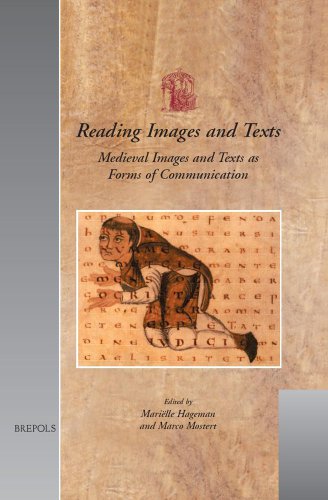
In recent years the relations between images and texts have benefitted from an increase in scholarly attention. In medieval studies, art historians, historians, codicologists, philologists and others have applied their methods to the study of illuminated manuscripts and other works of art. These studies have shifted from a concern about the contents of the messages contained in the artefacts (e.g. in iconography) to an interest in the ways in which they were communicated to their intended audiences. The perception of texts and images, their reception by contemporaries and by later generations have become topics in their own right. The analysis of individual manuscripts and works of art remains the basis for any consideration of their transmission and uses. Yet the time has come for an evaluation of the results of recent work on medieval communication. The interactions between non-verbal and verbal forms of communication, more in particular the relations between visual symbols other than writing and the recording of speech in writing, are important for the evaluation of both images and texts. According to some, medieval images may be 'read'. According to others, the perception of images is fundamentally different from that of texts. Do images have a morphology (colours, lines, planes), a syntax and semantics of their own? In other words: do both texts and images have a 'grammar'? Is it useful to speak of 'visual literacy'? Can texts be considered as images? How are texts and images perceived? Do they communicate different kinds of messages? Can an image's message be put into words? In which social contexts does medieval man prefer the visual to the textual? What about the interplay of texts and images (e.g. in rituals and ceremonies)? Do we observe an evolution in the perception of images due to the development of a literate mentality? These are some of the questions discussed in the contributions to this volume.
"synopsis" may belong to another edition of this title.
Search results for Reading Images and Texts: Medieval Images and Texts...

Stock Image
Reading Images and Texts Medieval Images and Texts as Forms of Communication : Papers from the Third Utrecht Symposium on Medieval Literacy, Utrecht, 7-9 December 2000
Seller: Powell's Bookstores Chicago, ABAA, Chicago, IL, U.S.A.
Seller rating 5 out of 5 stars

Hardcover. Condition: New. Dust Jacket Condition: None. Illustrated. Illus. cloth, no dj. (as issued). New inn shrink-wrap. In recent years the relations between images and texts have benefitted from an increase in scholarly attention. In medieval studies, art historians, historians, codicologists, philologists and others have applied their methods to the study of illuminated manuscripts and other works of art. These studies have shifted from a concern about the contents of the messages contained in the artefacts (e.g. in iconography) to an interest in the ways in which they were communicated to their intended audiences. The perception of texts and images, their reception by contemporaries and by later generations have become topics in their own right. The analysis of individual manuscripts and works of art remains the basis for any consideration of their transmission and uses. Yet the time has come for an evaluation of the results of recent work on medieval communication. The interactions between non-verbal and verbal forms of communication, more in particular the relations between visual symbols other than writing and the recording of speech in writing, are important for the evaluation of both images and texts. According to some, medieval images may be 'read'. According to others, the perception of images is fundamentally different from that of texts. Do images have a morphology (colours, lines, planes), a syntax and semantics of their own? In other words: do both texts and images have a 'grammar'? Is it useful to speak of 'visual literacy'? Can texts be considered as images? How are texts and images perceived? Do they communicate different kinds of messages? Can an image's message be put into words? In which social contexts does medieval man prefer the visual to the textual? What about the interplay of texts and images (e.g. in rituals and ceremonies)? Do we observe an evolution in the perception of images due to the development of a literate mentality? These are some of the questions discussed in the contributions to this volume. Seller Inventory # 2036434
Seller Image
Reading Images and Texts: Medieval Images and Texts as Forms of Communication. Papers from the Third Utrecht Symposium on Medieval Literacy, Utrecht, . 2000 (Utrecht Studies in Medieval Literacy)
Seller: -OnTimeBooks-, Phoenix, AZ, U.S.A.
Seller rating 5 out of 5 stars
Condition: very_good. Gently read. May have name of previous ownership, or ex-library edition. Binding tight; spine straight and smooth, with no creasing; covers clean and crisp. Minimal signs of handling or shelving. 100% GUARANTEE! Shipped with delivery confirmation, if you're not satisfied with purchase please return item! Ships USPS Media Mail. Seller Inventory # OTV.2503514375.VG
Stock Image
Reading Images and Texts
Published by
Brepols Publishers, 2005
ISBN 10: 2503514375
ISBN 13: 9782503514376
New
Hardcover
First Edition
Seller: ISD LLC, Bristol, CT, U.S.A.
Seller rating 5 out of 5 stars
hardcover. Condition: New. 1st. Seller Inventory # 86481
Seller Image
Reading Images and Texts : Medieval Images and Texts As Forms of Communication: Papers From The Third Utrecht Symposium On ?Medieval Literacy, Utrecht, 7-9 December 200
Seller: GreatBookPrices, Columbia, MD, U.S.A.
Seller rating 5 out of 5 stars
Condition: New. Seller Inventory # 1760521-n
Stock Image
Reading Images and Texts: Medieval Images and Texts As Forms of Communication: Papers From The Third Utrecht Symposium On ?Medieval Literacy, Utrecht, 7-9 December 200
Seller: Revaluation Books, Exeter, United Kingdom
Seller rating 5 out of 5 stars
Paperback. Condition: Brand New. illustrated edition. 263 pages. 9.50x6.50x1.50 inches. In Stock. Seller Inventory # __2503514375
Buy New
US$ 112.11
US$ 19.63 shipping
Ships from United Kingdom to U.S.A.
Ships from United Kingdom to U.S.A.
Quantity: 1 available
Stock Image
Reading Images and Texts : Medieval Images and Texts as Forms of Communication. Papers from the Third Utrecht Symposium on Medieval Literacy, Utrecht, 7-9 December 2000
Print on DemandSeller: Chiron Media, Wallingford, United Kingdom
Seller rating 5 out of 5 stars
Condition: New. This item is printed on demand. Brand new book, sourced directly from publisher. Dispatch time is 6-7 days from our warehouse. Book will be sent in robust, secure packaging to ensure it reaches you securely. Seller Inventory # 6666-IUK-9782503514376
Buy New
US$ 122.82
US$ 13.07 shipping
Ships from United Kingdom to U.S.A.
Ships from United Kingdom to U.S.A.
Quantity: 1 available
Seller Image
Reading Images and Texts : Medieval Images and Texts As Forms of Communication: Papers From The Third Utrecht Symposium On ?Medieval Literacy, Utrecht, 7-9 December 200
Seller: GreatBookPricesUK, Woodford Green, United Kingdom
Seller rating 5 out of 5 stars
Condition: New. Seller Inventory # 1760521-n
Buy New
US$ 118.81
US$ 19.63 shipping
Ships from United Kingdom to U.S.A.
Ships from United Kingdom to U.S.A.
Quantity: 1 available
Seller Image
Reading Images and Texts : Medieval Images and Texts As Forms of Communication: Papers From The Third Utrecht Symposium On ?Medieval Literacy, Utrecht, 7-9 December 200
Seller: GreatBookPrices, Columbia, MD, U.S.A.
Seller rating 5 out of 5 stars
Condition: As New. Unread book in perfect condition. Seller Inventory # 1760521
Seller Image
Reading Images and Texts : Medieval Images and Texts As Forms of Communication: Papers From The Third Utrecht Symposium On ?Medieval Literacy, Utrecht, 7-9 December 200
Seller: GreatBookPricesUK, Woodford Green, United Kingdom
Seller rating 5 out of 5 stars
Condition: As New. Unread book in perfect condition. Seller Inventory # 1760521
Buy Used
US$ 139.92
US$ 19.63 shipping
Ships from United Kingdom to U.S.A.
Ships from United Kingdom to U.S.A.
Quantity: 1 available
Seller Image
READING IMAGES & TEXTS
Seller: moluna, Greven, Germany
Seller rating 5 out of 5 stars
Condition: New. Seller Inventory # 907477248
Buy New
US$ 119.88
US$ 53.73 shipping
Ships from Germany to U.S.A.
Ships from Germany to U.S.A.
Quantity: 1 available