
Items related to Case Study Houses
Synopsis
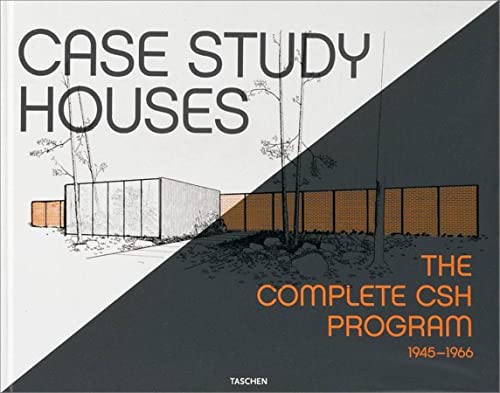
<div>Modernist experimental homes. Prototypes for everyone The Case Study House program (1945-66) was an exceptional, innovative event in the history of American architecture and remains to this day unique. The program, which concentrated on the Los Angeles area and oversaw the design of 36 prototype homes, sought to make available plans for modern residences that could be easily and cheaply constructed during the postwar building boom. The program's chief motivating force was Arts & Architecture editor John Entenza, a champion of modernism who had all the right connections to attract some of architecture's greatest talents, such as Richard Neutra, Charles and Ray Eames, and Eero Saarinen. Highly experimental, the program generated houses that were designed to re-define the modern home, and thus had a pronounced influence on architecture - American and international - both during the program's existence and even to this day. TASCHEN brings you a monumental retrospective of the entire program with comprehensive documentation, brilliant photographs from the period and, for the houses still in existence, contemporary photos, as well as extensive floor plans and sketches.</div>
"synopsis" may belong to another edition of this title.
Review
The first thing you notice about Case Study Houses: The Complete CSH Program, 1945-1966 is its size: it's big. Contained within its 16-inch frame is the history of Arts & Architecture magazine's famed program created to inspire the building of low-cost modern homes in America. The brainchild of magazine editor John Entenza, the program drew well-known architects including Charles Eames, Eero Saarinen, and Richard Neutra. Throughout the book are spectacular photographs of modernist glass- and patio-filled homes. Most of the homes were built in the Los Angeles area and make wonderful use of the surrounding scenery. A 17-foot-tall front door opens up onto a canal; streamlined Herman Miller furniture fills out a living room that overlooks a breathtaking panorama. While not all the projects were built, each received a detailed spread in the magazine, including drawings and models. Some of the architectural drawings are lovely, drawn with the movement and fluidity of a master. Included are short biographies of each architect, a provocative epilogue by photographer Julius Shulman, and the reprinted original magazine pages that announce the birth of the Case Study idea. This book is a true gem, and considering its size it's the Hope diamond. --J.P. Cohen
About the Author
Elizabeth A. T. Smith is the former Chief Curator and Deputy Director for programs at the Museum of Contemporary Art in Chicago. Previously a curator at MOCA Los Angeles, where she organized "Blueprints for Modern Living: History and Legacy of the Case Study Houses," Smith has taught at the University of Southern California and the School of the Art Institute in Chicago. She has curated numerous exhibitions and published widely on various aspects of contemporary art and architecture.
Peter Gössel runs an agency for museum and exhibition design. For TASCHEN he published monographs on Julius Shulman, R.M. Schindler, John Lautner and Richard Neutra as well as several titles in the Basic Architecture Series.
A resident of Los Angeles since 1920, Julius Shulman documented modernist architecture in Southern California and across the globe for nearly eight decades. His images of Pierre Koenig's Case Study House No. 22 (1960) in Los Angeles and Richard J. Neutra's Kaufmann House (1947) in Palm Springs are among the most recognizable and iconic architectural photographs of the 20th century. Shulman's interest in photography developed into a career when he photographed Neutra's Kun Residence in Los Angeles with his Kodak Vestpocket camera in 1936. Neutra admired young Shulman's images and continued to commission his work. Other leading architects of the time followed suit, as did hundreds of magazines, newspapers, and book publishers. Shulman's numerous awards include the Architectural Photography Medal from the American Institute of Architects (1969), a lifetime achievement award from the International Center of Photography in New York (1998), and honorary doctorates from various academic institutions. He died on July 15, 2009 at the age of 98.
"About this title" may belong to another edition of this title.
Search results for Case Study Houses

Stock Image
Case Study Houses
Published by
Taschen America Llc, 2002
ISBN 10: 3822864129
ISBN 13: 9783822864128
Used
Hardcover
First Edition
Seller: Magers and Quinn Booksellers, Minneapolis, MN, U.S.A.
Seller rating 5 out of 5 stars

hardcover. Condition: Very Good. Condition: Very Good; Large oblong hardcover in clear vinyl dustjacket. Firs Edition. The book is in Very Good condition with clean covers and pages, sharp corners and a tight, square binding. Mild soiling to dustjacket. Photos upon request. Seller Inventory # 1566400
Seller Image
Case Study Houses
Published by
Taschen, Koln, 2002
ISBN 10: 3822864129
ISBN 13: 9783822864128
Used
Hardcover
First Edition
Seller: Books Again, Atlanta, GA, U.S.A.
Seller rating 5 out of 5 stars
Hardcover. Condition: Very good. First Edition. Oversized Hardcover, illustrated, 440 pp. A very good copy with clean contents and solid binding. Pictorial covers, no dust jacket but the protective plastic cover is still present and is also very good. Seller Inventory # 5358
Stock Image
Case Study Houses: CASE STUDY HOUSES-TRILINGUE (Jumbo S.) [Feb 22, 2002] Smith, Elizabeth A. T. and Goessel, Peter
Seller: Zebra Books, Cambridge, United Kingdom
Seller rating 5 out of 5 stars
hardcover. Condition: Good. Hardback with dust jacket. Surface wear to DJ. Some wear to corners and edges, including two bumps/nicks to lower edge of front board and a related scuff to the lower edge of the page block. Upper edge of page block has some faint dust related foxing. Front end-paper is a little crumpled and has a small closed tear, otherwise internally very good. Seller Inventory # DD109
Buy Used
US$ 109.32
US$ 26.53 shipping
Ships from United Kingdom to U.S.A.
Ships from United Kingdom to U.S.A.
Quantity: 1 available
Seller Image
Case Study Houses
Seller: Southampton Books, Sag Harbor, NY, U.S.A.
Seller rating 5 out of 5 stars
Hardcover. Condition: Like New. First Edition. First Edition, First Printing. Published by Taschen, 2002. Folio. Pictorial boards with illustrated endpapers. Book is like new; clean with no writing or names. Sharp corners and spine straight. Binding tight and pages crisp. Dust jacket is like new with light shelf wear. A fine copy of this complete collection of experimental houses sponsored by Arts & Architecture magazine. 440 pages. ISBN: 9783822864128. 100% positive feedback. 30 day money back guarantee. NEXT DAY SHIPPING! Excellent customer service. Please email with any questions or if you would like a photo. All books packed carefully and ship with free delivery confirmation/tracking. All books come with free bookmarks. Ships from Southampton, New York. We Buy Books! Individual titles, libraries, collections. Message us if you have books to sell! Seller Inventory # 128131
Stock Image
Case Study Houses (Jumbo)
Seller: Books From California, Simi Valley, CA, U.S.A.
Seller rating 4 out of 5 stars

Hardcover. Condition: Very Good. Seller Inventory # mon0003912125
Seller Image
Case Study Houses
Seller: Q's)eBks, Fresno, CA, U.S.A.
Seller rating 5 out of 5 stars
Hardcover. Condition: Fine. Dust Jacket Condition: Fine. 1st Edition. 1st Edition/1st Printing. New/Fine DJ. 13.32" x 18.05" x 2.55" with 440 pages. From the publisher: "Modernist experimental homes. Prototypes for everyone The Case Study House program (1945-66) was an exceptional, innovative event in the history of American architecture and remains to this day unique. The program, which concentrated on the Los Angeles area and oversaw the design of 36 prototype homes, sought to make available plans for modern residences that could be easily and cheaply constructed during the postwar building boom. The program's chief motivating force was Arts & Architecture editor John Entenza, a champion of modernism who had all the right connections to attract some of architecture's greatest talents, such as Richard Neutra, Charles and Ray Eames, and Eero Saarinen. Highly experimental, the program generated houses that were designed to re-define the modern home, and thus had a pronounced influence on architecture - American and international - both during the program's existence and even to this day. TASCHEN brings you a monumental retrospective of the entire program with comprehensive documentation, brilliant photographs from the period and, for the houses still in existence, contemporary photos, as well as extensive floor plans and sketches." The decorative DJ has an approx. 6"L slit. All else is in as new condition. Please refer to photos. Extra shipping as this is a very large and heavy (13.5 pounds) book. Not an ex-library copy. Thank you for looking. Seller Inventory # AC23-006
Seller Image
Case Study Houses. The Complete CSH Program 1945 - 1966.
Seller: Frans Melk Antiquariaat, HILVERSUM, Netherlands
Seller rating 5 out of 5 stars
Taschen, 2002. Hardcover (half clothbound) with damaged plastic dust jacket. Illustrated in color and b/w throughout. 440 pages. - Very good/near fine copy [Architecture / international [Algemene Architectuur] ]. Seller Inventory # #129797
Buy Used
US$ 115.90
US$ 76.52 shipping
Ships from Netherlands to U.S.A.
Ships from Netherlands to U.S.A.
Quantity: 1 available
Seller Image
Case Study House _ The Complete CSH Program 1945-1966
Seller: San Francisco Book Company, Paris, France
Seller rating 5 out of 5 stars
Hardcover. Condition: Very good. Dust Jacket Condition: acceptable. Hardcover Folio/dust jacket. illustrated boards, dust jacket, 440 pp dj is torn Standard shipping (no tracking or insurance) / Priority (with tracking) / Custom quote for large or heavy orders. Seller Inventory # 96677
Buy Used
US$ 173.86
US$ 50.64 shipping
Ships from France to U.S.A.
Ships from France to U.S.A.
Quantity: 1 available
Seller Image
CASE STUDY HOUSES: The Complete CSH Program 1945-1966
Published by
TASCHEN, Koln, 2002
ISBN 10: 3822864129
ISBN 13: 9783822864128
Used
Hardcover
First Edition
Seller: Uncle Peter's Books, Clunes, NSW, Australia
Seller rating 5 out of 5 stars
Hardcover. Condition: Good. Dust Jacket Condition: Good. 1st Edition. Pictorial boards, with clear plastic dust wrapper. Binding is neat and tidy. Signs of gentle use. Stored in original box. Dust wrapper has smll creases and tear at rear. Otherwise book is in good condition. *We always describe the faults of our books meticulously; they usually present better than they sound. This book weighs over 1kg and will attract extra postage to destinations outside of Australia. Please contact bookseller for postage quote. Seller Inventory # ARC152
Buy Used
US$ 179.75
US$ 52.00 shipping
Ships from Australia to U.S.A.
Ships from Australia to U.S.A.
Quantity: 1 available
Stock Image
Case Study Houses (Jumbo)
Seller: Vagabond Books, A.B.A.A., PASADENA, CA, U.S.A.
Seller rating 3 out of 5 stars

Hardcover. Condition: New. Dust Jacket Condition: Fine. FIRST. A FINE FIRST IN DJ. Seller Inventory # COT 55