
Items related to Dürer
Synopsis
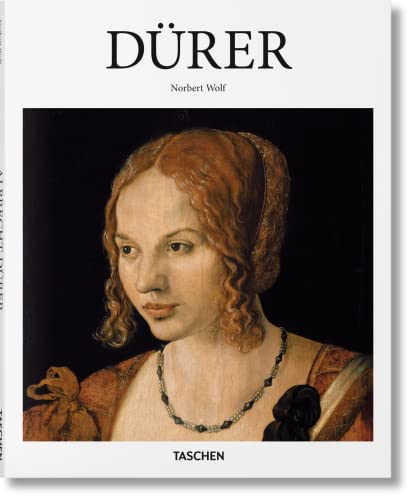
A polymath of the German Renaissance, Albrecht Dürer (1471–1528) was a prolific artist, theorist, and writer whose works explored everything from religion to art theory to philosophy. His vast body of work includes altarpieces, portraits, self-portraits, watercolors, and books, but is most celebrated for its astonishing collection of woodcut prints, which transformed printmaking from an artisan practice into a whole new art form.
Dürer’s woodcuts astonish in scale as much as detail. Through works such as Apocalypse and the Triumphal Arch for Emperor Maximilian I, he created dense, meticulous compositions that were much larger, much more finely cut, and far more complex than any earlier woodcut efforts. With an ambitious tonal and dynamic range, he introduced a new level of conceptual, emotional, and spiritual intensity. His two major woodcut series on Christ’s Passion, named The Large Passion and The Small Passion after their size, are particularly remarkable for their vivid human treatment of the Christian narrative. In his copper engraving, Melancholia I, meanwhile, Dürer created a startling vision of emotional ennui, often cited as a defining early image of a depressive or melancholic state.
Ever inquisitive, Dürer absorbed ideas not only from masters and fellow artists in Germany but also from Italy, while his own influence extended across Europe for generations to come. In this essential TASCHEN introduction, we explore this pioneering figure’s complex practice, his omnivorous intellect, and the key works which shaped his enduring legacy.
"synopsis" may belong to another edition of this title.
About the Author
Norbert Wolf graduated in art history, linguistics, and medieval studies at the Universities of Regensburg and Munich, and earned his PhD in 1983. He held visiting professorships in Marburg, Frankfurt, Leipzig, Düsseldorf, Nuremberg-Erlangen, and Innsbruck. His extensive writings on art history include many TASCHEN titles, such as Diego Velázquez, Ernst Ludwig Kirchner, Caspar David Friedrich, Expressionism, Romanesque, Landscape Painting, and Symbolism.
"About this title" may belong to another edition of this title.
Search results for Dürer

Stock Image
Dürer
Seller: ThriftBooks-Dallas, Dallas, TX, U.S.A.
Seller rating 5 out of 5 stars

Hardcover. Condition: Very Good. No Jacket. May have limited writing in cover pages. Pages are unmarked. ~ ThriftBooks: Read More, Spend Less. Seller Inventory # G3836530813I4N00
Stock Image
Dürer
ISBN 10: 3836530813
ISBN 13: 9783836530811
Used
Paperback
Seller: WorldofBooks, Goring-By-Sea, WS, United Kingdom
Seller rating 5 out of 5 stars
Paperback. Condition: Very Good. The book has been read, but is in excellent condition. Pages are intact and not marred by notes or highlighting. The spine remains undamaged. Seller Inventory # GOR009246544
Buy Used
US$ 14.18
US$ 7.41 shipping
Ships from United Kingdom to U.S.A.
Ships from United Kingdom to U.S.A.
Quantity: 1 available
Stock Image
Dürer
Seller: Roundabout Books, Greenfield, MA, U.S.A.
Seller rating 4 out of 5 stars

hardcover. Condition: Near Fine. Condition Notes: Excellent, unmarked copy with little wear and tight binding. We ship in recyclable American-made mailers. 100% money-back guarantee on all orders. Seller Inventory # 1780622
Stock Image
Dürer
Seller: Better World Books Ltd, Dunfermline, United Kingdom
Seller rating 5 out of 5 stars
Condition: Very Good. Former library copy. Pages intact with possible writing/highlighting. Binding strong with minor wear. Dust jackets/supplements may not be included. Includes library markings. Stock photo provided. Product includes identifying sticker. Better World Books: Buy Books. Do Good. Seller Inventory # 47109542-20
Buy Used
US$ 17.47
US$ 6.62 shipping
Ships from United Kingdom to U.S.A.
Ships from United Kingdom to U.S.A.
Quantity: 1 available
Seller Image
Albrecht Dürer 1471-1528 : The Genius of the German Renaissance
Seller: GreatBookPrices, Columbia, MD, U.S.A.
Seller rating 5 out of 5 stars
Condition: New. Seller Inventory # 25088614-n
Seller Image
Dürer
Seller: Rarewaves USA, HEBRON, KY, U.S.A.
Seller rating 5 out of 5 stars
Hardback. Condition: New. A polymath of the German Renaissance, Albrecht Dürer (1471-1528) was a prolific artist, theorist, and writer whose works explored everything from religion to art theory to philosophy. His vast body of work includes altarpieces, portraits, self-portraits, watercolors, and books, but is most celebrated for its astonishing collection of woodcut prints, which transformed printmaking from an artisan practice into a whole new art form. Dürer's woodcuts astonish in scale as much as detail. Through works such as Apocalypse and the Triumphal Arch for Emperor Maximilian I, he created dense, meticulous compositions that were much larger, much more finely cut, and far more complex than any earlier woodcut efforts. With an ambitious tonal and dynamic range, he introduced a new level of conceptual, emotional, and spiritual intensity. His two major woodcut series on Christ's Passion, named The Large Passion and The Small Passion after their size, are particularly remarkable for their vivid human treatment of the Christian narrative. In his copper engraving, Melancholia I, meanwhile, Dürer created a startling vision of emotional ennui, often cited as a defining early image of a depressive or melancholic state. Ever inquisitive, Dürer absorbed ideas not only from masters and fellow artists in Germany but also from Italy, while his own influence extended across Europe for generations to come. In this essential TASCHEN introduction, we explore this pioneering figure's complex practice, his omnivorous intellect, and the key works which shaped his enduring legacy. Seller Inventory # LU-9783836530811
Seller Image
Drer (Hardcover)
Seller: Grand Eagle Retail, Bensenville, IL, U.S.A.
Seller rating 5 out of 5 stars
Hardcover. Condition: new. Hardcover. A polymath of the German Renaissance, Albrecht Duerer (14711528) was a prolific artist, theorist, and writer whose works explored everything from religion to art theory to philosophy. His vast body of work includes altarpieces, portraits, self-portraits, watercolors, and books, but is most celebrated for its astonishing collection of woodcut prints, which transformed printmaking from an artisan practice into a whole new art form. Duerers woodcuts astonish in scale as much as detail. Through works such as Apocalypse and the Triumphal Arch for Emperor Maximilian I, he created dense, meticulous compositions that were much larger, much more finely cut, and far more complex than any earlier woodcut efforts. With an ambitious tonal and dynamic range, he introduced a new level of conceptual, emotional, and spiritual intensity. His two major woodcut series on Christs Passion, named The Large Passion and The Small Passion after their size, are particularly remarkable for their vivid human treatment of the Christian narrative. In his copper engraving, Melancholia I, meanwhile, Duerer created a startling vision of emotional ennui, often cited as a defining early image of a depressive or melancholic state. Ever inquisitive, Duerer absorbed ideas not only from masters and fellow artists in Germany but also from Italy, while his own influence extended across Europe for generations to come. In this essential TASCHEN introduction, we explore this pioneering figures complex practice, his omnivorous intellect, and the key works which shaped his enduring legacy. All you need to know about Albrecht Duerer, the German Renaissance polymath whose masterful compositionsincluding Melancholia I and Knight, Death and the Devilrevolutionized woodcut illustration, engraving, and printmaking and left an indelible mark on European art. Shipping may be from multiple locations in the US or from the UK, depending on stock availability. Seller Inventory # 9783836530811
Seller Image
Dürer
Seller: Rarewaves.com USA, London, LONDO, United Kingdom
Seller rating 5 out of 5 stars
Hardback. Condition: New. A polymath of the German Renaissance, Albrecht Dürer (1471-1528) was a prolific artist, theorist, and writer whose works explored everything from religion to art theory to philosophy. His vast body of work includes altarpieces, portraits, self-portraits, watercolors, and books, but is most celebrated for its astonishing collection of woodcut prints, which transformed printmaking from an artisan practice into a whole new art form. Dürer's woodcuts astonish in scale as much as detail. Through works such as Apocalypse and the Triumphal Arch for Emperor Maximilian I, he created dense, meticulous compositions that were much larger, much more finely cut, and far more complex than any earlier woodcut efforts. With an ambitious tonal and dynamic range, he introduced a new level of conceptual, emotional, and spiritual intensity. His two major woodcut series on Christ's Passion, named The Large Passion and The Small Passion after their size, are particularly remarkable for their vivid human treatment of the Christian narrative. In his copper engraving, Melancholia I, meanwhile, Dürer created a startling vision of emotional ennui, often cited as a defining early image of a depressive or melancholic state. Ever inquisitive, Dürer absorbed ideas not only from masters and fellow artists in Germany but also from Italy, while his own influence extended across Europe for generations to come. In this essential TASCHEN introduction, we explore this pioneering figure's complex practice, his omnivorous intellect, and the key works which shaped his enduring legacy. Seller Inventory # LU-9783836530811
Buy New
US$ 26.98
Free Shipping
Ships from United Kingdom to U.S.A.
Ships from United Kingdom to U.S.A.
Quantity: 1 available
Seller Image
Albrecht Dürer 1471-1528 : The Genius of the German Renaissance
Seller: GreatBookPrices, Columbia, MD, U.S.A.
Seller rating 5 out of 5 stars
Condition: As New. Unread book in perfect condition. Seller Inventory # 25088614
Seller Image
Dürer
Seller: BookAddiction (IOBA, IBooknet), Canterbury, United Kingdom
Seller rating 5 out of 5 stars
Hardcover. Condition: As New. Dust Jacket Condition: As New. As new. 4to. Still in publisher's plastic wrapper. Seller Inventory # 034017
Buy Used
US$ 17.73
US$ 9.27 shipping
Ships from United Kingdom to U.S.A.
Ships from United Kingdom to U.S.A.
Quantity: 1 available