
Items related to The Electric Geisha: Exploring Japan's Popular...
Synopsis
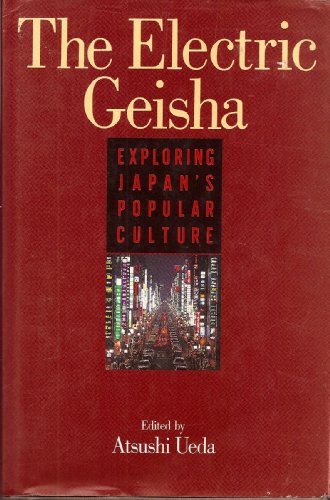
In this stunning collection of essays the roots of Japanese mores and popular culture are explored with disarming candor and verve, covering everything from economics and politics to fashion, entertainment, and sex.
What we normally see of the attention-shy Japanese is simply nothing more than the superficial manifestation of something much deeper. In fact, centuries deeper. The authors take us behind closed doors and illuminate the layers of tradition behind many of today's inexplicable practices. The ubiquitous "package tour" that sees armies of Japanese pleasure-seekers flocking to the far corners of the globe in tight-knit groups has its roots in the temple pilgrimage of old - arranged under the watchful eye of the village associations. The almost fanatical grab for prime property in New York, London, Berlin, and other major cities around the world echoes a cycle of fortune-seeking that began in Japan centuries ago. And the "electric geisha" of the title is a metaphor for the karaoke sing-along machines that have replaced the old forms of entertainment, but serve much the same purpose.
With telling insight and frankness, Mr. Ueda and his colleagues unlock a little more of the Japanese mystery, tracing each thread from the time of shoguns and geisha to the close of the technology-dominated twentieth century. What emerges is a colorful tapestry of old Japan - with its samurai and nobles, palanquins and pleasure quarters - and a fascinating, tightly woven composite of modern Japan, its people, and the collective psyche.
"synopsis" may belong to another edition of this title.
Reviews
In this collection of essays, Japanese academics explain many of their country's customs that frequently puzzle foreigners. Each of the two dozen pieces sketches in both a current practice and its historical roots, supplying insights. The predilection for group travel, for example, an ``object of ridicule'' abroad, ``giving the impression that the Japanese can only function in a group, like sheep,'' can be traced back to pre-modern times when ordinary people made pilgrimages to the Grand Shrines of Ise. The kimono, once an undergarment worn by the nobility, gradually became an outer garment worn by the masses; the Japanese habit of washing before taking a bath may seem peculiar to foreigners, but not as odd as the Western custom of placing a toilet in the same room with the bathtub is to the Japanese. Money, sex, recreation, family life, business, food, tableware, transportation and education are examined.
Copyright 1994 Cahners Business Information, Inc.
"About this title" may belong to another edition of this title.
Search results for The Electric Geisha: Exploring Japan's Popular...

Stock Image
THE ELECTRIC GEISHA: Exploring Japan's Popular Culture
Published by
Kodansha International, Tokyo, Japan, 1994
ISBN 10: 4770017537
ISBN 13: 9784770017536
Used
Hardcover
First Edition
Seller: Stephen Dadd, Ashford, United Kingdom
Seller rating 5 out of 5 stars

Hardcover. Condition: Very Good. Dust Jacket Condition: Very Good. 1st Edition. 260pp. HARDCOVER. (1st ed. & 1st printing.) Clean copy. No inscriptions. In protected VG d/w. Size: 8vo - over 7¾ - 9¾" tall. Book. Seller Inventory # 35367/D-5
Buy Used
US$ 21.74
US$ 17.13 shipping
Ships from United Kingdom to U.S.A.
Ships from United Kingdom to U.S.A.
Quantity: 1 available
Seller Image
The Electric Geisha. Exploring Japan's Popular Culture.
Published by
Kodansha International., Tokyo., 1994
ISBN 10: 4770017537
ISBN 13: 9784770017536
Used
Hardcover
Seller: Asia Bookroom ANZAAB/ILAB, Canberra, ACT, Australia
Seller rating 5 out of 5 stars
Black and white illustrations, 260pp, glossary, edges faintly and evenly browned, minor wear, dustjacket spine a little sunned, a good hardback copy. "In this stunning collection of essays the roots of Japanese mores and popular culture are explored with disarming candour and verve, covering everything from economics and politics to fashion, entertainment, and sex." Publisher's description. Seller Inventory # 67183
Buy Used
US$ 17.97
US$ 21.25 shipping
Ships from Australia to U.S.A.
Ships from Australia to U.S.A.
Quantity: 1 available
Seller Image
The Electric Geisha: Exploring Japan's Popular Culture
Published by
Kodansha International Ltd, Tokyo, 1994
ISBN 10: 4770017537
ISBN 13: 9784770017536
Used
Hardcover
First Edition
Seller: Your Book Soon, Stroud, GLOS, United Kingdom
Seller rating 5 out of 5 stars
Hardcover. Condition: Very Good. Dust Jacket Condition: Very Good. 1st Edition. 260 pp Grey cloth darker title and motif, blue endpapers. Pages tanned otherwise a clean sound book, dust wrapper a little sunned publishers band in Japanese laid in. Seller Inventory # 038859
Buy Used
US$ 17.44
US$ 25.07 shipping
Ships from United Kingdom to U.S.A.
Ships from United Kingdom to U.S.A.
Quantity: 1 available
Seller Image
The Electric Geisha: Exploring Japan's Popular Culture
Published by
Kodansha International Ltd. (Tokyo), 1994
ISBN 10: 4770017537
ISBN 13: 9784770017536
Used
Hardcover
First Edition
Seller: Kitazawa Bookstore, ABAJ/ILAB, Tokyo, TOKYO, Japan
Seller rating 5 out of 5 stars
Hardcover. Condition: Very Good. Dust Jacket Condition: Very Good. 1st Edition. "The Electric Geisha: Exploring Japan's Popular Culture" by Atsushi Ueda. This copy: First Edition. Kodansha International Ltd. (Tokyo), 1994. Hardcover. 260 pp. Binding: Hardcover. Dust jacket: Present. Size: 22.0 x 15.0 cm Language: English Condition: Dust jacket: Very Good - signs of use and light sunning. Body: Very Good - slight tanning and signs of use. Binding: Very Good. Edges: Good - tanning. Pages: Good - noticeable tanning. Text: Very Good. Description: A collection of essays on Japanese popular culture edited by Atsushi Ueda and translated by Miriam Eguchi as stated on the title page. Shipping from Tokyo, Japan. International shipping available. Please note: All sales are final, especially for higher-value items. Returns are not accepted unless the item is significantly not as described. Stock availability may change, as our listings are shared with a physical bookstore. Seller Inventory # SJ926
Buy Used
US$ 35.86
US$ 60.00 shipping
Ships from Japan to U.S.A.
Ships from Japan to U.S.A.
Quantity: 1 available
Stock Image
The Electric Geisha: Exploring Japan's Popular Culture
Seller: BennettBooksLtd, Los Angeles, CA, U.S.A.
Seller rating 5 out of 5 stars
hardcover. Condition: New. In shrink wrap. Looks like an interesting title! Seller Inventory # Q-4770017537
Stock Image
The Electric Geisha: Exploring Japan*s Popular Culture
Seller: Mispah books, Redhill, SURRE, United Kingdom
Seller rating 4 out of 5 stars

Hardcover. Condition: Very Good. Very Good .Ships From Multiple Locations. book. Seller Inventory # ERICA80347700175374
Buy Used
US$ 107.65
US$ 33.07 shipping
Ships from United Kingdom to U.S.A.
Ships from United Kingdom to U.S.A.
Quantity: 1 available