
Synopsis
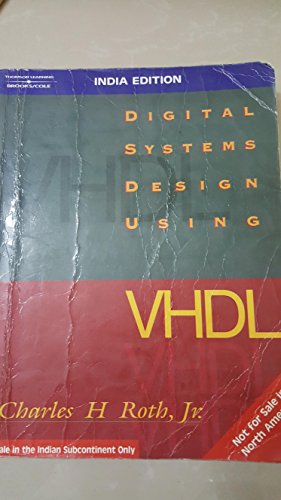
Written for an advanced-level course in digital systems design, DIGITAL SYSTEMS DESIGN USING VHDL integrates the use of the industry-standard hardware description language VHDL into the digital design process. Following a review of basic concepts of logic design in Chapter 1, the author introduces the basics of VHDL in Chapter 2, and then incorporates more coverage of VHDL topics as needed, with advanced topics covered in Chapter 8. Rather than simply teach VHDL as a programming language, this book emphasizes the practical use of VHDL in the digital design process. For example, in Chapter 9, the author develops VHDL models for a RAM memory and a microprocessor bus interface; he then uses a VHDL simulation to verify that timing specifications for the interface between the memory and microprocessor bus are satisfied. The book also covers the use of CAD tools to synthesize digital logic from a VHDL description (in Chapter 8), and stresses the use of programmable logic devices, including programmable gate arrays. Chapter 10 introduces methods for testing digital systems including boundary scan and a built-in self-test. Features: Teaches the use of VHDL in the advanced digital design process; both digital design concepts and VHDL are covered simultaneously. Teaches the use of VHDL for modeling, simulating, and synthesizing digital systems. Design examples range in complexity from a simple adder to a complete microcontroller. Numerous examples and exercises are provided at the end of each chapter, presented at various levels of difficulty. Programmable gate arrays and complex PLDs are presented in Chapter 6, with complete design examples using these devices presented in later chapters. Includes descriptions of both Xilinx an
"synopsis" may belong to another edition of this title.