
Items related to The Return of the Repressed: Pirqe de-Rabbi Eliezer...
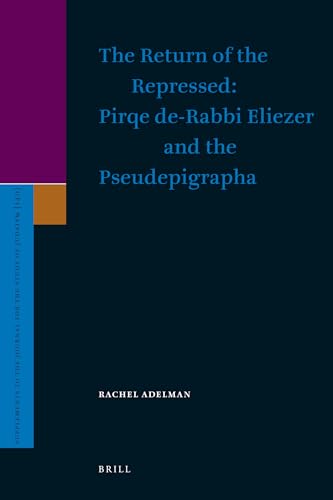
The Return of the Repressed: Pirqe de-Rabbi Eliezer and the Pseudepigrapha (Supplements to the Journal for the Study of Judaism, 140) - Hardcover
Synopsis
This study analyzes mythic narratives, found in the 8th century midrashic text Pirqe de-Rabbi Eliezer (PRE), that were excluded, or ‘repressed’, from the rabbinic canon, while preserved in the Pseudepigrapha of the Second Temple period. Examples include the role of the Samael (i.e. Satan) in the Garden of Eden, the myth of the Fallen Angels, Elijah as zealot, and Jonah as a Messianic figure. The questions are why these exegetical traditions were excluded, in what context did they resurface, and how did the author have access to these apocryphal texts. The book addresses the assumptions that underlie classic rabbinic literature and later breaches of that exegetical tradition in PRE, while engaging in a study of the genre, dating, and status of PRE as apocalyptic eschatology.
"synopsis" may belong to another edition of this title.
About the Author
Rachel Adelman, (Ph.D. Hebrew University of Jerusalem 2008) was a post-doctoral fellow in Jewish Studies at the University of Toronto in 2007-2008. She now teaches Bible and Rabbinics at Miami University, Ohio, and also lectures widely abroad.
From the Back Cover
This book engages in a study of the mid-8th century midrashic text, Pirqe de-Rabbi Eliezer, including a classification of its genre, dating, and its status as apocalyptic eschatology. The author analyses several mythic narratives that were repressed in the rabbinic canon, but found in the Literature of the Second Temple period, only to resurface in this late midrash. Examples include the role of the Samael in the Garden of Eden, the myth of the Fallen Angels, Elijah as zealot, and Jonah as a Messianic figure. In addition, the relationship between myth and praxis is analyzed in terms of the etiological retelling of biblical stories. The book addresses what underlies the assumptions of classic rabbinic literature and later breaches of that exegetical tradition in PRE.
"About this title" may belong to another edition of this title.
Search results for The Return of the Repressed: Pirqe de-Rabbi Eliezer...

Seller Image
The Return of the Repressed: Pirqe de Rabbi Eliezer and the Pseudoepigrapha.
Published by
Brill, Leiden & Boston, 2009., 2009
ISBN 10: 9004170499
ISBN 13: 9789004170490
Used
Hardcover
Seller: Antiquariat Stefan Wulf, Berlin, Germany
Seller rating 5 out of 5 stars

Oktav. Goldgepr. Org.-Ganzleinen mit bedrucktem Org.-SU, viii (+ii), 352 (+6) S., nahezu neuwertiges Exemplar. [=Supplements to the Journal for the Study of Judaism (JSJS); 140]. - Erste Ausgabe. - ISBN 9789004170490. - ENGLISH: Octavo. Publisher's gilt full cloth with publisher's d/j, viii (+ii), 352 (+6) pp., a very fine copy. [=Supplements to the Journal for the Study of Judaism (JSJS); 140]. - Erste Ausgabe. - ISBN 9789004170490. - ENGLISH: Octavo. Publisher's gilt full cloth with publisher's d/j, viii (+ii), 352 (+6) pp., a very fine copy. 1000 g. Seller Inventory # 20_BN_07_078_0602
Buy Used
US$ 155.74
US$ 28.00 shipping
Ships from Germany to U.S.A.
Ships from Germany to U.S.A.
Quantity: 1 available
Seller Image
Return of the Repressed : Pirqe De-Rabbi Eliezer and the Pseudepigrapha
Seller: GreatBookPrices, Columbia, MD, U.S.A.
Seller rating 5 out of 5 stars
Condition: As New. Unread book in perfect condition. Seller Inventory # 8537084
Seller Image
Return of the Repressed : Pirqe De-Rabbi Eliezer and the Pseudepigrapha
Seller: GreatBookPricesUK, Woodford Green, United Kingdom
Seller rating 5 out of 5 stars
Condition: As New. Unread book in perfect condition. Seller Inventory # 8537084
Buy Used
US$ 308.54
US$ 19.82 shipping
Ships from United Kingdom to U.S.A.
Ships from United Kingdom to U.S.A.
Quantity: Over 20 available
Seller Image
Return of the Repressed : Pirqe De-Rabbi Eliezer and the Pseudepigrapha
Seller: GreatBookPrices, Columbia, MD, U.S.A.
Seller rating 5 out of 5 stars
Condition: New. Seller Inventory # 8537084-n
Seller Image
The Return of the Repressed : Pirqe De-Rabbi Eliezer and the Pseudepigrapha
Seller: AHA-BUCH GmbH, Einbeck, Germany
Seller rating 5 out of 5 stars
Taschenbuch. Condition: Neu. Neuware - This study analyzes mythic narratives, found in the 8th century midrashic text Pirqe de-Rabbi Eliezer (PRE), that were excluded, or 'repressed', from the rabbinic canon, while preserved in the Pseudepigrapha of the Second Temple period. Examples include the role of the Samael (i.e. Satan) in the Garden of Eden, the myth of the Fallen Angels, Elijah as zealot, and Jonah as a Messianic figure. The questions are why these exegetical traditions were excluded, in what context did they resurface, and how did the author have access to these apocryphal texts. The book addresses the assumptions that underlie classic rabbinic literature and later breaches of that exegetical tradition in PRE, while engaging in a study of the genre, dating, and status of PRE as apocalyptic eschatology. Seller Inventory # 9789004170490
Buy New
US$ 378.26
US$ 39.20 shipping
Ships from Germany to U.S.A.
Ships from Germany to U.S.A.
Quantity: 2 available
Seller Image
Return of the Repressed : Pirqe De-Rabbi Eliezer and the Pseudepigrapha
Seller: GreatBookPricesUK, Woodford Green, United Kingdom
Seller rating 5 out of 5 stars
Condition: New. Seller Inventory # 8537084-n
Buy New
US$ 407.77
US$ 19.82 shipping
Ships from United Kingdom to U.S.A.
Ships from United Kingdom to U.S.A.
Quantity: Over 20 available