Synopsis
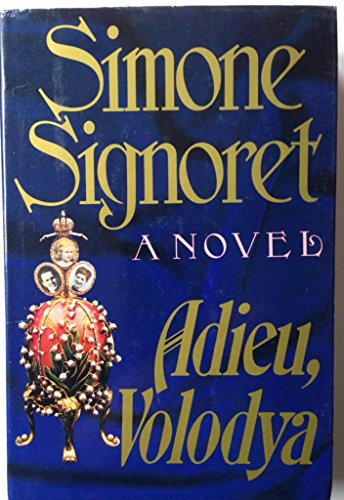
Three families of Jewish emigres living in Paris--Janek and Nicole Roginski, Stepan, Janek's brother, his wife Olga, and their daughter; and the Guttmans--experience the upheavals of a Europe in the years after World War I
Reviews
When she completed this novel in September 1984, the actress may well have known she hadn't long to live. The foreknowledge of her death may account for the sense her novel conveys of striving to get everything said while there was still time. Without being directly autobiographical, this generational saga has the feel of absolute fidelity to ancestral history. Two Jewish families, one from the Ukraine, the other from Poland, both in flight from anti-Semitic pogroms, settle in Paris after the Russian Revolution. Their children carry the weight of the richly detailed, densely factual narrative as their own lives trace the trajectory of European history through the following decades. They come of age during the rise of Nazism, experience the excrescence of French anti-Semitism, the Spanish Civil War and the Popular Front, the fall of France and the German Occupation, deportations, the Resistance and liberation. A multitude of details tends to slow the pace and minor digressions abound; sometimes the telling is flat and reportorial, dutiful rather than necessary. But these are relatively minor flaws in a deep-running, sensitive novel we should be grateful to have.
Copyright 1986 Reed Business Information, Inc.
This novel by the celebrated French actress, published here posthumously, follows the fortunes of some Jewish emigre families. Set in Paris between the world wars, her story is of people who find ways to survive both the memories of past persecution in Eastern Europe and the threats of Nazism on the rise in France. Numerous characters, most connected with the garment and theater industries, are brought in, but only Nicole, the nouveau riche neurotic who has created both a new identity and a new past for herself, seems to be flesh and blood. The others, despite some lively dialogue, are two-dimensional and unreal. But a sense of the era does emerge, with political events skillfully interwoven. Laurie Spector Sullivan, Frank Lloyd Wright Index Project, Cambridge, Mass.
Copyright 1986 Reed Business Information, Inc.
"About this title" may belong to another edition of this title.