Synopsis
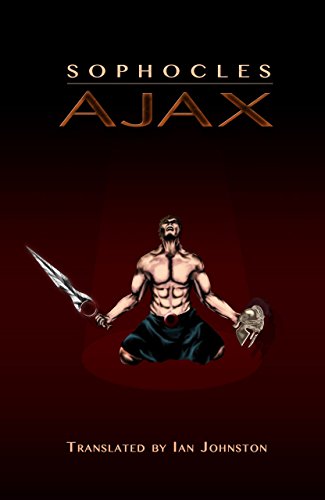
Sophocles (c. 496 BC to 406 BC), the great Athenian tragic dramatist, wrote Ajax early in his career, perhaps around 440 BC. It is one of the seven plays which survive from the more than one hundred and twenty plays Sophocles wrote.Ajax presents the story of the final day in the life of one of the most glorious heroes from the world of the Iliad, the great Ajax, king of Salamis, the finest warrior after Achilles, who is driven mad by the gods, commits unspeakable atrocities, and then must face up to what he has done, particularly to the shame he must now encounter from his colleagues and his family. How can a hero who has always lived by the traditional heroic code continue living after such a disgrace? Ajax s resolution of this problem is one of the very greatest scenes in tragic drama. In the character of Odysseus, Ajax s great enemy, Sophocles also explores how a society which has moved beyond the heroic age should deal with such disasters.Ian Johnston new translation is an accurate and fluent rendition of Sophocles text, especially suitable for dramatic production.
About the Authors
Sophocles (c. 497–406 BC) was one of the three great tragedians of ancient Greece and the most widely read playwright of classical Athens. Celebrated for his mastery of dramatic structure and psychological depth, he transformed Greek tragedy by introducing a third actor, expanding character complexity, and strengthening plot development. His works explore themes of honor, fate, human suffering, and moral responsibility with clarity and enduring power. Of the more than 120 plays he wrote, only seven survive, including Ajax, Antigone, Oedipus the King, Electra, and Oedipus at Colonus, each considered foundational to Western literature. Sophocles’ influence continues today in literature, theatre, philosophy, and the study of classical civilization.
Ian Johnston, Translator, was born in Valparaiso, Chile, and educated in Canada and England. He has a BSc from McGill in Geology and Chemistry, a BA from Bristol in English and Greek, and an MA from Toronto in English. For many years he taught as a college and university-college instructor in British Columbia teaching English, Classics and Liberal Studies. He is the author of The Ironies of War: An Introduction to Homer's Iliad. His translation of Homer's Iliad and Odyssey have recently been published in both book and audiobook form. He is now retired and living in Nanaimo, British Columbia.
"About this title" may belong to another edition of this title.