Synopsis
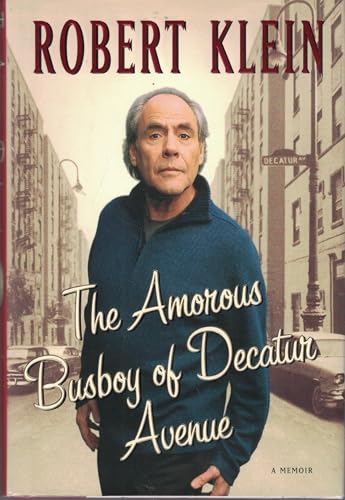
The comedian traces his rise from a New York City youth of the 1950s and 1960s to a stage and film star, describing his childhood antics as a young class clown, his Jewish heritage, and his professional achievements.
Reviews
Best known for his unique brand of observational humor—seen on Broadway and in film and television—Klein details his life from ages nine to 25 as seen "through the gauze of time." Uproarious opening chapters about his 1950s Bronx childhood and his overly cautious parents ("Never touch a light switch with wet hands! My God, don't cut that bagel toward your neck!") give way to a recollection of seeing a feared fourth-grade teacher go beyond her usual verbal venom and hit a student in the face. Klein's theme park of memories alternates dark moments with sunlit humor. Teenage frustrations prompted a visit to a Harlem prostitute, which filled Klein with "shame and triumph and guilt." He encountered individual and institutional anti-Semitism at Alfred University, yet led the frat house fun, moving on to the Yale School of Drama, Chicago's Second City, New York theater and a variety of romances. Along the way, Klein had successes and failures, both in bed and on stage. Probing not only his own psyche but also the evolution of sexual mores during the 1950s and '60s, he unfurls an array of captivating anecdotes, writing with wry wit and honesty. B&w photos. Agent, Mel Berger. (June 2)
Copyright © Reed Business Information, a division of Reed Elsevier Inc. All rights reserved.
Celebrity autobiographies, perhaps by definition, are often self-indulgent. Klein's story is no exception. Fortunately, the comedian, actor, and witty observer of our social foibles is also a fine and very funny writer. Raised in a Bronx apartment by very "cautious" Jewish parents, Klein recounts his childhood with both affection and a sharp critical eye. While he seemed inclined to rebel, Klein also makes clear, without regrets, that he is a proud product of his youthful experiences. In school, he was an occasionally disruptive class clown, but he obviously gained both knowledge and insight from his public-school education. As Klein pursued a career in entertainment, one can see the flowering of his gift for satirical social criticism. His first major break, winning a job with Chicago's Second City improvisational troupe, is remembered here fondly, and Klein fills his story with interesting and revealing anecdotes about many Second City alumni. Klein's humor is biting, sometimes scatological, but never bitter, and he reveals an interesting life with this thoroughly enjoyable chronicle. Jay Freeman
Copyright © American Library Association. All rights reserved
"About this title" may belong to another edition of this title.