About this Item
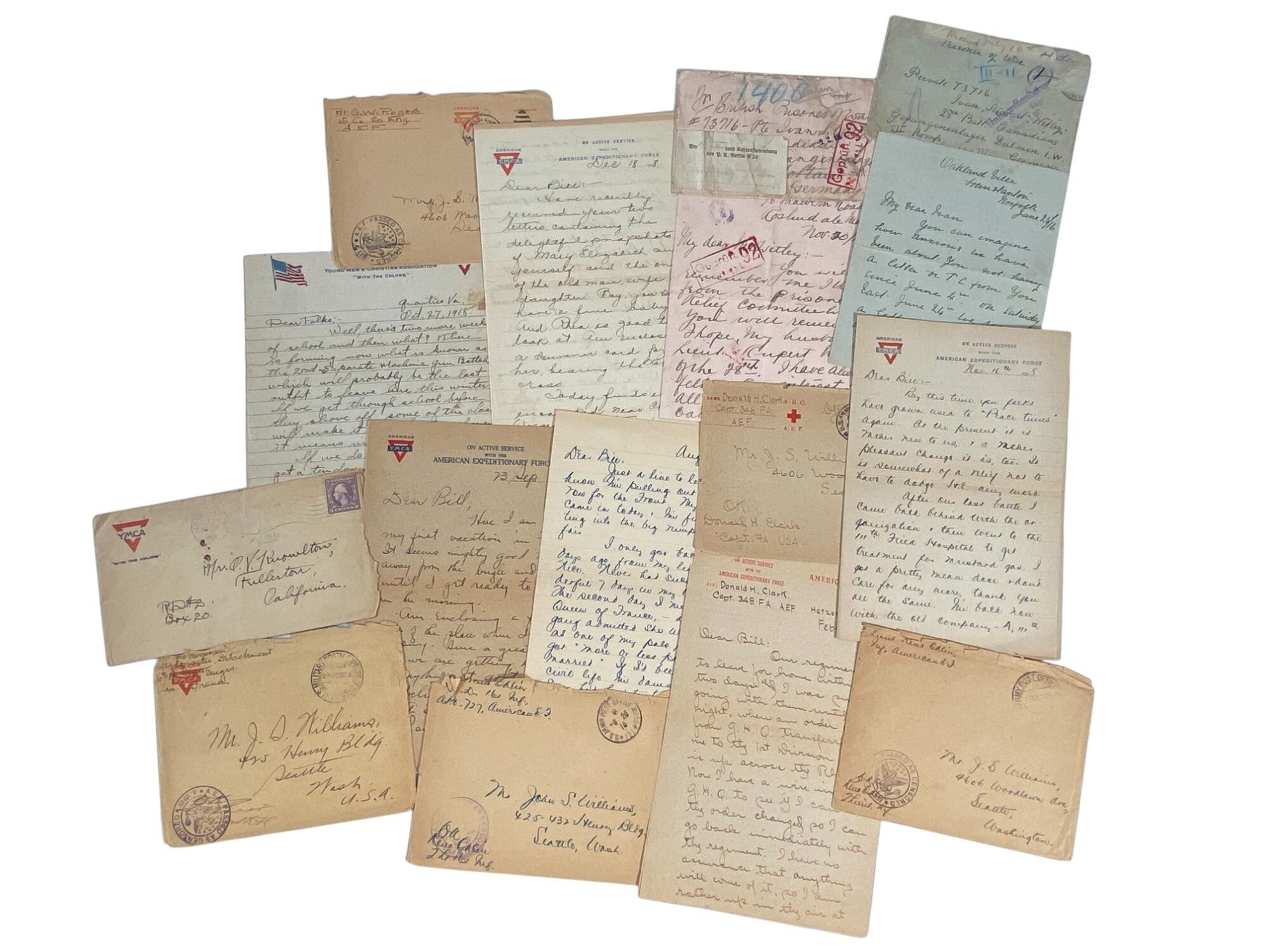
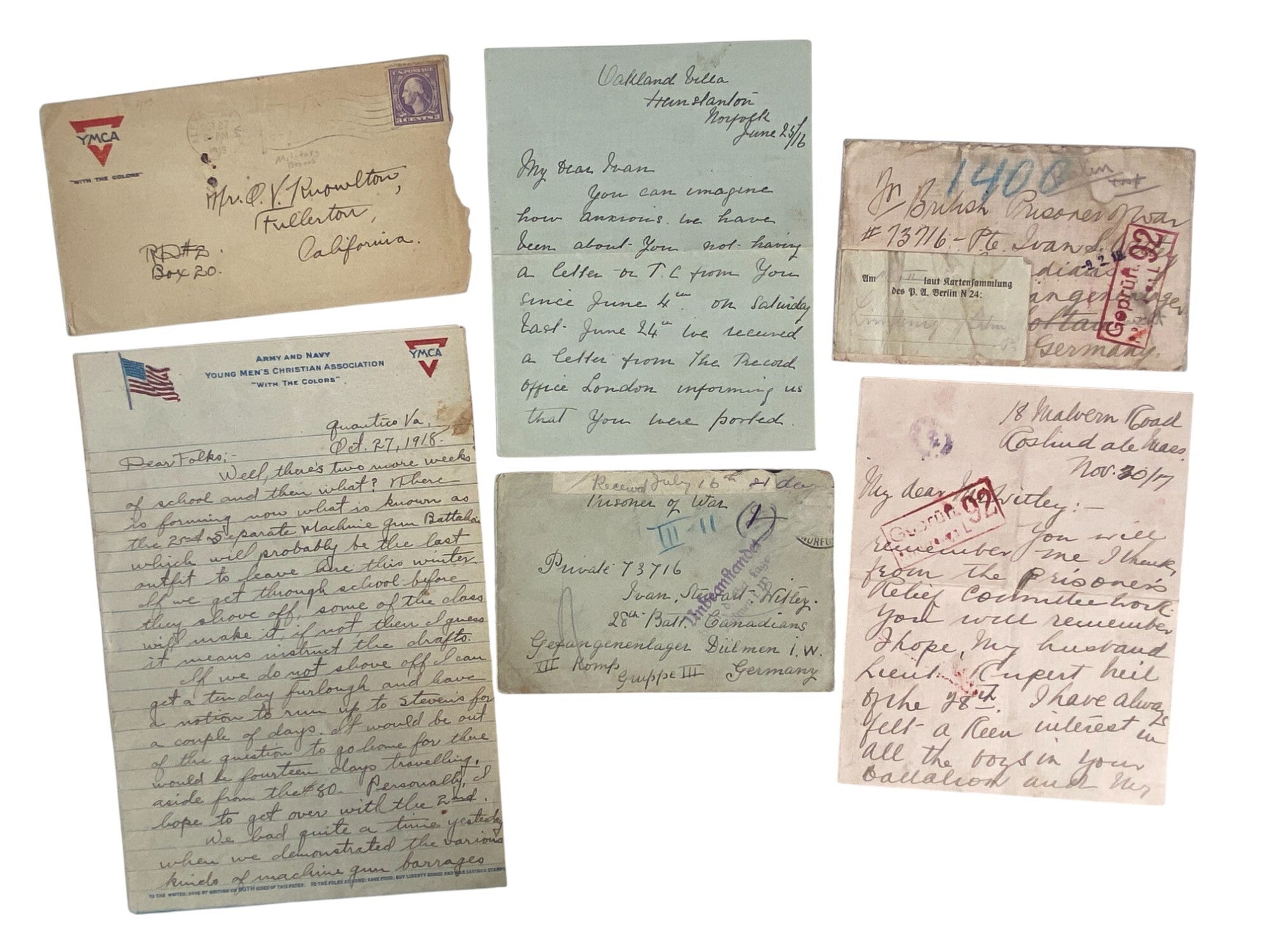
[WWI][Prisoners of War] World War I soldier correspondence archive of Allied military communication during the global conflict and its immediate aftermath. The letters record exchanges between servicemen and family members during active combat operations, imprisonment in German prisoner of war camps, and the post armistice occupation of Germany. The letters illustrate how military censorship impacted wartime communication between soldiers, POWs, and international relief organizations. Prisoner of war correspondence often passed through humanitarian channels such as the Red Cross and was subject to strict limitations, while soldiers of the American Expeditionary Force in France wrote under similar censorship rules that restricted discussion of troop movements and military conditions. The archive preserves the constrained language and emotional tone characteristic of wartime letters. Archive includes: [1] World War I POW prisoner correspondence from Gefangenenlager Dülmen, Germany, July 23, 1916. Letter regarding Canadian POW Ivan Stewart Atley of the 28th Battalion, Canadian Infantry. Atley's family writes anxiously from Norfolk: "we have been anxious. not having a letter or P.C. from you since June 4th. June 24th we received a letter from the Record Office London informing us that you were posted." The envelope is heavily censored with German stamps and POW handling marks, underscoring the delays and restrictions imposed on prisoner correspondence. [2] World War I POW related correspondence from Scotland, November 30, 1917. Letter by Mrs. P.W. Neil appealing on behalf of her husband, Lieut. Rupert Neil, who was captured after being injured: "He had the misfortune to sprain his ankle and was recaptured." She pleads for communication to ensure her husband's welfare. The envelope bears censor stamps, providing direct evidence of how Britain and Germany monitored correspondence relating to prisoners. [3] World War I Marine correspondence from Quantico, Virginia, 1918. Hollis Knowlton, U.S. Marine Corps, writes on YMCA "With the Colors" stationery during training. He describes drill routines and preparation for deployment, his letter framed by the institutional language of YMCA morale material. [4] World War I American Expeditionary Forces correspondence from France, April 20, 1918. Sgt. E.E. Harpham of the 20th Engineers writes to Seattle. He notes, "I would like to tell you in detail the whole thing but we are not permitted to write anything of the sort from here." His admission of forbidden detail reflects censorship's effect on soldiers' letters. He adds that American news is scarce: "I have seen very little of the American papers or magazines since coming over." [5] World War I American Expeditionary Forces correspondence from France, August 24, 1918. Lieut. Reed Allin informs his correspondent of leave in Nice, and reports gas casualties: "After our last battle I came back. to the Field Hospitals to get treatment for mustard gas. I got a pretty mean dose-don't care for any more, thank you all the same." He tempers his disclosure with humor, a coping mechanism under censor oversight. [6] World War I American Expeditionary Forces correspondence from France, September 23, 1918. Sgt. Harpham again writes from the 20th Engineers on YMCA stationery, reporting a temporary reprieve from camp: "Here I am spending my first vacation in France. it seems mighty good to get away from the bugle and sleep." [7] World War I American Expeditionary Forces correspondence from France, November 16, 1918. Lieut. Reed Allin reflects on the aftermath of the Armistice. He anticipates a paperwork assignment: "After the last battle the Colonel recommended me for promotion. so I expect by the 1st of December to be a 2nd Lieutenant." [8] World War I American Expeditionary Forces correspondence from France, December 18, 1918. Pvt. G.W. Rogers of the 20th Engineers writes while encamped in the Vosges: "Today finds us encamped near Chatenois (Vosges). we hav.
Seller Inventory # 22635
Contact seller
Report this item