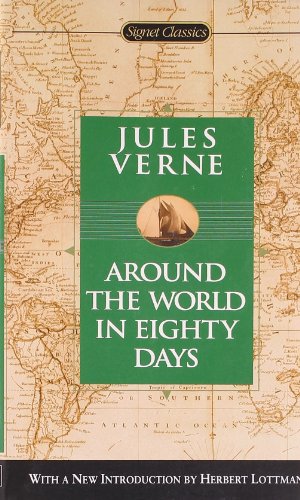
Synopsis
One ill-fated evening at the Reform Club, Phileas Fogg rashly bets his companions that he can travel around the entire globe in just eighty days -- and he is determined not to lose. Breaking the well-established routine of his daily life, the reserved Englishman immediately sets off for Dover, accompaned by his hot-blooded manservant Passepartout. Traveling by train, steamship, sailboat, sledge, and even elephant, they must overcome storms, kidnappings, natural disasters, Sioux attacks, and the dogged Inspector Fix of Scotland Yard -- who believes that Fogg has robbed the Bank of England -- to win the extraordinary wager. Around the World in 80 Days gripped audiences on its publication and remains hugely popular, combining exploration, adventure, and a thrilling race against time.
About the Author
Jules Verne, born at Nantes, France, in 1828, of legal and seafaring stock, was the author of innumerable adventure stories that combined a vivid imagination with a gift for popularizing science. Although he studied law at Paris, he devoted his life entirely to writing. His most popular stories, besides 20,000 Leagues Under the Sea (1870), include: Five Weeks in a Balloon (1863), Journey to the Center of the Earth (1864), A Trip to the Moon (1865), Around the World in Eighty Days (1872), and Michael Strogoff (1876). In addition, he was the author of a number of successful plays, as well as a popular history of exploration from Phoenician times to the mid-nineteenth century, The Discovery of the Earth (1878-80). After a long and active career in literature, Jules Verne died at Amiens, France, in 1905.
"About this title" may belong to another edition of this title.