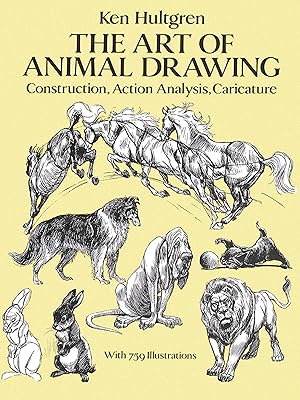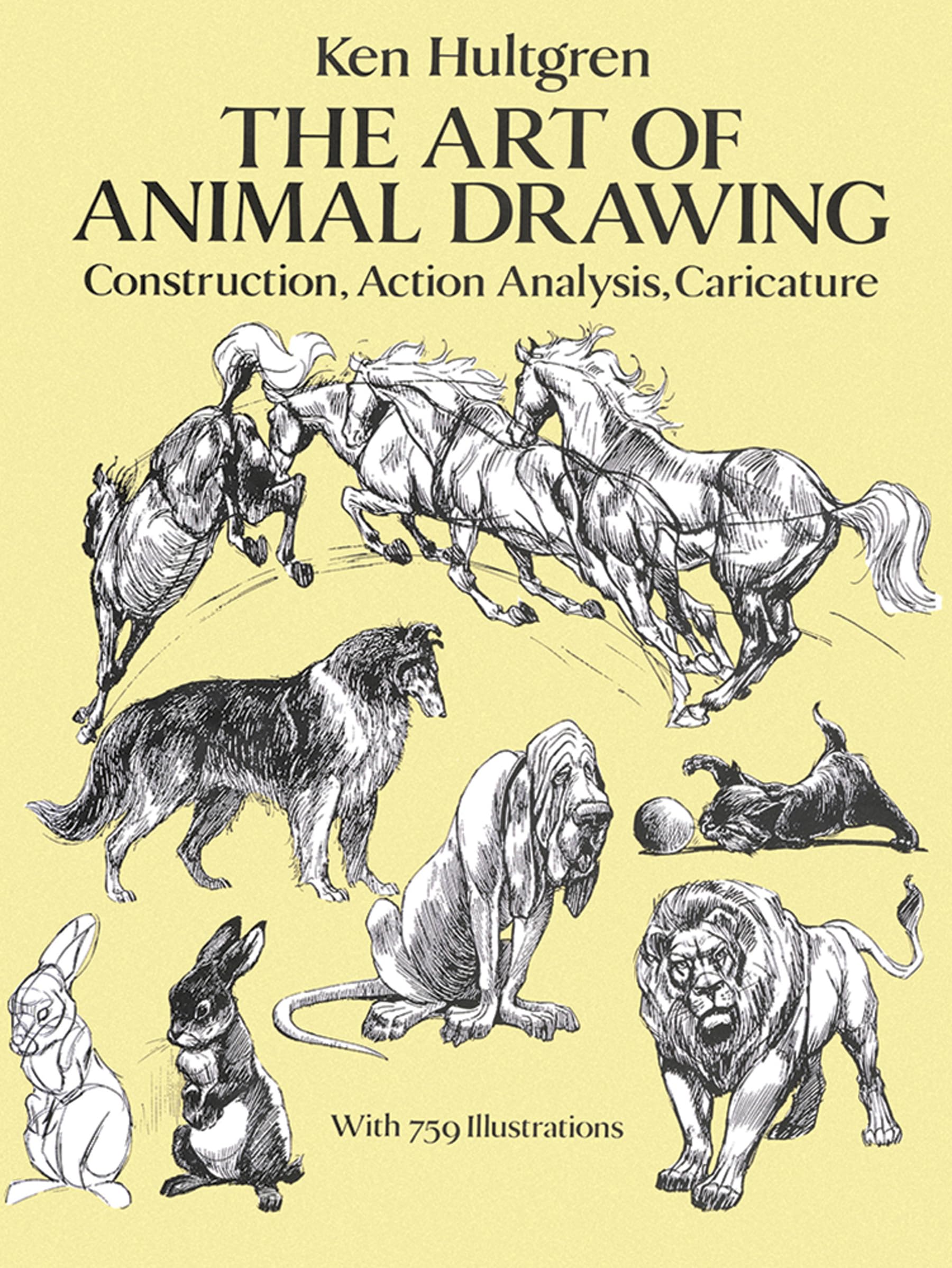
A must-have resource combining the experience of a Walt Disney Studios animator with exemplary line illustrations for artists eager to capture the essence, movement, and character of animals. Former Disney animator offers expert advice on drawing animals both realistically and as caricatures. Use of line, brush technique, establishing mood, conveying action, and much more. Construction drawings reveal the development process in creating animal figures. Many chapters cover drawing individual animal forms, including dogs, cats, horses, deer, cows, foxes, and kangaroos. 53 halftones, 706 line illustrations.
- Comprehensive Techniques: Learn essential methods like construction, action analysis, and caricature to understand animal anatomy and dynamics.
- Extensive Visual Examples: Features over 700 stunning line illustrations prioritizing visual learning over theoretical explanation.
- Versatile Animal Studies: Includes detailed guidance on drawing a wide range of animals, from horses and cats to giraffes and gorillas.
- Master Movement and Emotion: Develop the ability to portray lifelike action, mood, and expressions, avoiding static or lifeless poses.
- For All Skill Levels: Whether you’re a beginner, student, or seasoned professional, this book offers insightful instruction for every artist.
- Expert Advice: Benefit from the perspective of legendary animator Ken Hultgren with practical tips and techniques honed in the golden age of animation.
The Art of Animal Drawing is a timeless treasure for creators passionate about bringing the animal world to life through art!
This thoughtful and incisive guidebook, written by a former animator for Walt Disney Studios, will help artists at many skill levels improve their ability to draw a wide variety of animal forms both realistically and as caricatures.
You'll learn why the author considers construction, action analysis, and caricature all-important for a clear understanding of animal anatomy and movement. You'll also benefit from Mr. Hultgren's expert
advice and tips on catching the essential movement and character of animals and avoiding the stiff, wooden poses that are the frequent and unfortunate result of much sketching of animals from life. Throughout, the emphasis is on construction drawings (there are over 700 line illustrations and halftones) rather than on text. This means the student is able to view the development process of the drawing by example rather than theory or description.
The book begins with introductory chapters on the special techniques of drawing animals, the use of line, establishing mood and feeling, conveying action, and brush techniques. Mr. Hultgren then turns to individual animal forms—horses, deer, cats, cows and bulls, giraffes, camels, gorillas, pigs, and many more. His instruction on animal caricature will be especially valuable to the legions of artists avidly interested in the subject. The Art of Animal Drawing belongs in the library of any artist—student, amateur, or professional—who is interested in drawing animals.