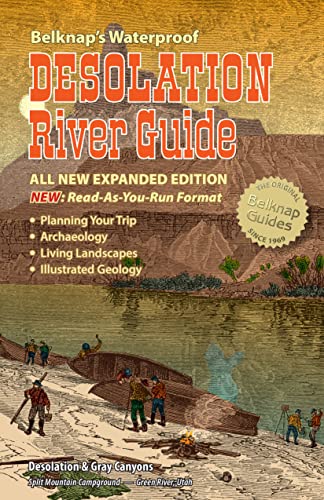
Created by river runners for river runners, this newly updated waterproof guide is built for adventure. It covers 200 miles of Utah’s Green River—from Split Mountain Campground in Dinosaur National Monument to the town of Green River—with a special focus on the iconic Desolation and Gray Canyons.
Designed in a convenient read-as-you-run format, the guide now includes 32 additional pages filled with detailed river maps, planning tips, suggested campsites, hiking highlights, and rich archaeological insights into Desolation-Gray, Nine Mile, and Range Creek. You'll also find expanded content on the region’s unique ecology and living landscapes, along with in-depth geology sections featuring diagrams, photo labels, and clear explanations to deepen your understanding of the canyon environment.
Belknap’s Waterproof Desolation River Guide includes:
- INFORMATIVE DETAILED RIVER MAPS to guide you through the canyon with beautiful shaded-relief topographic maps
- ACCURATE CAMPSITE, RAPIDS AND OTHER FEATURE LOCATIONS with USGS Mileage Points
- FULL-COLOR GEOLOGY PHOTOS AND DIAGRAMS to explain the canyon’s rock history
- ARCHAEOLOGY AND HISTORY SECTIONS to share the early inhabitants, explorers and pioneers
- PLANTS AND ANIMALS OF THE CANYON with full-color photos and descriptions to help identify the flora and fauna, including information on native and invasive fish
- WATERPROOF BOOK made to last and be used on the river!
Buzz Belknap, grew up going on river trips with his father, photographer Bill Belknap, and family friend Otis “Dock” Marston. Buzz’s outstanding Canyon adventures include a 1958 outboard expedition riding flows in excess of 100,000 c.f.s. and a 1963 sportyak trip on 900 c.f.s. He also crewed for the 1959 Disney film, Ten Who Dared, a reenactment of Powell’s journey, and, at the age of sixteen, piloted one of four jet boats on the successful 1960 Grand Canyon uprun. In 1968, while an officer in the U.S. Navy, he conceived the idea for the Grand Canyon River Guide. Working with his Dad and printer Eben Dale, he designed and produced the first Guide, now known as “Old Blue.” It came off the press in time for the 1969 Powell Centennial Celebration.