Synopsis
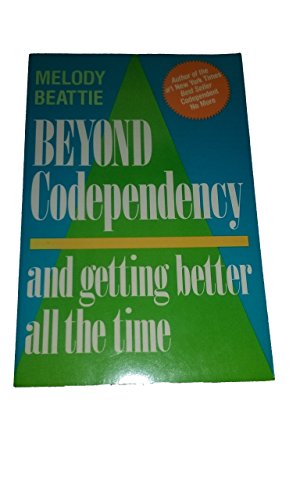
In the companion volume to her popular book, Codependent No More, Beattie teaches individuals how to do more than just survive. She teaches them to grow and to realize that recovery from codependency is a lifelong journey of self-care.
Reviews
Adult children of alcoholics and drug abusers will want to peruse this encouraging sequel to Beattie's groundbreaking book on the dynamics of codependency ( Codependent No More ). She focuses here on the process of recovering from the self-defeating behaviors adopted as survival tactics by adult children of families rendered dysfunctional by parental alcoholism or similar traumas. Beattie's strength is short, sharply delineated portraits of ordinary people learning to recognize and avoid unhealthy practices--obsessive concern for the welfare of others at one's own expense, lack of self-esteem, etc. The author stresses the practical, offering possible ways to cope with difficulties and suggesting "activities" ("What would a diagram of your recovery look like?") at the end of each chapter. And Beattie maintains the sensitive, supportive tone epitomized in the opening chapter: "Let's love ourselves for how far we've come. Let's see how far we can go." The uninitiated may be put off initially by her jargon, but the author's wisdom and common sense soon become apparent. 175,000 first printing; $125,000 ad/promo; author tour.
Copyright 1989 Reed Business Information, Inc.
Codependency is a term applying not only to the spouses of alcoholics and drug abusers, but to any "person who has let someone else's behavior affect him or her, and is obsessed with controlling that person's behavior." In her best-selling Codependent No More , and now here, Beattie draws on her own experience and on the insights developed by a whole U.S. subculture devoted to treatment and to participation in 12-step programs such as AA and Al-Anon. There are a lot of books circulating in this subculture, but Beattie reaches out to the mass market. She covers the usual codependency topics--oneself and one's needs, family of origin, intimacy, boundaries, conflict resolution, children, relationships, and relapse or recycle--but places them all in the infrequently considered context of how to keep going with a recovery process once it's begun.
- Janice Dunham, John Jay Coll. Lib., New York
Copyright 1989 Reed Business Information, Inc.
"About this title" may belong to another edition of this title.