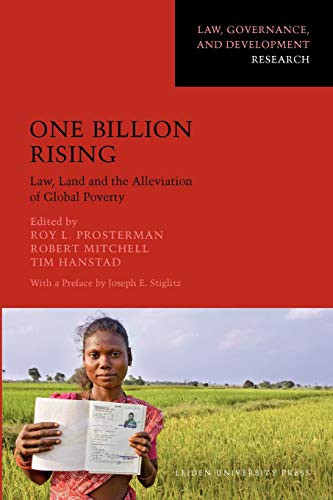
In an age fueled by globalization and focused on the struggling citizens of the urban metropolis, it might come as a surprise to learn that most of the world’s 1.4 billion poorest people are still rural. Unfortunately, the vast majority of these populations lack ownership of—and rights to—the land that forms their principal source of livelihood. Although land reform and related legal work have transformed the lives of millions of families by providing secure land rights, not all such efforts have succeeded. That mix of success and failure has been a big part of the reason that, in recent years, the conventional wisdom concerning law and land tenure reform—what is needed, what is possible, and how such reform contributes to pro-poor development—has changed, sometimes in striking ways. In this timely and important volume, lawyers from the Rural Development Institute and the University of Washington’s School of Law in Seattle use four decades worth of research on the results of land tenure reform efforts around the world in order to address how we might better meet the struggles to understand and change the plight of the rural poor.
Roy L. Prosterman is founder and chairman emeritus of the Rural Development Institute (RDI) in Seattle, Washington and professor emeritus at the University of Washington’s School of Law. Tim Hanstad is chief executive officer and president of RDI, and affiliate associate professor of law at the University of Washington’s School of Law. Robert Mitchell is program chair and senior land tenure expert at RDI, where he currently directs RDI’s India Program and affiliate assistant professor of law at the University of Washington’s School of Law.