Synopsis
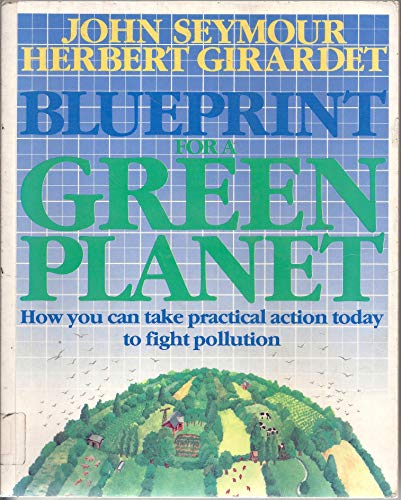
Seymour and Girardet's book is a good beginning place for people who want to learn more about environmental problems and how they can tread less lightly upon the Earth. The text is clearly written at a level the average person can understand and a large number of drawings illustrate well the various systems and cycles they discuss. One of my favorites is the four-page spread (58-61) showing how food gets from the farm to our tables. One suspects that if more people followed the book's Six Principles for Good Housekeeping (18), the world would be in much better shape.
Readers must read critically, however. Several times I found the authors overstating their case. One wonders, for example, if more widespread paper recycling programs would really make this industry, "hugely profitable, and the scourge of paper litter would vanish." (90) I was simiarly skeptical of their discussion of the Borana tribe, a people who "live almost entirely on milk--with a little meat from time to time" but do not suffer from heart disease usually associated with a high fat diet. (70-1). These and similar exaggerations, perhaps made with best intentions, are dangerous ammunition for opponents who wish to discredit environmentalists.
http://www.amazon.com/Blueprint-Green...
Reviews
YA Seymour and Giradet depict a very serious, negative picture of our environment, explaining how it became this way and offering suggestions for what can be done to swing the pendulum the other way. But it is really a book of hope, and throughout the text the authors suggest plans or ``blueprints'' that give readers ``positive action'' steps to take concerning a particular ecological malady. The authors present facts concerning solid waste, water, farming, drugs, hazards in the home, energy problems, and pollution in a clear, non-technical style. This approach, combined with superb diagrams, charts, and the ``positive action'' steps, makes this a perfect reference book for chemistry and biology teachers or students. Yet its appeal is broader, for teachers and students of social science will come to view it as a guide to ``citizen action.'' Seymour and Giradet succeed in convincing readers that individuals can make a difference if they try. Robyn Schuster, Episcopal High School, Bellaire
Copyright 1987 Reed Business Information, Inc.
"About this title" may belong to another edition of this title.