Synopsis
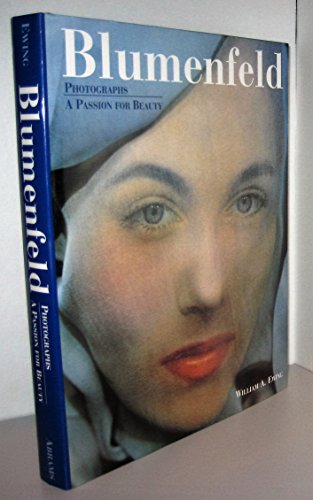
With a career that took him from pre-1914 Berlin to Amsterdam, Paris, and New York, Erwin Blumenfeld (1897-1969) was one of the outstanding figures in the history of twentieth-century photography. From the late 1930s to the 1960s, at such influential magazines as Harpers' Bazaar and Vogue, he transformed fashion into high art, and his pictures were in such demand that by the mid-1950s he had become the most highly paid fashion photographer in the world. He photographed the greatest couture creations of the day - designs by Chanel, Balenciaga, Piguet, Dior, and Charles James. Yet his very success in that glamorous world has until now obscured a far more complex and eclectic talent and personality.
In Blumenfeld: Photographs, William A. Ewing explores the life and work of this extraordinary and multitalented man. Blumenfeld took up photography almost by chance in the 1920s, beginning with portraiture and the nude. His highly original and visionary work was a seamless blend of the negative and the positive: taking the picture in the studio and making it in the darkroom. Highly inventive, he developed his own idiosyncratic language, using solarization and negative printing, double and multiple exposures, and a host of hybrid techniques. His interests soon expanded to include architectural subjects, landscapes, and works of art, but photographing "Woman" - or capturing the "eternal feminine," as Blumenfeld described it - would remain his chief obsession throughout his life.
This book is the first retrospective examination of Blumenfeld's work. It brings together the diverse achievements of this brilliant photographer in more than 235 images in both color and black-and-white, providing a thorough representation of his drawings, collages, and photographs.
Reviews
Erwin Blumenfeld (1897-1969) went through a lot before becoming the highest-paid fashion photographer in the world. A child photographer contemptuous of bourgeois Berlin parents whose bedroom keyhole nonetheless taught him economy of design, he served as a front-line German "corpse-carrier" in WWI, after which he failed as a ladies-goods shopkeeper in Amsterdam before remaking himself as a Dada photo-artist in Paris of the 1930s. When, as a WWII emigre, he arrived in New York City, he had few published photographs. As seen in this lively biography and retrospective pictorial history by photo-historian Ewing, Blumenfeld, by virtue of a long series of Vogue magazine covers and advertising assignments in the 1950s, became a visual innovator whose "masterpieces of form and colour" owed as much to laboratory manipulation as to artistry in street or studio. He is recognized here for the first time on such a scale. The book's bold design ideally suits the often startling close-cropping, double-image or simply color-accented subjects seen in the plates. Photographer-artist Schinz (The Book of Sweets) was a Blumenfeld associate.
Copyright 1996 Reed Business Information, Inc.
Though Edwin Blumenfeld is best known as a master of fashion photography, this book also explores his early work, including painting, drawing, and collage. By showing Blumenfeld's imagination in these other media, photography curator Ewing and Schinz, Blumenfeld's principal assistant from 1964 until his death in 1969, have prepared the reader for the photographer's creative range. Blumenfeld used cubist perspectives, multiple exposures, lighting surprises, mirrors?whatever it took to keep his work fresh through four decades of fashion photography. With a rich legacy in Vogue and other fashion publications, Blumenfeld worked magic with color, the female form, fabric, and fantasy. His images from the 1930s are as cutting edge as any produced in the 1990s. Recommended for photography and fashion collections.?David Bryant, New Canaan P.L., Ct.
Copyright 1996 Reed Business Information, Inc.
"About this title" may belong to another edition of this title.