Synopsis
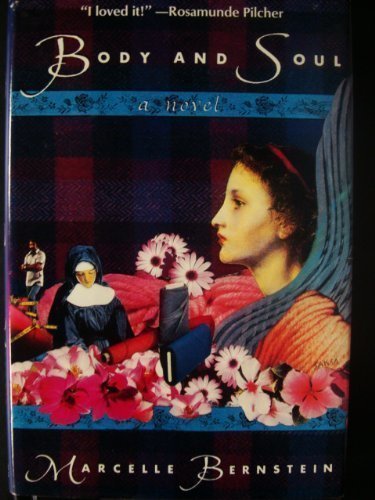
When her brother dies, nun Anna Summers returns home from her strict religious life in Wales, confronts her secular desires, and must choose between returning to the convent and pursuing a more normal life
Reviews
Anna, enclosed for 13 years as Sister Gabriel in a Welsh convent, has already begun to lose her fervor when a crisis summons her briefly outside its walls. Her brother Simon, having brought the family woolen mill to the verge of bankruptcy, has committed suicide and left his pregnant wife Lynn with two small sons. Anna knows the business: she contributes to her convent's income by carding and spinning yarns that she dyes with natural colors from nuts and mosses. Lynn's ineptitude and the mill's imminent ruin impel Anna to try to save the family. At the plant she confronts the scurrilous Beattie, a manager who harrasses female workers and plans to switch to cheaper synthetic fibers, and becomes attracted to an honest overseer, brash Peter Hallam. Submitting rather passively to badgering by her whiny sister-in-law and rough-mannered lover, Anna doesn't always seem forceful enough to make the tough decisions required as she is torn between religious and secular life. Journalist Bernstein, author of three previous novels and The Nuns , a well-researched nonfiction study, does better with depictions of the solaces, rigors, self-flagellations and lesbian temptations of the cloister than with the humdrum workaday details of the yarn-spinning industry. Literary Guild and Doubleday Book Clubs alternates.
Copyright 1991 Reed Business Information, Inc.
A contemporary nun from a strict contemplative order in Wales ventures out into the world and within a few months finds earthly love, life's small material pleasures, a career (she saves and runs the family woolen mill), swell clothes, and a decent haircut. A perfunctory genuflection is made to the spiritual life, but the show is the unfreezing of nunly chaste discipline--an ancient (and rather tawdry) popular titillation. Anna, a.k.a Sister Gabriel, is a member of an order where the work is simple and hard, the discipline severe. She is beginning to feel restless, but it's not until her brother commits suicide and her sister-in-law Lynn, mother of two and expecting, calls for help that Anna is exposed to the temptations and challenges of the outside world. Anna helps the distraught Lynn while guiltily enjoying delights like perfumed baths and coffee (the sisters were served hot water--rarely tea). But then she confronts the problem of the family mill (she's the only descendant). The mill, thanks to Anna's brother's instability and the dirty work of a manager, is about to go under. But with an acumen hitherto slumbering at the convent, Anna takes hold, and using her remembered knowledge of the business and materials--from fleece to dye to looms--she routs the bad guy, makes super bank deals, and even, along the way, helps deliver Lynn's baby (with the help of one of the bankers). Un- habited, there'll be a night of love, stolen kisses, and a promise of future partnership before Anna officially leaves the convent. Bernstein (Nuns, 1976) has chosen convent rituals and rules of unusual rigor to point up pulse pounding when the world booms in. It all boils down to: nun thaws, has--whimperin' wimples!--sex and career. -- Copyright ©1991, Kirkus Associates, LP. All rights reserved.
Thirty-one year old Anna has been cloistered in a strict convent in Wales for 13 years when she is called home to England to look after her brother's widow, children, and the family business. Already doubting her calling, Anna is thrown into a world that has changed dramatically since she left. She finds that she desperately misses the things that she will never have as a nun. Her habit starts to become a prison rather than a sanctuary. She must come to terms with her sexuality and her power as a woman and at the same time resolve her spiritual questions. Bernstein has written a very thoughtful and elegant book. Her dialog is faultless and her visual images rich. Most of the characters, especially the nuns, are well drawn and believable. The plot, while a bit predictable, never becomes trite. This story of sexual awakening is recommended for public libraries.
- Lisa J. Cochenet, Rhinelander Dist. Lib., Wis.
Copyright 1991 Reed Business Information, Inc.
"About this title" may belong to another edition of this title.