Synopsis
“Al Ovies combines an impressive array of source material and intricate analysis to craft a historical gem. This is a must-read for anyone interested in Civil War cavalry and later war actions in the Eastern Theater.” ― Scott Patchan, author of The Last Battle of Winchester
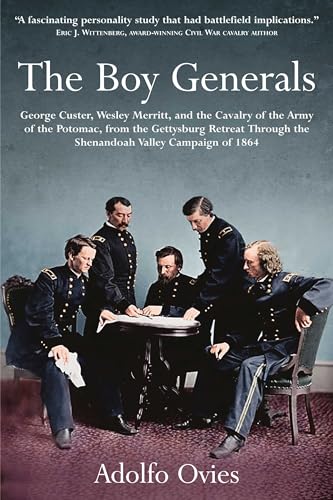
The second installment of Al Ovies’s The Boy Generals trilogy encompasses a period jammed with tumultuous events for the cavalry on and off the battlefield and a significant change of command at the top.
Once below the Potomac River, the Union troopers raced down the east side of the Blue Ridge Mountains but were unable to prevent General Lee’s wounded Army of Northern Virginia from reaching Culpeper. The balance of 1863 was a series of maneuvers, raids, and fighting that witnessed the near-destruction of the Michigan Cavalry Brigade at Buckland Mills and the indecisive and frustrating efforts of the Bristoe Station and Mine Run campaigns. Alfred Pleasonton’s controversial command of the mounted arm ended abruptly, only to be replaced by the more controversial Philip H. Sheridan, whose combustible personality intensified the animosity burning between George Custer and Wesley Merritt.
Victory and glory followed the Cavalry Corps during the early days of the Overland Campaign, particularly at Yellow Tavern, where Rebel cavalier Jeb Stuart was mortally wounded. The spirited rivalry between Custer and Merritt took a turn for the worse and at Trevilian Station, the bitterness and rancor permeating their relationship broke into the open and made it into their official reports. Merritt’s elevation to temporary command of the 1st Cavalry Division cemented their rancor.
The worsening relationship coincided with the darkening of the war. As the sieges of Richmond and Petersburg ground on and Confederate partisan operations intensified, Gen. U. S. Grant demanded Sheridan seek retribution, which prompted the cavalry leader to deliver his infamous edict to “eat out Virginia clear and clean as far as they go, so that crows flying over it for the balance of the season will have to carry their provender with them.” Much of this gritty task fell on the shoulders of his “boy generals.”
This well-researched and meticulously detailed account of the increasingly dysfunctional relationship between Custer and Merritt follows the same entertaining style as Ovies’s first installment. The Boy Generals will change the way Civil War enthusiasts understand and judge the actions of the Union’s bold riders.
About the Author
Adolfo Ovies has vivid memories of watching the movie They Died with Their Boots On while a young boy in Cuba, which starred the roguish Errol Flynn as Custer, with subtitles in Spanish. In 1960, the Ovies family migrated to the United States, making their home in Connecticut. With Gettysburg just a short distance away, the ten-year-old Adolfo made his first trip to the battlefield. It turned out to be one of the most impactful moments of his life. The Boy Generals trilogy springs from his lifetime passion for the Civil War, and George Custer’s role in particular. Ovies serves on the Board of Directors of the Little Big Horn Association, where he champions Custer’s role in the Civil War. He is an active member of the Miami Civil War Round Table and serves as the administrator of the group’s Facebook page. He resides in Miami, Florida, with his wife Juliet.
"About this title" may belong to another edition of this title.