Synopsis
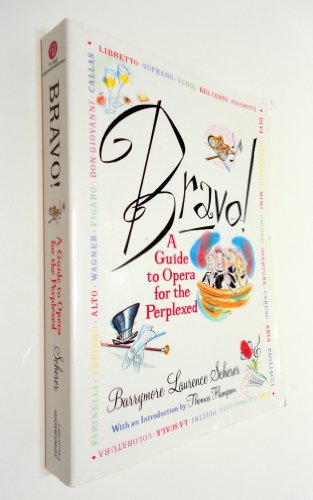
A guide to opera written to allow readers to get a quick overview of a particular theme or work in the opera repertoire includes a glossary of operatic terminology, a look at the different voice categories, opera etiquette, and other features
From Publishers Weekly
Opera is the fastest-growing performance art in the country, enjoying a 35% increase in its audience in the past decade, according to the New York Times. But freelance music critic Scherer provides only a pallid explanation for this popularity, suggesting that opera's "emotional high" is the audience-grabber. Disappointingly, his handbook to this enormous subject provides the neophyte with only a suggestion of that high, via dollops of information that on occasion are very basic, such as his clarification of the different voices (coloratura soprano and lyric soprano, for example). Scherer is at his most instructive when he gives his opinions free rein, as when he likens composer Meyerbeer (1791-1864) to Andrew Lloyd Webber. He shows how opera evolved in 16th-century Italy, then spread to France, Germany and Russia as various styles, baroque, opera seria, romanticism, etc., developed. Scherer's analysis of Russian opera is interesting for his explication of the friction between the Slavophile camp of Rimsky-Korsakov, Borodin and Mussorgsky and Westernizers such as Tchaikovsky, a friction that marks Russian literature as well. Readers will be struck by the paucity of American opera, which is only now finding its voice thanks to the likes of Menotti and Glass. If this introduction to opera is a bit sketchy, Scherer is nonetheless such a consummate opera lover that his enthusiasm ultimately carries the day.
Copyright 1996 Reed Business Information, Inc.
"About this title" may belong to another edition of this title.