Synopsis
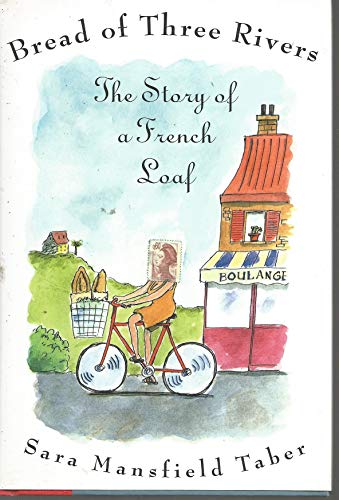
The author's passion for French bread takes her on fascinating quest for the basic ingredients found in her favorite breads.
Reviews
Nothing epitomizes the French lifestyle more than a loaf of bread fresh from the local bakery. How can something so distinctive be made from only flour, water, salt, and yeast? Taber assesses the state of contemporary French bread by visiting an artisanal bakery and some producers of those four ingredients. She spends days at a celebrated Breton boulangerie, uncovering the traditions and techniques of producing an incomparable, crusty loaf. She proceeds to the miller of the bakery's flour and, to her surprise, discovers that much of the wheat comes from the U.S. She visits the pumping station that supplies the bakery with water from the local aquifer. She tours the factory that grows the high-quality yeasts used by the bakery. Her most extensive investigations occur where generations of workers employ elaborate series of sluices and ponds to extract the finest salts from seawater. The ingredients and the baking of French bread are threatened by technological advances and the nascent world economy, whose effects on the foundation of the French diet may be profound. Mark Knoblauch
Copyright © American Library Association. All rights reserved
Frustrated with the hectic Washington, DC, lifestyle and disappointed with the perpetually busy lives of Americans, Taber attempts to find delight in a simple, honest loaf of French bread. As many others before her, she flees to France to immerse herself in the cuisine of the country and to write about it. Unlike others, she concentrates solely on the search for "a wonderful French loaf" and the story behind it. Traveling across France to research each ingredient salt, wheat, water, and yeast she interviews the individuals who provide each ingredient to the baker of her perfect loaf. What results is a romanticized book that is equal parts history, travel narrative, and culinary scientific process. A former university professor and participant in the 1996 Bread Loaf Writers' Conference, Taber has written a literary title filled with metaphor, but her irritation with the American way of life and its global influence detracts from what is an otherwise fascinating look into the complexities of seemingly mundane ingredients. Readers interested in food writing are more likely to be entertained by Peter Mayle's French Lessons (Knopf, 2001). Recommended for larger collections. Pauline Baughman, Multnomah Cty. Lib., Portland, OR
Copyright 2001 Reed Business Information, Inc.
"About this title" may belong to another edition of this title.