
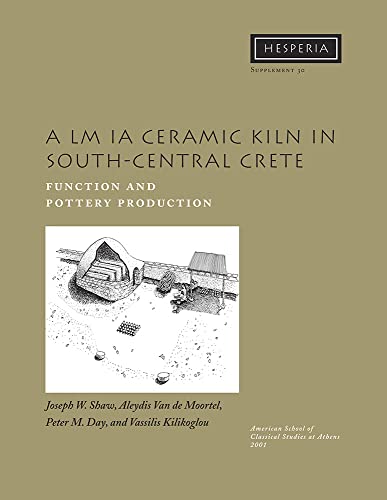
A LM IA Ceramic Kiln in South-Central Crete: Function and Pottery Production: 30 (Hesperia Supplement) [Nov 21, 2001] Shaw, Joseph W.; Van de Moortel, Aleydis; Day, Peter M. and Kilikoglou, Vassilis
Shaw, Joseph W.; Van De Moortel, Aleydis; Day, Peter M.; Kilikoglou, Vassilis
ISBN 10: 0876615302 ISBN 13: 9780876615300
Published by American School of Classical Studies at Athens, 2001
Used
Soft cover
From
Hay-on-Wye Booksellers, Hay-on-Wye, HEREF, United Kingdom
Seller rating 4 out of 5 stars

AbeBooks Seller since October 20, 2005
This specific item is no longer available.
About this Item
Description:
The books cover is in very good condition with ware such as scratches and light staining. The content is in new condition. Seller Inventory # HP-72485a
Synopsis:
An in-depth study of the Late Minoan IA cross-draft kiln found in excavations at Kommos, Crete. The kiln is of a type popular during the Neopalatial period, and its good state of preservation has allowed the authors to speculate about its original internal layout and use, as well as about the roof that covered it. Much of the large quantity of pottery found associated with the kiln is analyzed in detail, allowing for the first time the study of the shapes, decoration, and technical characteristics of vases known to have been fired in a specific LM IA kiln. The book presents an integrated program of analytical techniques used to illustrate the range of firing temperatures, the compositional similarities and differences in the clays used, and aspects of the firing process and the upper kiln structure. Offered here is a valuable contribution to our knowledge of the technology and organization of ceramic production at the beginning of the Late Minoan period, which will form a basis for studies of pottery provenience and exchange.
About the Author:
Joseph W. Shaw, emeritus professor at the University of Toronto, has focused his work on the architecture and the general character of the Bronze Age Aegean. In particular, he and his wife, Maria, discovered, excavated, and published (starting in 1976) the southern Cretan site of Kommos―the seaport of Minoan Phaistos and Hagia Triadha.
"About this title" may belong to another edition of this title.
Bibliographic Details
Title: A LM IA Ceramic Kiln in South-Central Crete:...
Publisher: American School of Classical Studies at Athens
Publication Date: 2001
Binding: Soft cover
Condition: Very Good