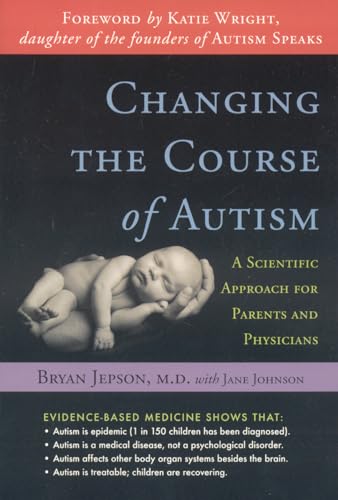
This book shows that autism can be treated by reducing the neurological inflammation that is part of the disease process, rather than simply masking the symptoms with drugs like Ritalin and Prozac. The authors have have seen autistic behaviors improve dramatically or disappear completely with appropriate medical treatment. The book reviews the medical literature regarding the biological nature of the disease, including the potential connection between vaccines and autism. The foreword is by Katie Wright, whose parents—Bob and Suzanne Wright—founded Autism Speaks.
BRYAN JEPSON, M.D., graduated from the University of Utah Medical School in 1995 and completed residency training in Grand Rapids, Michigan in 1998. He is Board certified in emergency medicine. In 2001, his second son was diagnosed with autism. Over the course of that year, he and his wife Laurie began exploring treatment options and found that the medical community knew very little about the cause, the treatment, or the prognosis of this disease. After a year of research, the couple established a clinic in Utah where autistic children could receive the most up-to-date care available. From 2002-2005, their non-profit Children's Biomedical Center of Utah raised awareness throughout the intermountain West concerning issues related to autism and other childhood developmental disorders. Dr. Jepson treated hundreds of children on the autism spectrum and enjoyed the experience of watching them improve.
Because he was a leading specialist in the field, Dr. Jepson was recruited to join the team at Thoughtful House Center for Children, a multidisciplinary clinic dedicated to caring for children with autism and related conditions. The Thoughtful House is designed to integrate biomedical, gastrointestinal, and educational intervention into a coordinated effort, and to use this model to perform clinical research. Dr. Jepson is now the Director of Medical Services there.
He lives in Austin, Texas, with Laurie and their two sons.
JANE JOHNSON became interested in medical treatment for learning disabilities in 2000, when one of her children was diagnosed with non-verbal learning disorder (NLD). In her effort to educate herself, she became more and more alarmed at the epidemic growth of the prevalence of developmental disorders. She is the Co-Managing Director of the Board of Directors of Thoughtful House. She lives in New York City with her husband and her three children.