Synopsis
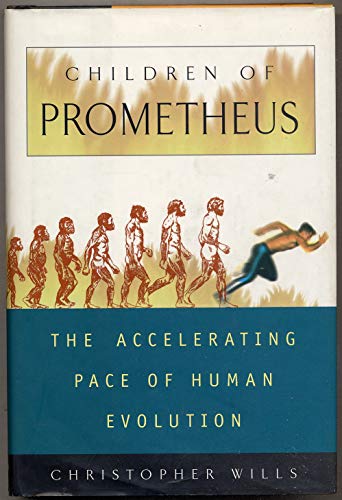
Are we still evolving? Scientists have grappled with this question since the time of Darwin. Now, in this provocative book, biologist Christopher Wills argues that we are not only continuing to evolve but that our pace of change is accelerating. He examines the rapid, short-term evolutionary change taking place in people living at the earth's extremes (even as babies, Tibetans can draw in more oxygen than lowlanders), and the new physiology of those who participate in extreme sports. But the more we shape our environment, the more it seems to shape us: Whether the future has us wiring our brains into vast electronic databases, or popping “smart drugs” that alter the brain's very biochemical structure, new environmental pressures are speeding up our evolution in ways that we cannot now predict but that will help us to survive the future.
Reviews
In an eclectic romp through the topic of human evolution, U.C.-San Diego biologist Wills (The Wisdom of the Genes, etc.) focuses on two related questions: Have humans followed the same evolutionary principles as the rest of the mammalian world? And are we still undergoing evolutionary change? He concludes that while the principles have indeed been the same, the rate of human evolution has been dramatically faster than for any of our close relatives and that, if anything, the pace has been speeding up of late. "Humans have accelerated the pace of evolutionary change everywhere, and at the forefront of that change, we are altering ourselves more rapidly than any other species." Wills attributes our rapid pace of change to the way our brains permit us to interact with our environment, the massive amount of environmental change for which we have been responsible over the millennia and the wholesale genetic mixing that is so typical of humans. He traverses broad territory, ranging from hominid phylogeny to a discussion of those who participate in extreme sports; from the physiology of Tibetan Sherpas to an analysis of the stresses faced by British civil servants. He also takes time in his articulate, provocative study to refute, convincingly, many of the claims linking IQ and genetics made in The Bell Curve.
Copyright 1998 Reed Business Information, Inc.
On a Saturday in 1997 Wills and his wife went to the X-games (X for "extreme") in San Diego and found themselves among 30,000 "bronzed and healthy young people, watching a range of contests that their parents would have found unimaginable." The contests included snowboarding, in-line skating and bungee-jumping--all invoking challenges new to athletes and reinforcing Wills's view that "part of our success is due to our ability to modify our behaviors in the face of new environmental challenges, and to build on a knowledge base in order to do so. "Reviewing in this splendidly eclectic book the evolutionary reasons that human beings have taken a path much different from those traveled by all other animals, he undertakes to "show not only that we are still evolving, but that our evolution--particularly the evolution of our minds-is actually proceeding at an accelerating pace." In his journey he examines people who live at high altitudes in Tibet and the Andes, the effects of disease on human development and the singular selective pressures that bear on workers low in the hierarchy of the British civil service. "There seems no doubt,"he concludes, "that the environment of the late twentieth century is revealing more than ever of our underlying genetic variation for brain function and perhaps for other characteristics, and is accelerating our evolution as a result."
Building on earlier ideas (presented in The Runaway Brain, 1993, and Exons, Introns and Talking Genes, 1991), Wills, an English evolutionary biologist transplanted to the Univ. of Calif., San Diego, makes a cogent case for the continued and even more rapid future evolution of our species. The counterargument: Since the advent of life-saving drugs, vaccines, clean water, and other public health measures, even the unfit survive so handily that natural selection has nothing to work on. Not true, says Wills (and most evolutionary biologists), presenting such interesting evidence in support of his position as the finding that native Tibetans have as a group lived longer than anyone anywhere else at extreme altitudes with the help of adaptive changes. (Even during pregnancy, the Tibetan fetus is able to extract more oxygen and achieve a normal birth weight more successfully than newborns of nonadapted Chinese living the same area.) Wills is at his best in presenting examples such as this, as well as in his detailed discussions of the genetic trade-offs that have led to the survival of sickle cell or cystic fibrosis genes. Via these, he reprises the paleontological literature, focusing on his pet theme: the rapid growth of the human brain and mental faculties. His opinion: Environment plays a major role in interactions with genes, which among themselves may act quite mysteriously. He also points to new evidence that the uterus itself constitutes an environment that contributes to the concordance for certain traits seenand the difference in othersin identical twins. Ultimately, Wills forecasts a rosy future: smart pills for us to swallow as we learn more about the makeup of biochemical mind boosters; a gene pool diverse enough to meet future contingencies; life spans double what they are now. More important than this clearly optimistic vision are the cogent arguments about our evolutionary path to date and that make possible the uniquely human qualities of language, culture, and civilization. -- Copyright ©1998, Kirkus Associates, LP. All rights reserved.
Some believe that our species is no longer evolving in a positive direction because modern medicine enables even unfit individuals to survive and reproduce. Wills (biology, Univ. of California, San Diego), counters that we are still evolving and at an accelerating pace. In his earlier The Runaway Brain (LJ 8/93), Wills proposed an accelerating evolutionary feedback loop in which improvements in the human brain lead to the species changing its own social and physical environment, which in turn causes further selection for improved brain and social function. Here, Wills contrasts the rapid rate of human evolution with the much slower rate of our closest primate relatives. He suggests factors that may be exerting evolutionary pressures by affecting health, such as social and work-related stresses and environmental pollution. These suggestions are interesting but sometimes highly speculative. Clear and engaging, Wills's latest work should be of interest to a wide range of libraries.?Marit MacArthur, Auraria Lib., Denver
Copyright 1998 Reed Business Information, Inc.
"About this title" may belong to another edition of this title.