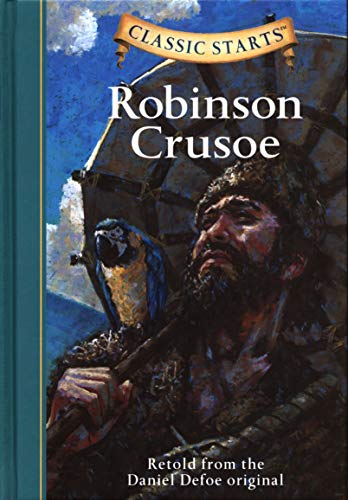
A shipwreck. A sole survivor, stranded on a deserted island. What could be more appealing to children than Robinson Crusoe’s amazing adventure? Set in the 17th century, and unfolding over a 30-year period, it offers plenty of suspense and everyday detail about how Crusoe manages to stay alive. Additionally, it paints a fascinating portrait of the age—including references to slavery and Europe’s view of the “New World.”
Gr. 4-7. The latest title in the Classic Starts series simplifies Defoe's famous survival adventure story, one of the first novels ever written, reworking the tortuous prose into a relaxed, chatty style ("I felt awful") with short sentences that will be accessible to a grade-school audience. True to the 1719 original, the first-person narrative relates how Crusoe defies his parents, runs away to sea, has various adventures, and survives alone on a desert island until he finds a native man whom Robinson calls Friday. The big difference here is that the two men become friends, pals, and equals. There is not a racist word, nothing about Defoe's "savages." For contrast, to spark classroom discussion, pair this with Timothy Meis' retelling, discussed in Focus: "Survivor" (BKL Mr 1 03), which stays true to the prejudice in the original. Hazel Rochman
Copyright © American Library Association. All rights reserved