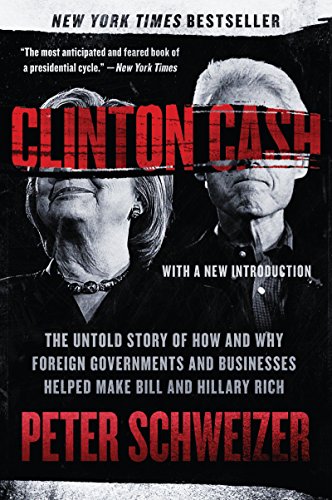
The definitive takedown by the #1 New York Times bestselling author of Secret Empires.
In 2000, Bill and Hillary Clinton owed millions of dollars in legal debt. Since then, they’ve earned over $130 million. Where did the money come from? Most people assume that the Clintons amassed their wealth through lucrative book deals and high-six figure fees for speaking gigs. Now, Peter Schweizer shows who is really behind those enormous payments.
In his New York Times bestselling books Extortion and Throw Them All Out, Schweizer detailed patterns of official corruption in Washington that led to congressional resignations and new ethics laws. In Clinton Cash, he follows the Clinton money trail, revealing the connection between their personal fortune, their “close personal friends,” the Clinton Foundation, foreign nations, and some of the highest ranks of government.
Schweizer reveals the Clinton’s troubling dealings in Kazakhstan, Colombia, Haiti, and other places at the “wild west” fringe of the global economy. In this blockbuster exposé, Schweizer merely presents the troubling facts he’s uncovered. Meticulously researched and scrupulously sourced, filled with headline-making revelations, Clinton Cash raises serious questions of judgment, of possible indebtedness to an array of foreign interests, and ultimately, of fitness for high public office.
This explosive investigation uncovers the hidden patterns of crony capitalism and quid pro quo, revealing:
- Follow the Money: How did the Clintons go from millions in debt to a fortune of over $130 million? Schweizer maps the explosive connections between enormous speaking fees, personal wealth, and policy decisions.
- Foreign Influence: The meticulously sourced links between the Clinton Foundation, donations from foreign governments and oligarchs, and favorable outcomes from the State Department.
- The Russian Uranium Deal: An in-depth look at how a company critical to U.S. nuclear energy resources was transferred to the Russian government, and the timely flow of funds to Clinton interests.
- Disaster Capitalism in Haiti: An examination of how post-earthquake reconstruction funds benefited politically connected friends and family instead of the Haitian people.
- Crony Capitalism: Case studies from Kazakhstan, Colombia, and beyond that reveal a pattern of enriching "close personal friends" and allies at the intersection of power, money, and so-called philanthropy.
Peter Schweizer is the president of the Government Accountability Institute and the former William J. Casey Fellow at the Hoover Institution, Stanford University. He is a number one New York Times bestselling author whose books have been translated into eleven languages.