Synopsis
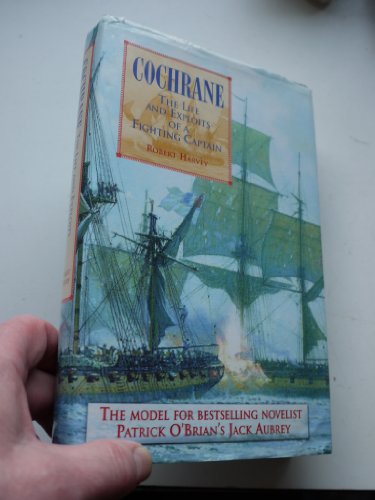
A seaman as heroic as Nelson, a master of gunnery and genius at deception, a tactician so formidably skillful Napoleon called him "the sea wolf," Thomas Cochrane was an adventurer, admiral, and inventor of new devices of warfare far beyond his time. He made of his life at sea a legend more extraordinary than any of the works of fiction it inspired - like the famous sea tales of C.S. Forrester and Patrick O'Brian's bestselling series of naval novels featuring the redoubtable Jack Aubrey. Barely twenty-five when he assumed command of the Speedy, Cochrane created mayhem in the Mediterranean as he took the tiny brig with its fourteen guns to naval glory and himself to national fame and a fortune in prize money. A maverick, Cochrane often stood at odds with the Admiralty and on occasion operated against its orders. As innovative as he was fearless, he flew under false colors to deceive the enemy, instituted in-shore guerrilla raiding, promoted the use of explosion ships, and experimented with poison gas, propeller-drive ships, and compressed-air engines. Outnumbered and outgunned, he nonetheless triumphed over Spanish and Portuguese naval forces in battles off the coasts of Chile, Peru, and Brazil, where he served as a mercenary in the cause of independence. Born into a penurious but noble Scottish family, Cochrane rose fabulously and fearlessly from midshipman to admiral, from penniless heir to a radical member of parliament to Tenth Earl of Dundonald. He married a penniless orphan and had a long-standing liaison with one of the most famous literary figures of his day. He survived the Stock Exchange scandal that sent him to prison and escaped to South America, where he helped shape the destiny of a continent. Rebellious, dashing, mad, heroic; Cochrane embodies the spirit of the Romantic Age.
Reviews
Thomas Cochrane was one of the most successful captains in British naval history. He was the inspiration behind the famous novels of C.S. Forrester and Patrick O'Brian. Yet he was almost erased from his country's history by a corrupt Admiralty with whom he constantly banged heads. In this history, which should appeal to Forrester's and O'Brian's readers, Harvey attempts to return Cochrane to prominence, focusing on three aspects of his career: fighting captain in the British Navy, radical politician and expatriate military genius who, after suffering disgrace in England, helped South American countries battle for independence. In the early 1880s, Cochrane used deception, tactical strategy and expert seamanship to win battles against supposedly unbeatable opponents. His strength was such that Napoleon dubbed him "the sea wolf," and Harvey captures the excitement of his exploits in immediate, gripping prose. The sections about Cochrane's career in Parliament and his exploits in South America are less entertaining, but necessary in order to paint a complete picture of his life. The book does not shy away from Cochrane's feud with his superiors in the navy or from his alleged involvement in a stock exchange scandal, but in all cases the author comes out as pro-Cochrane. One flaw is Harvey's tendency to assign thoughts to Cochrane without any historical support for them. To his credit, however, Harvey includes many primary accounts of Cochrane's exploits. These, unlike Harvey's speculations, give the reader true insight into a man who inspired so many novels. 8 pages of b&w photos not seen by PW. (Nov.)
Copyright 2000 Reed Business Information, Inc.
A most extraordinary combination of fighting sailor and English eccentric, Thomas Cochrane came from a noble but impoverished Scots family. Going to sea at 17, he commanded a brig at 25 and with it took a Spanish frigate with 10 times as much fighting power. Thereafter, he commanded frigates that greatly annoyed and distressed the Spanish and the French. When grossly insubordinate (though correct) to an admiral who botched a major victory over the French, he was sent ashore. Eventually involved in a stock fraud, he was thrown out of the navy, only to turn to Latin America during the revolutions against Spain. He founded the Chilean navy, helped the Brazilian, and worked well for the Greeks against Turkey. Meanwhile, he fought inept dockyard managers, corrupt prize agents, and Lord Saint Vincent (a bad enemy). He married a remarkable woman 20 years his junior and died full of years, an admiral of the fleet. No novelist would dare invent Cochrane's feats, though Forester, O'Brian, and others have grafted edited versions upon their sea-warrior heroes. Roland Green
Copyright © American Library Association. All rights reserved
"About this title" may belong to another edition of this title.